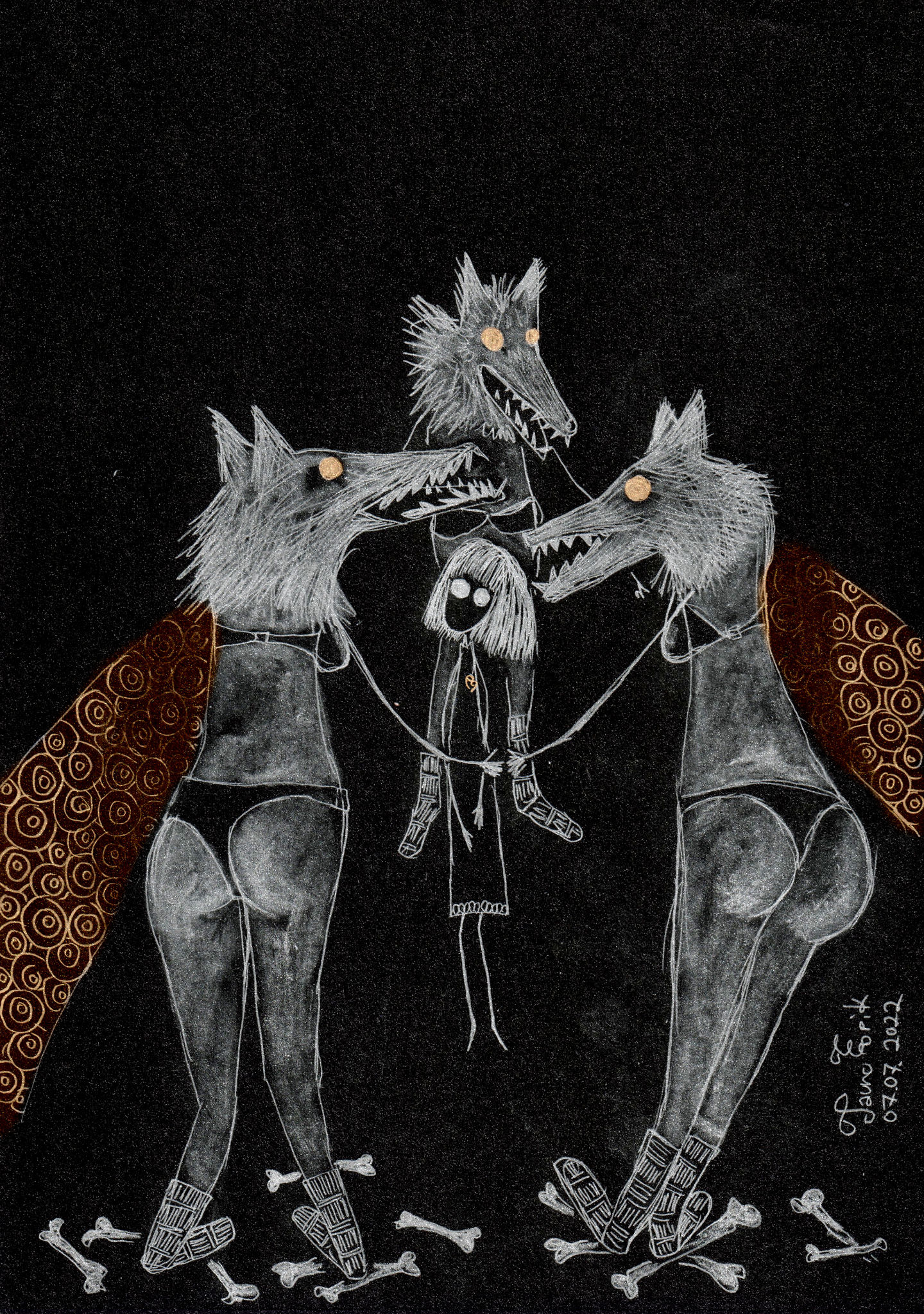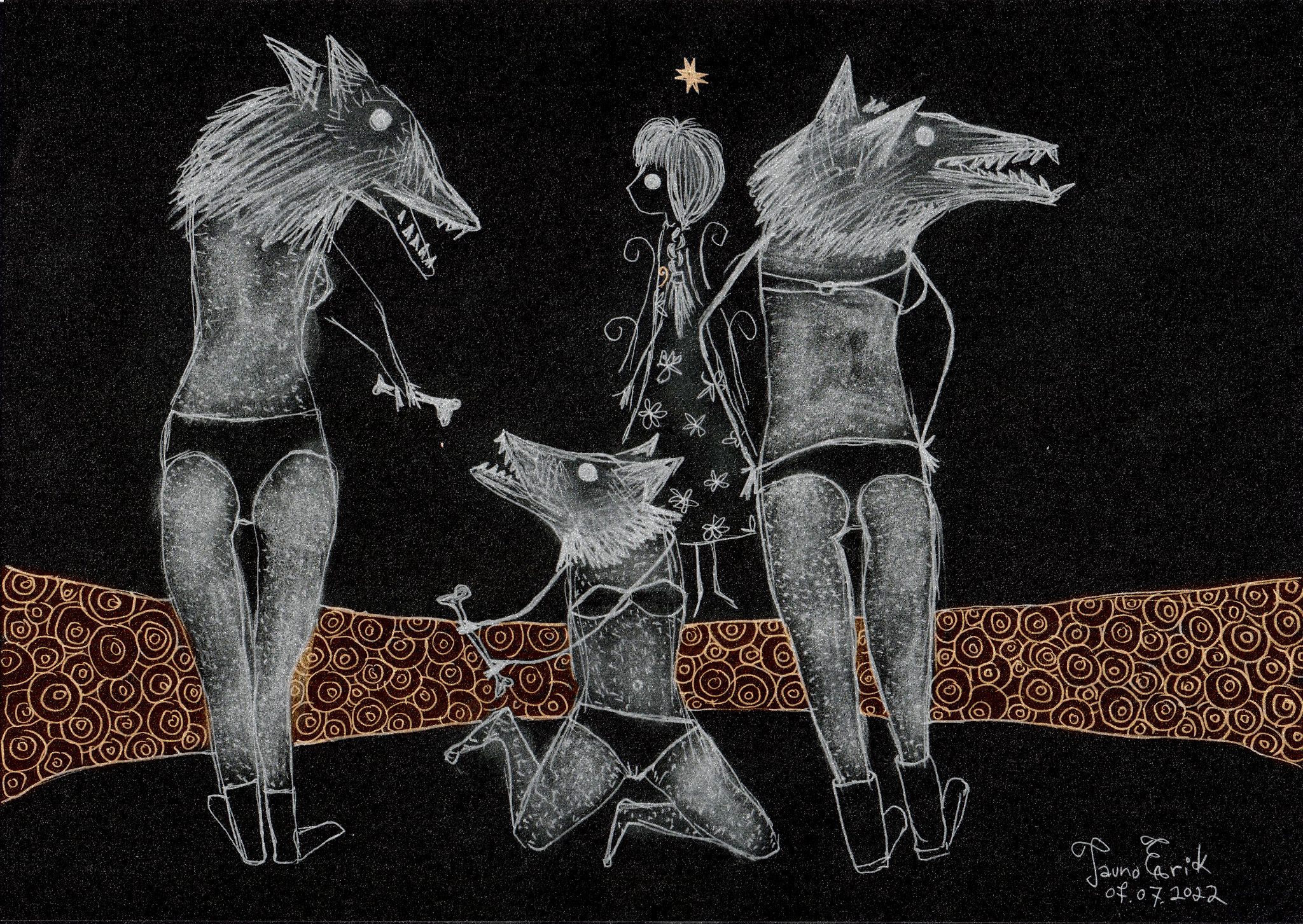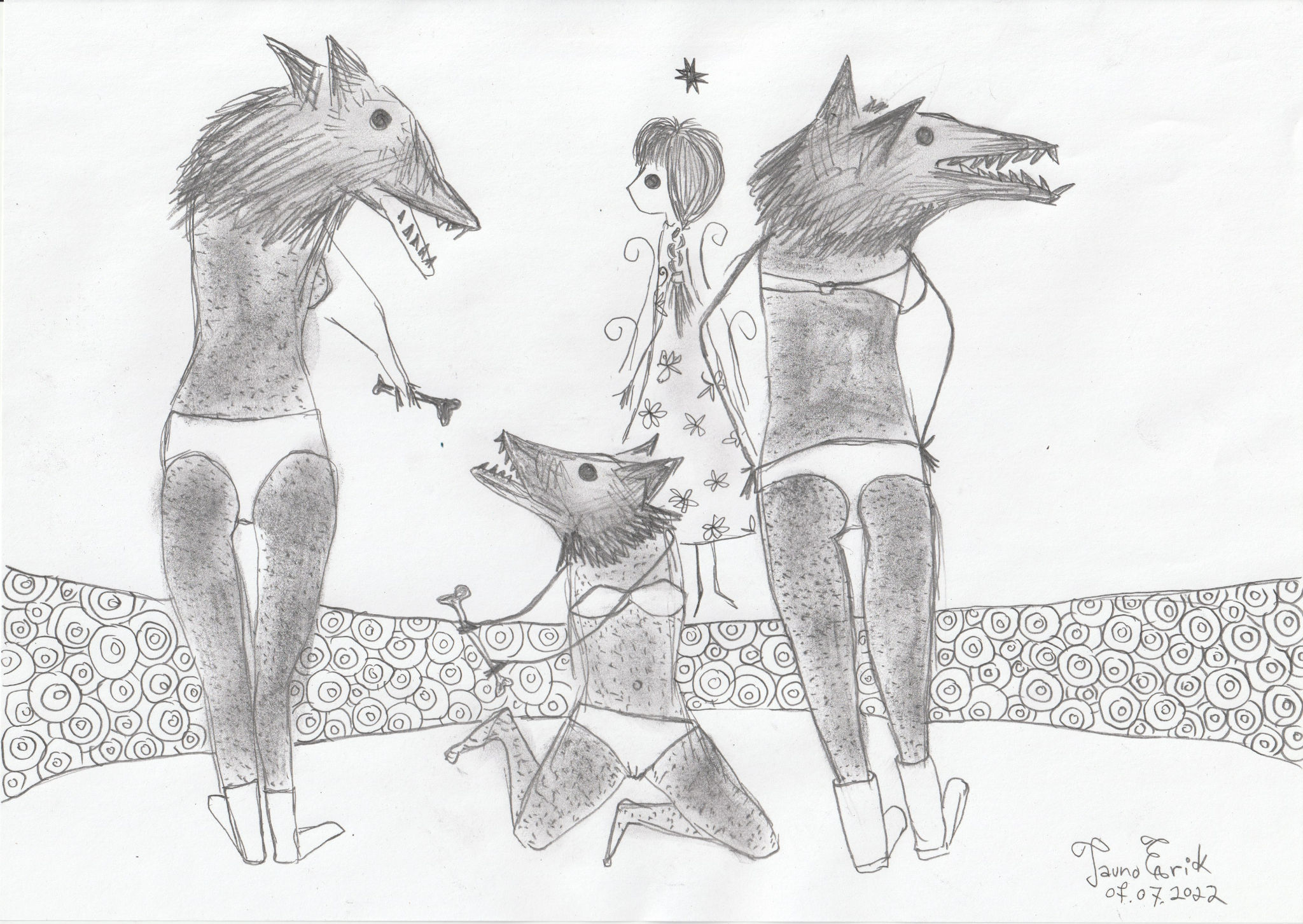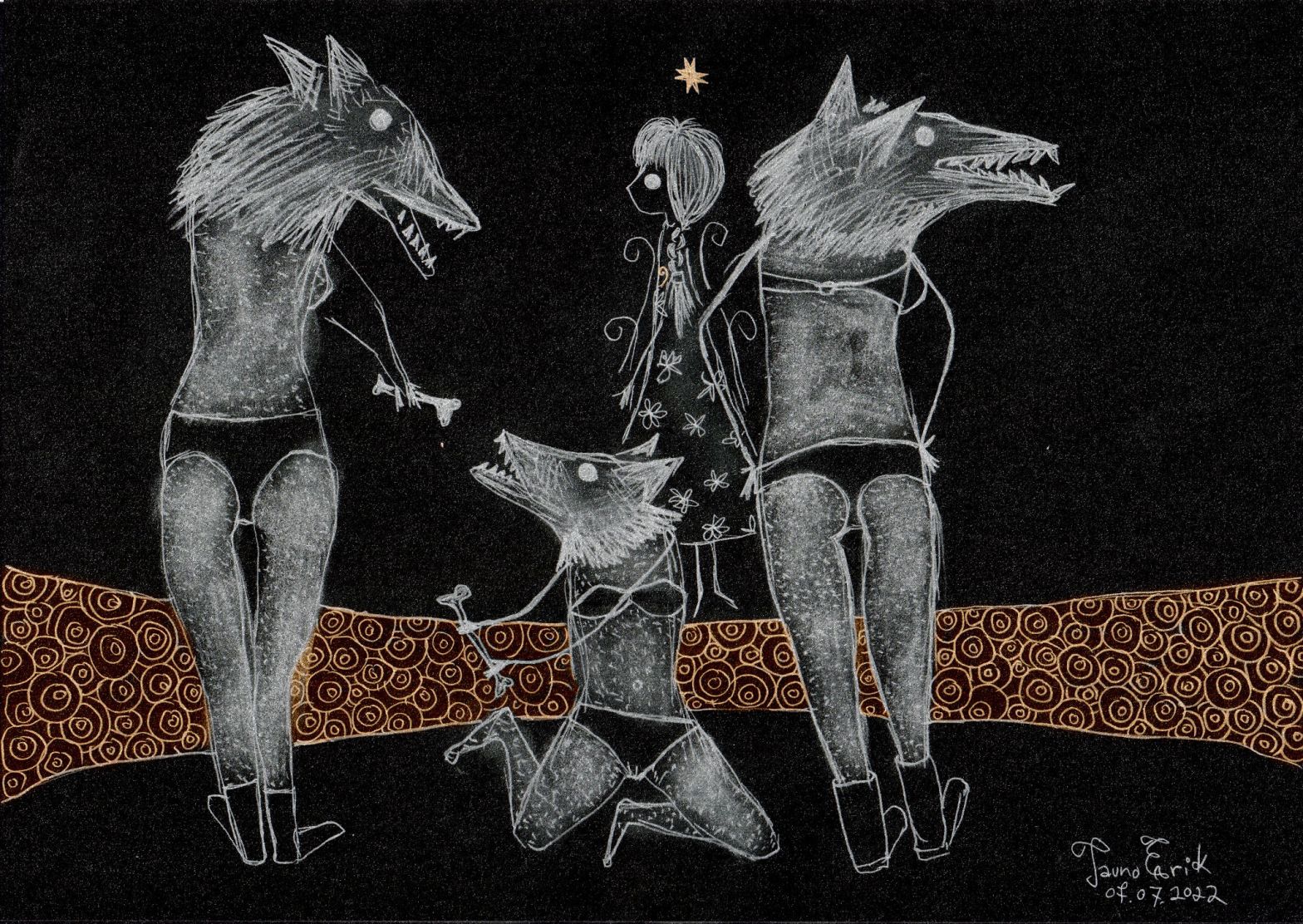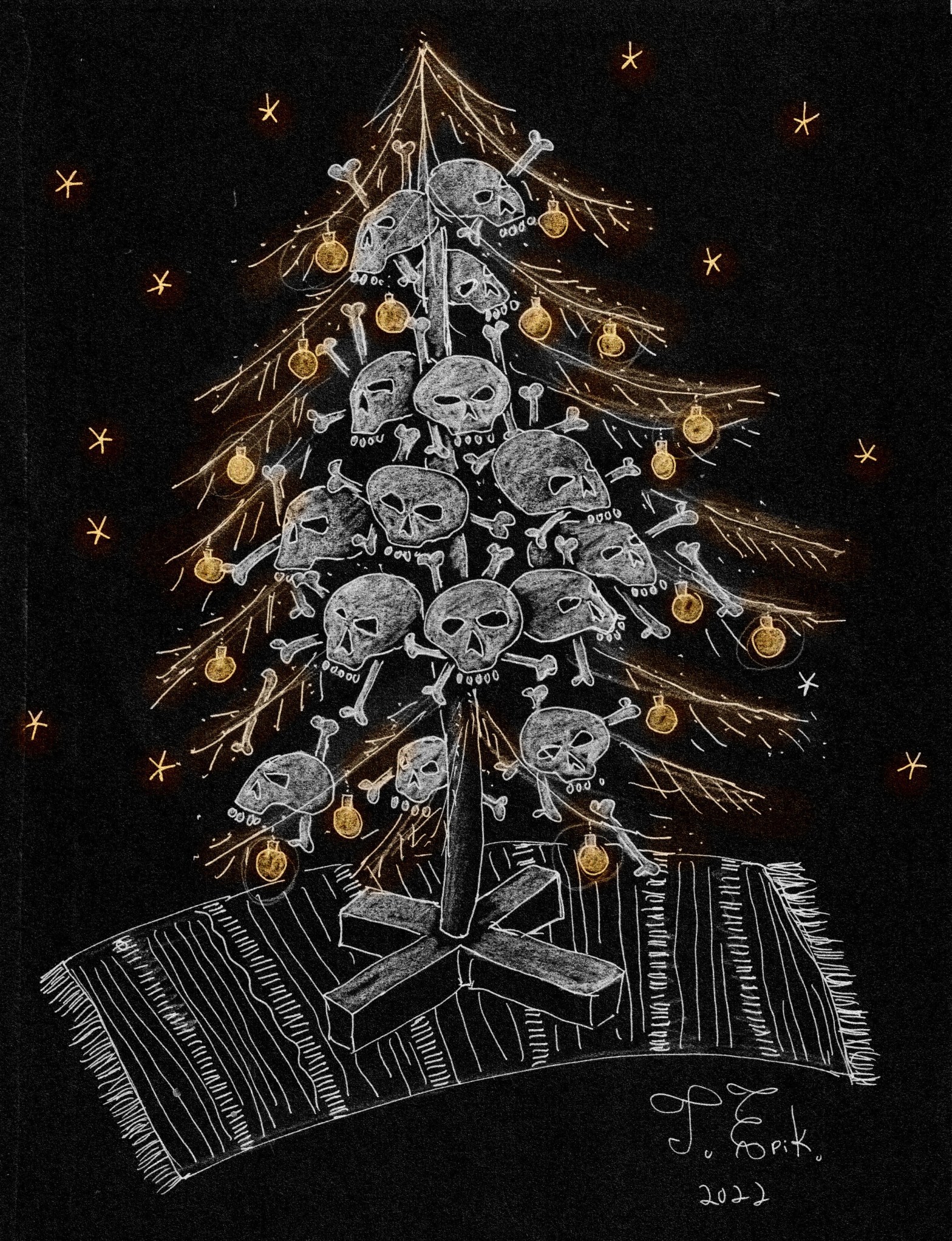
My conflicted feelings about Christmas are summarised in these images.
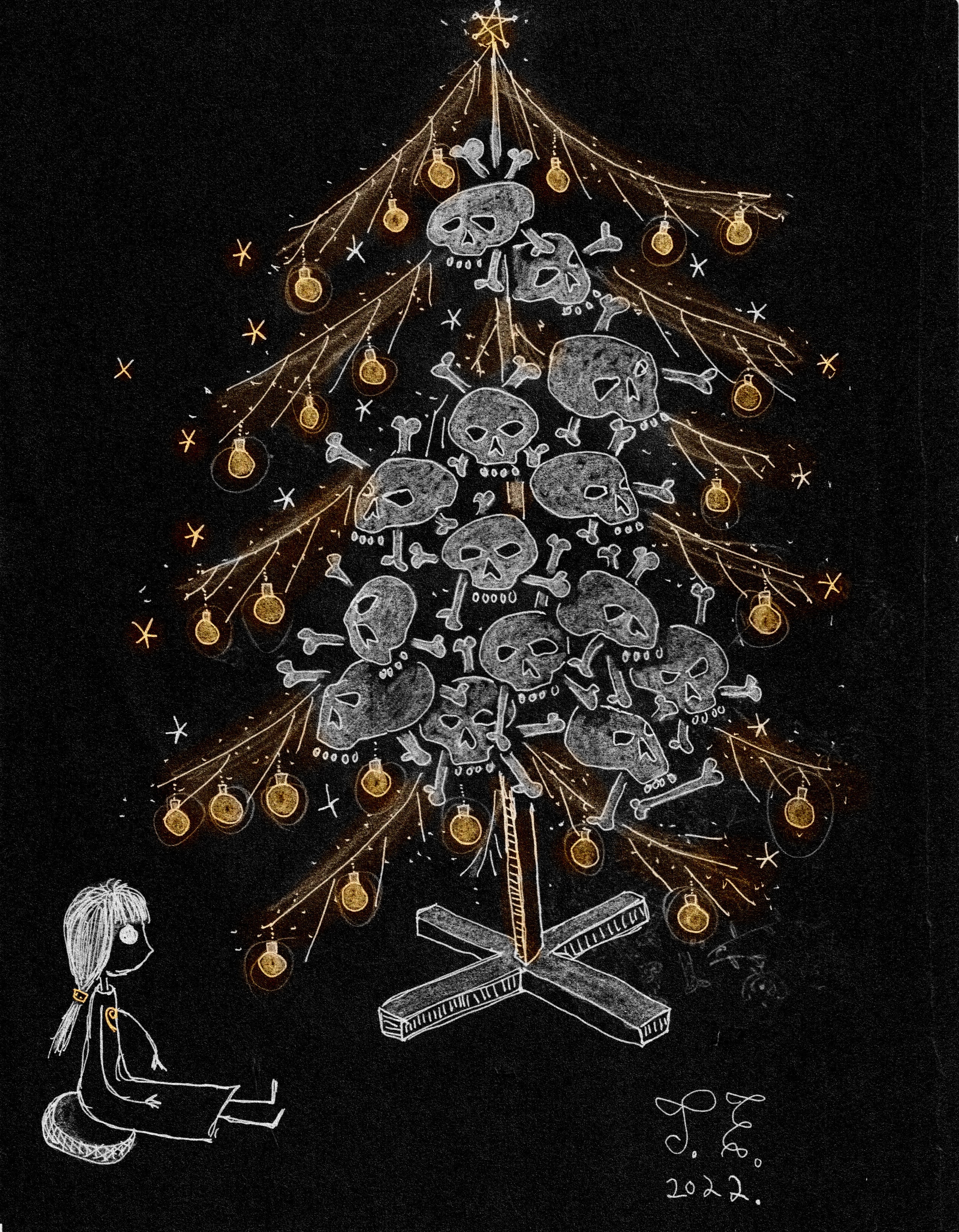
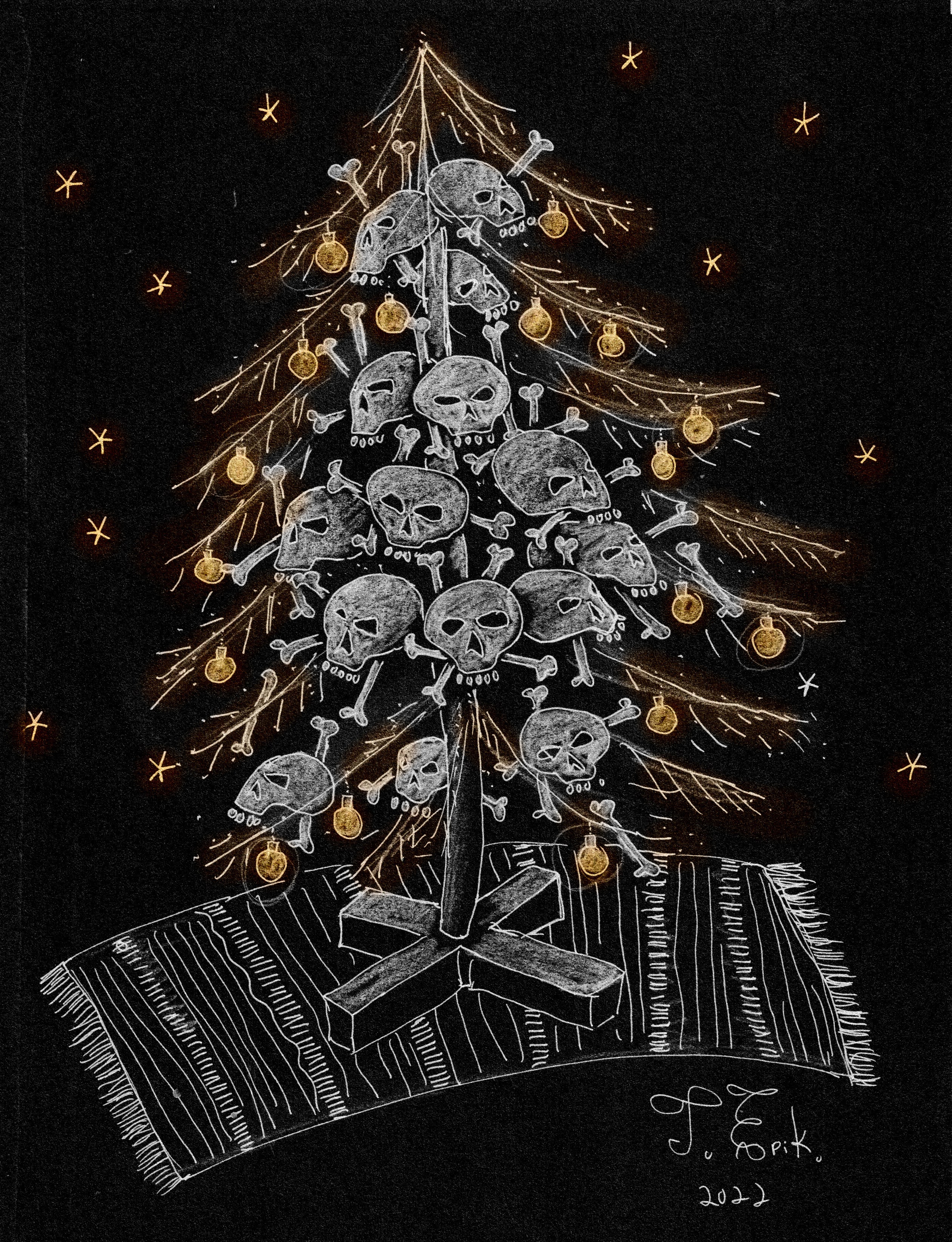
My conflicted feelings about Christmas are summarised in these images.
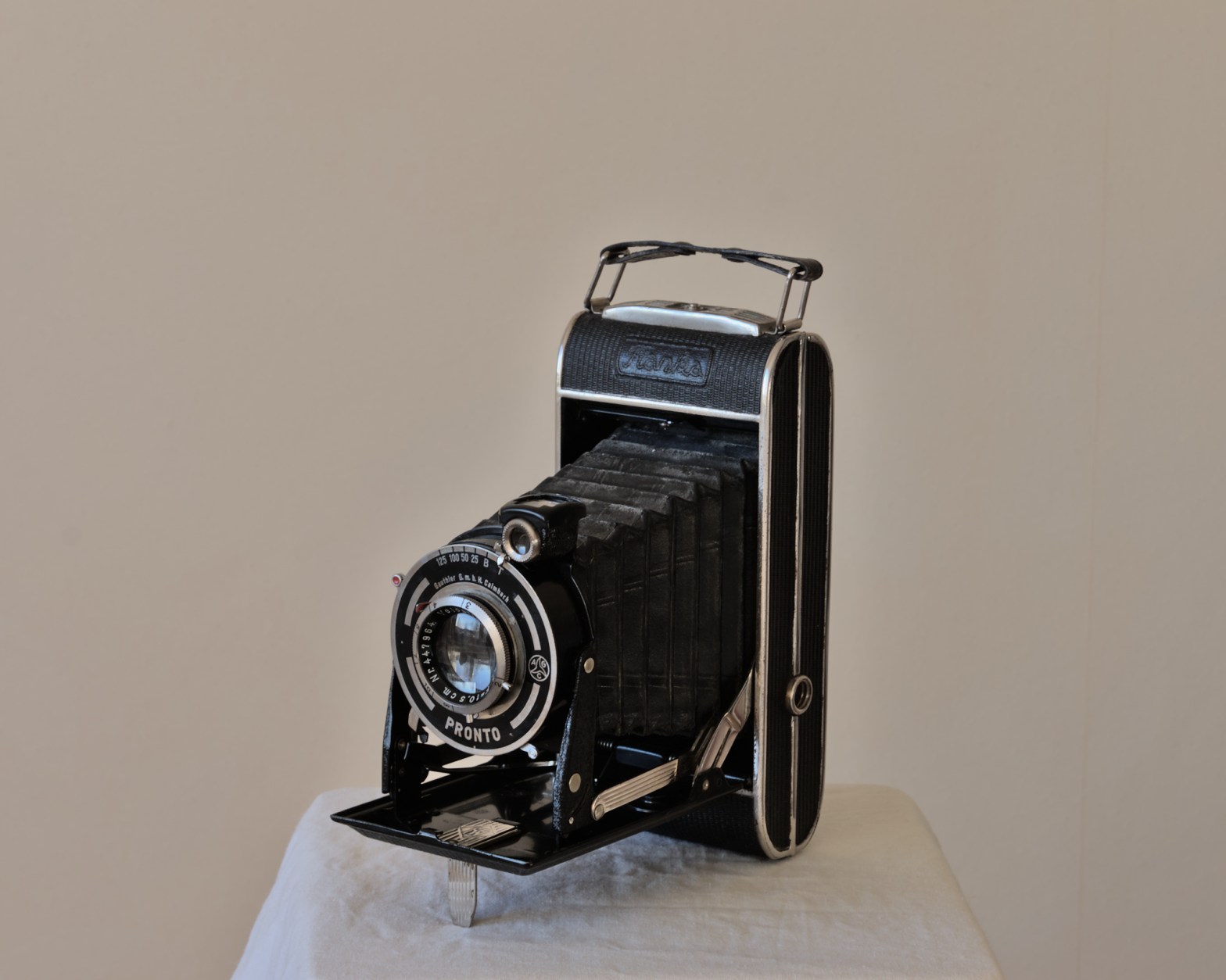
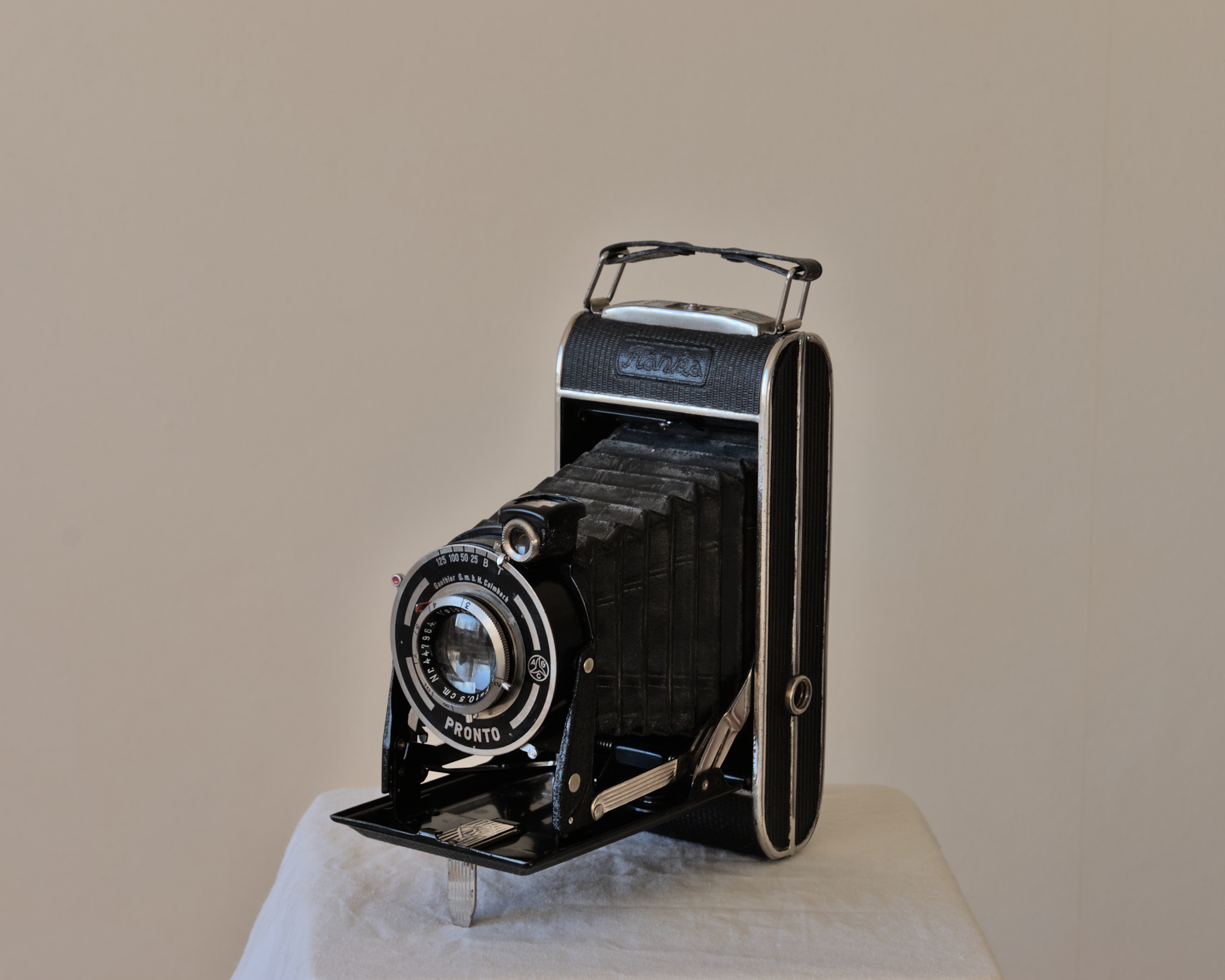
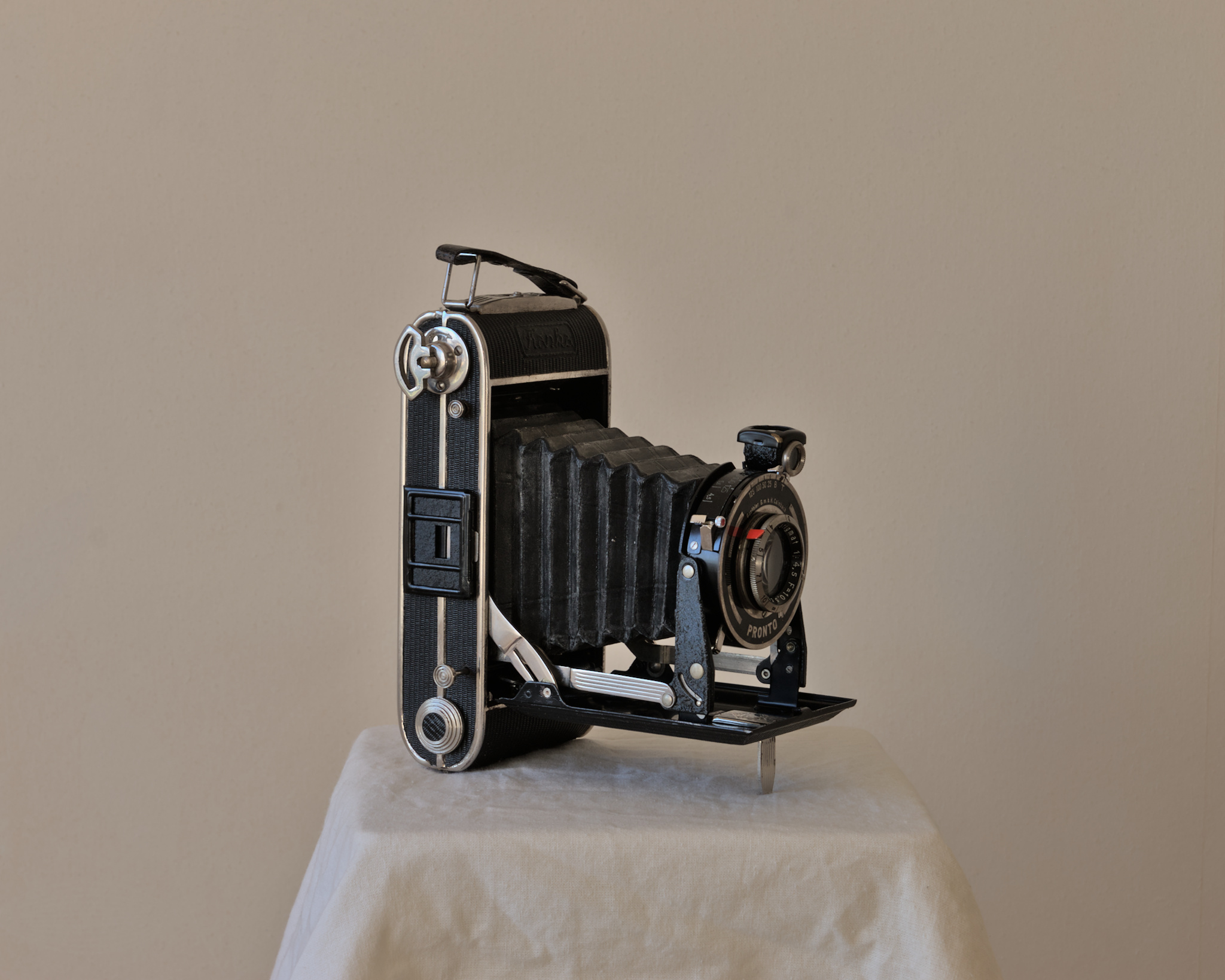
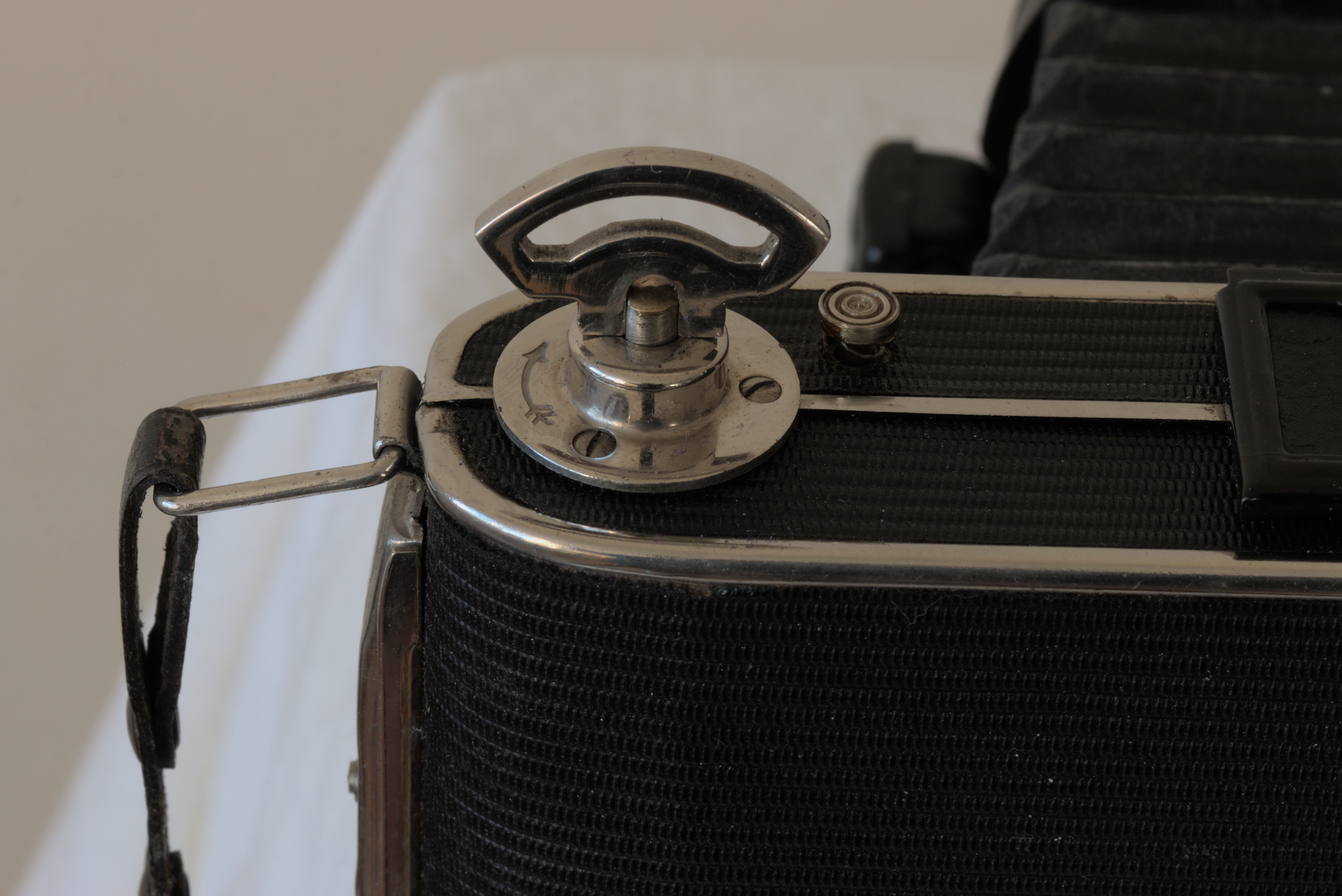
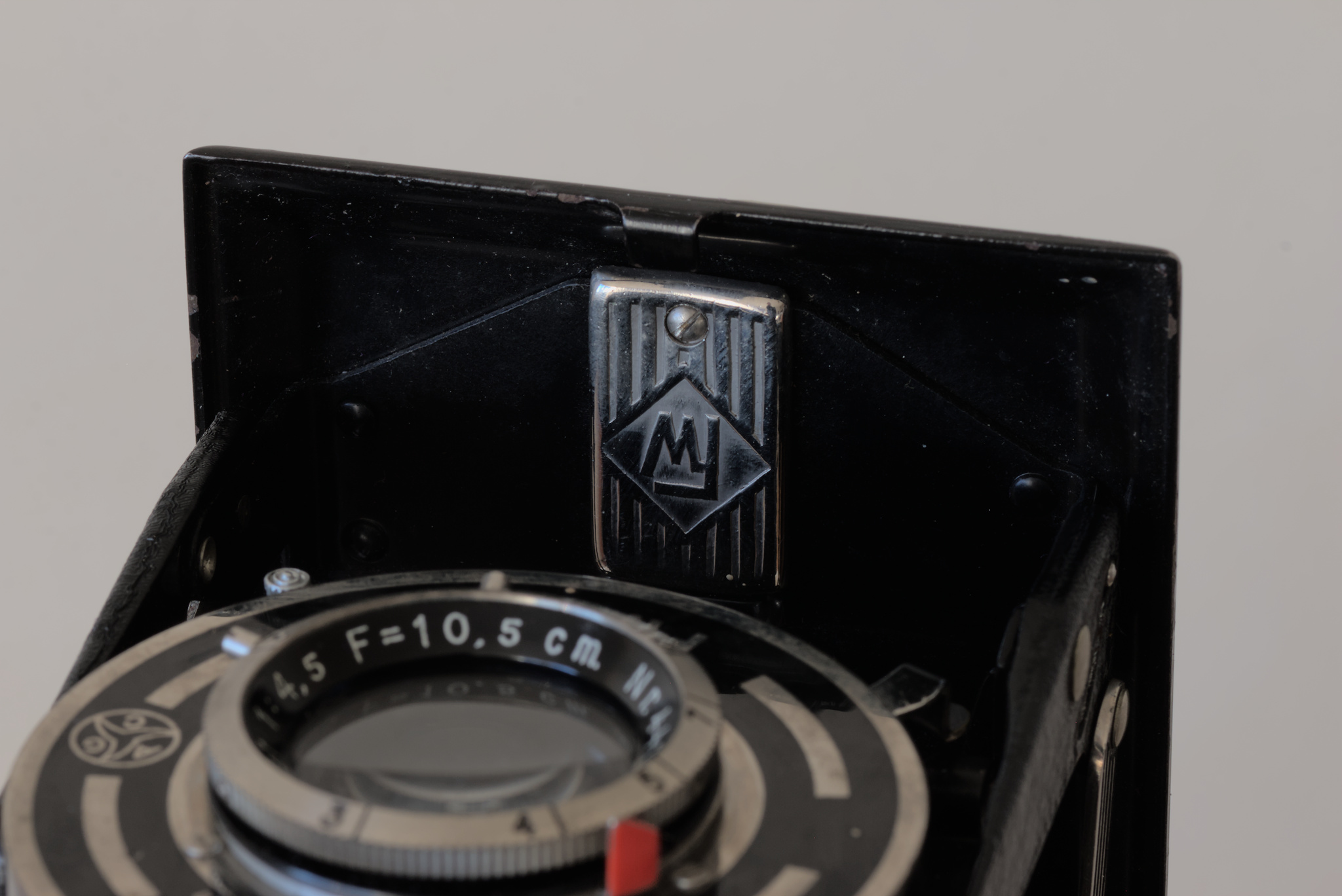
The actual model’s name is Franka Rolfix. It was made before World War II. Probably around 1938. I have looked at these brands of cameras and they all look different in detail.
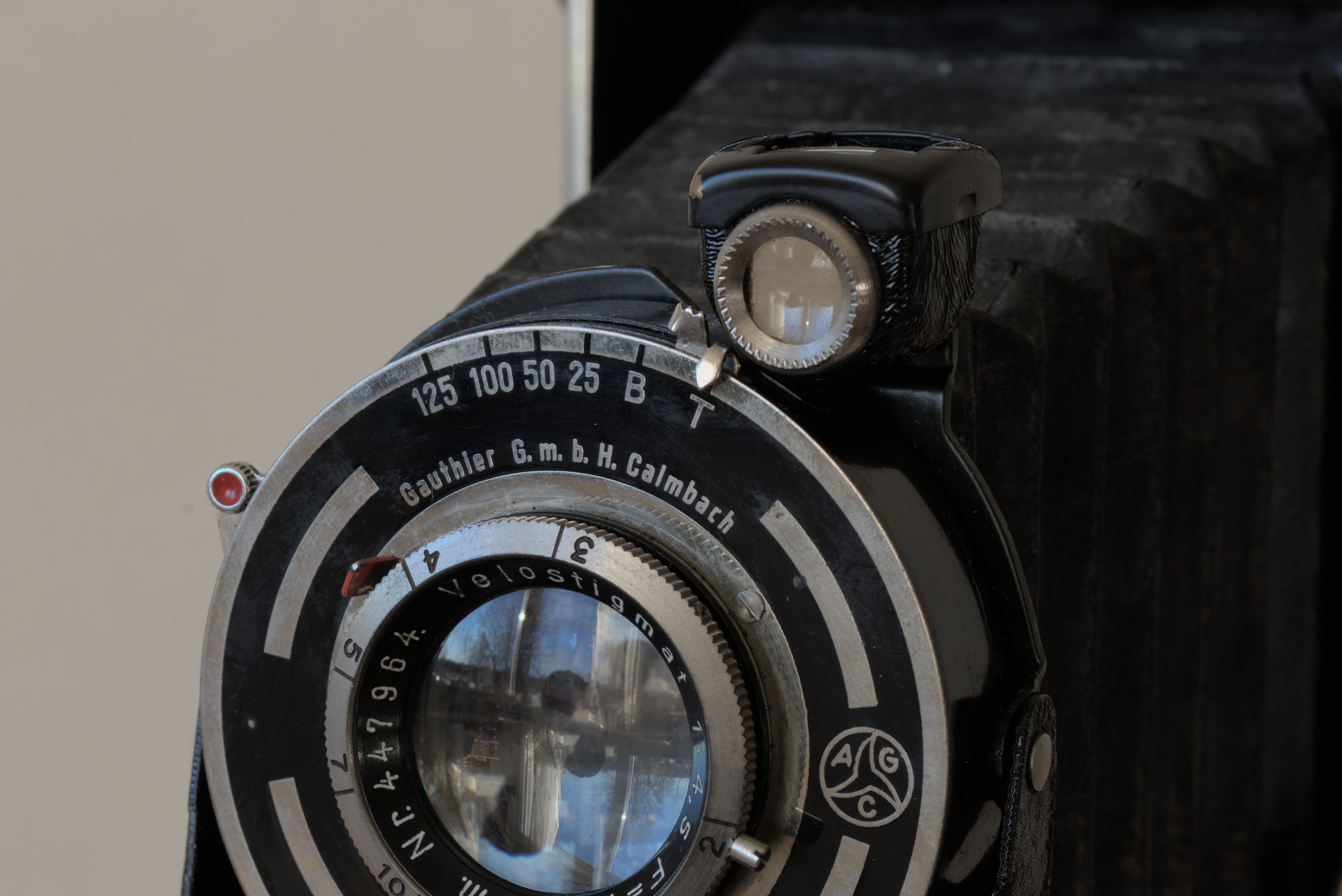
It is a Folding Camera designed for “full” medium format 6 x 9 cm. The lens seems to have no coating and uncoated lenses are pretty rare in post-war folding cameras. This model was also called Hapo 5 , when it was sold by Hans Porst. The lens is Velostigmat 1:4.5 F=10.5 cm and the shutter is Pronto (Gauthier G.m.b.H Calmbach) B, T, 1/25 – 1/125, Nr. 447964.
Franka Kamerawerk was a manufacturer of camera equipment situated in Bayreuth, Germany. It was founded by Franz Vyskocil in 1909. The company was known under several names during its life: Vysko-Fabrik Franz Vyskocil; Weigand & Vyskocil; Frankonia-Kamerawerk; Hogaschwerk; Franka-Kamerawerk.
The leather case has name letters on it G.Z They mean Gustav Zeno (08.02.1874 – …) or Gottfried Zeno (14.03.1898 – 08.03.1955), his son.
1949, Vastseliina, Kütioru lähedal.
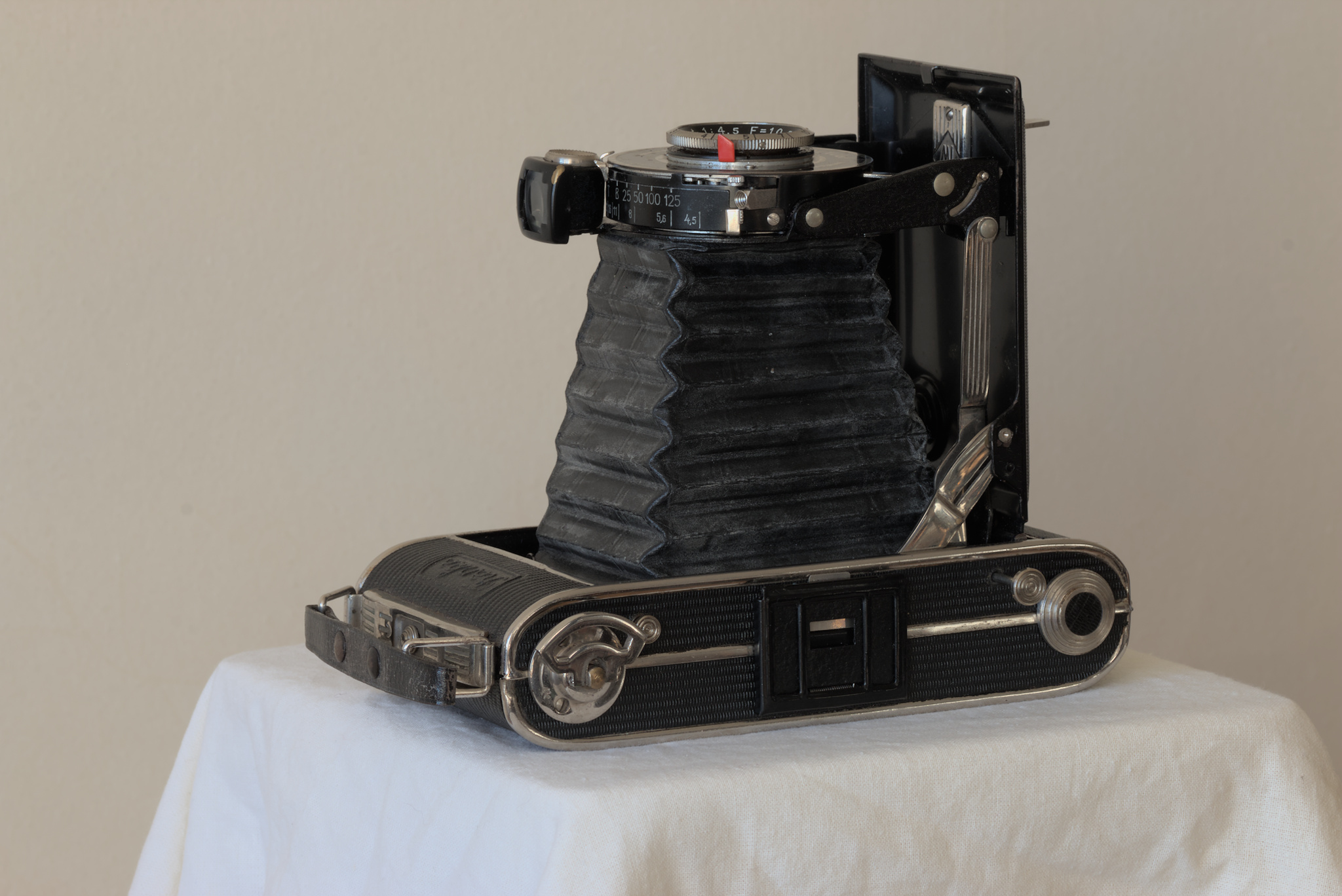
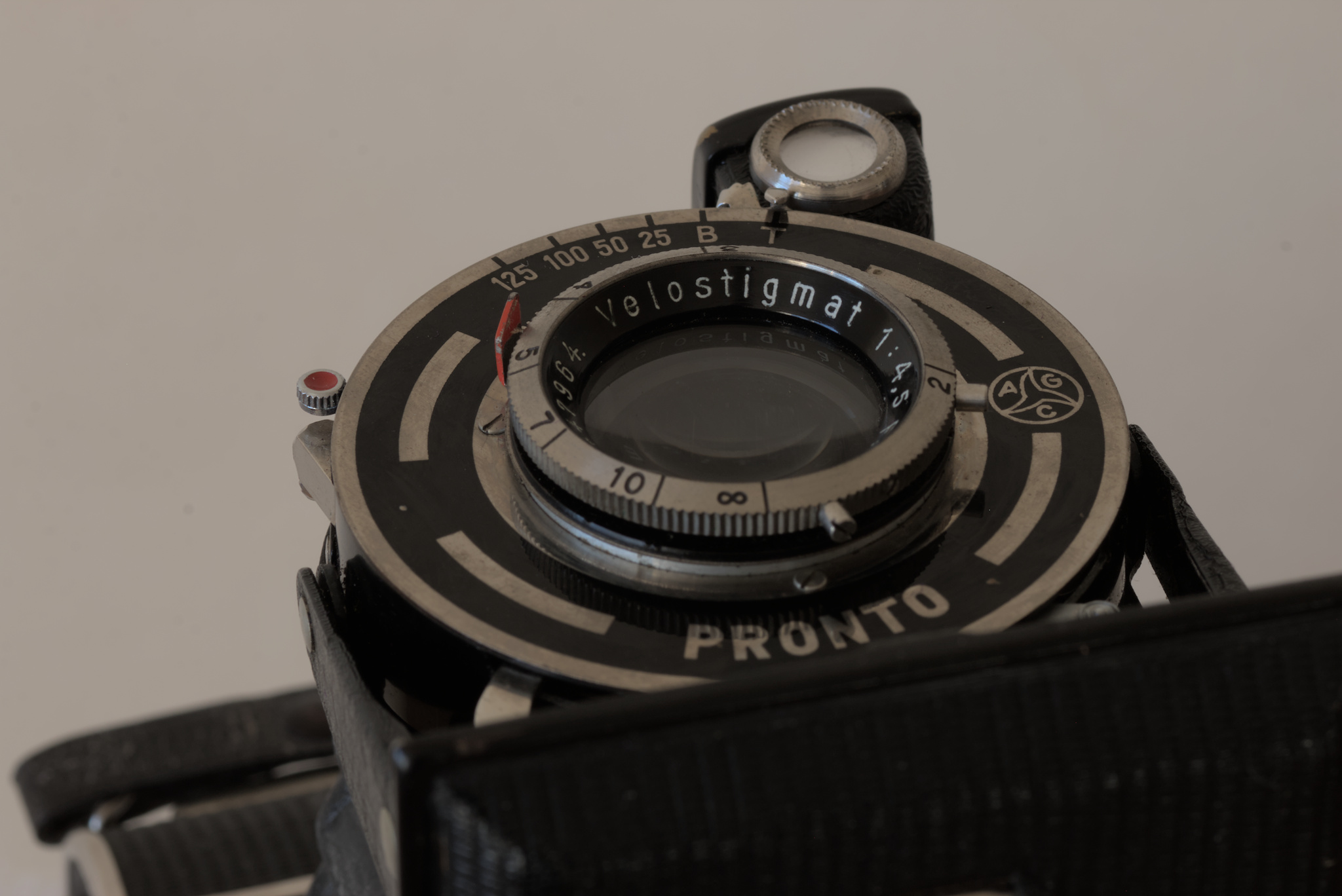
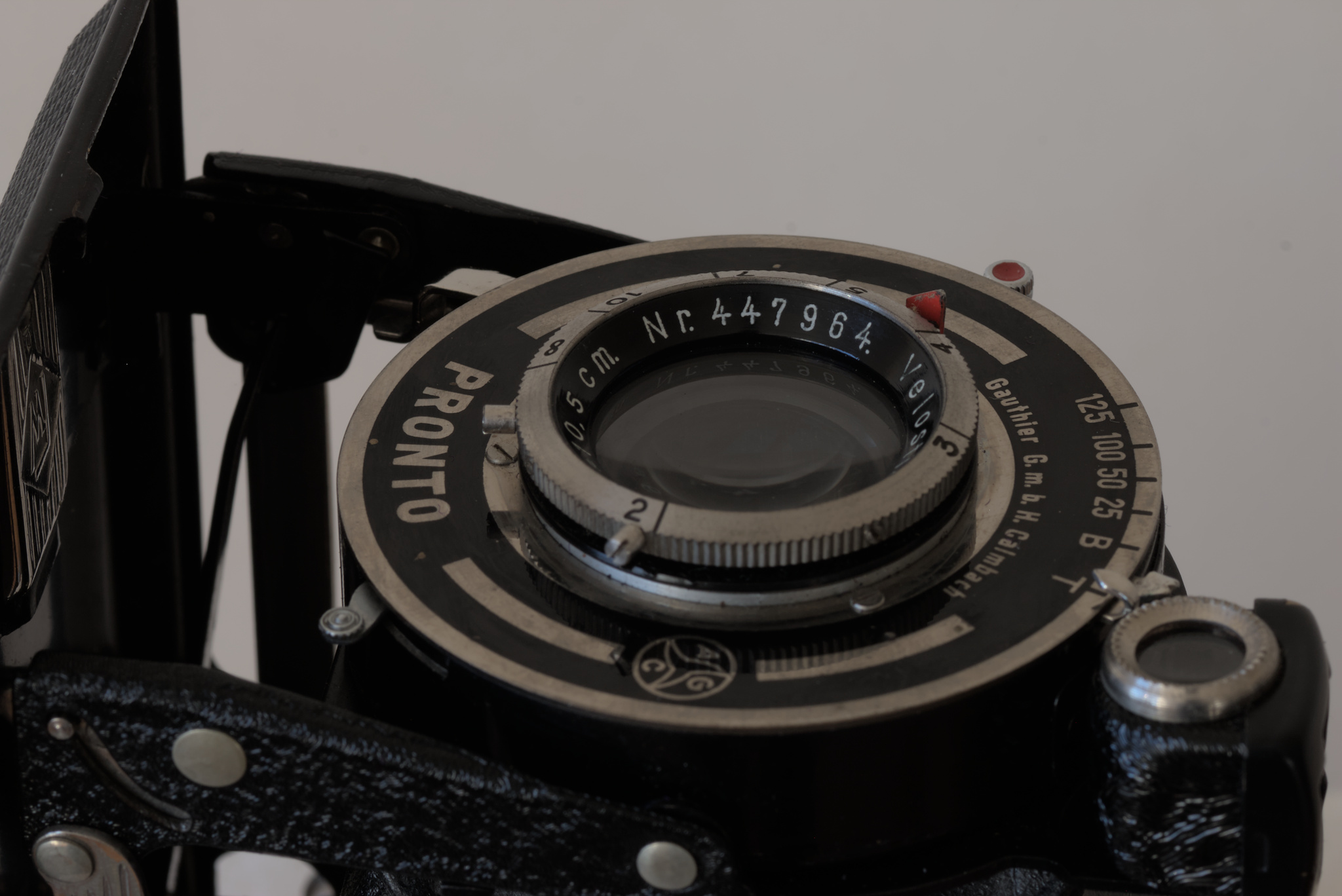
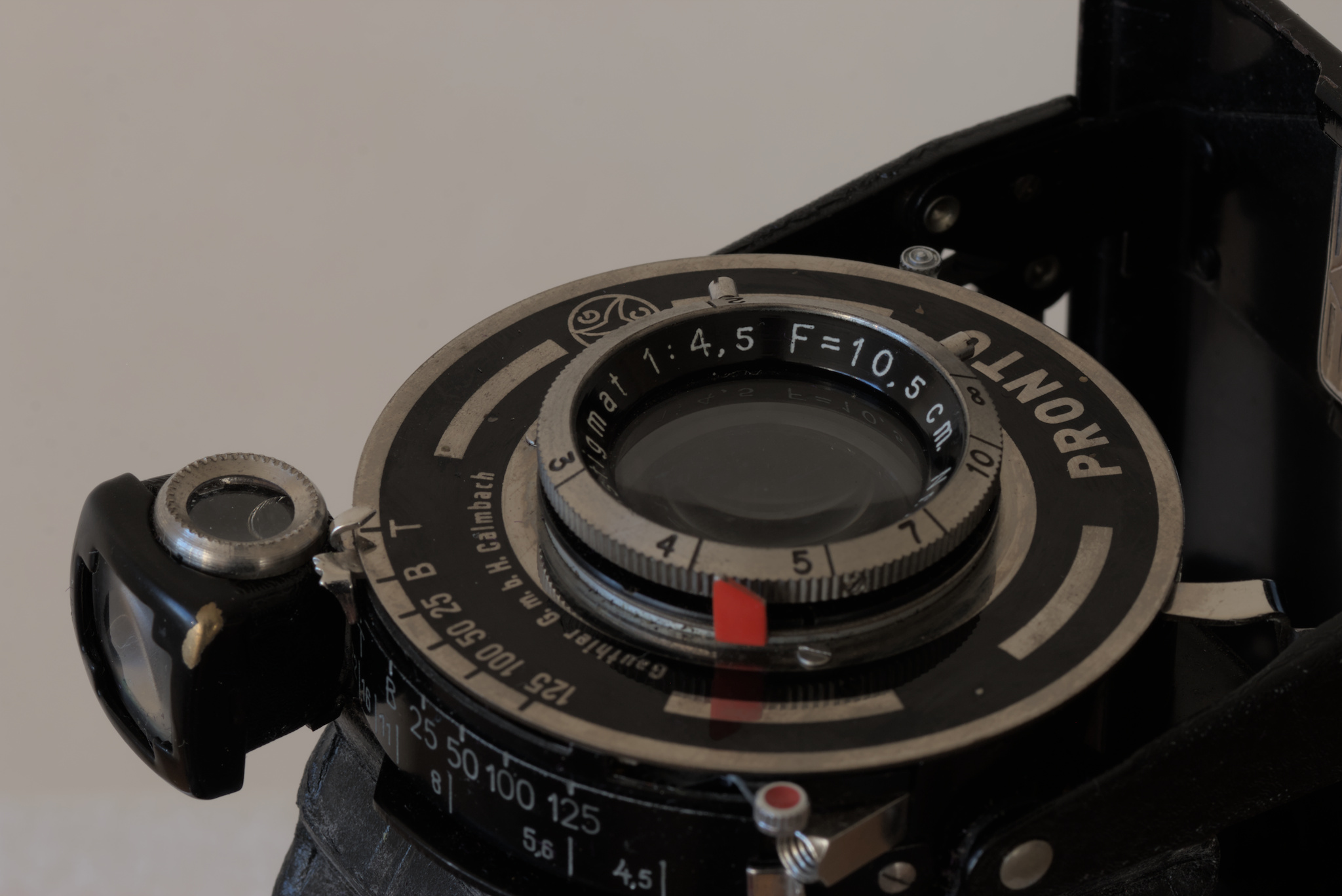
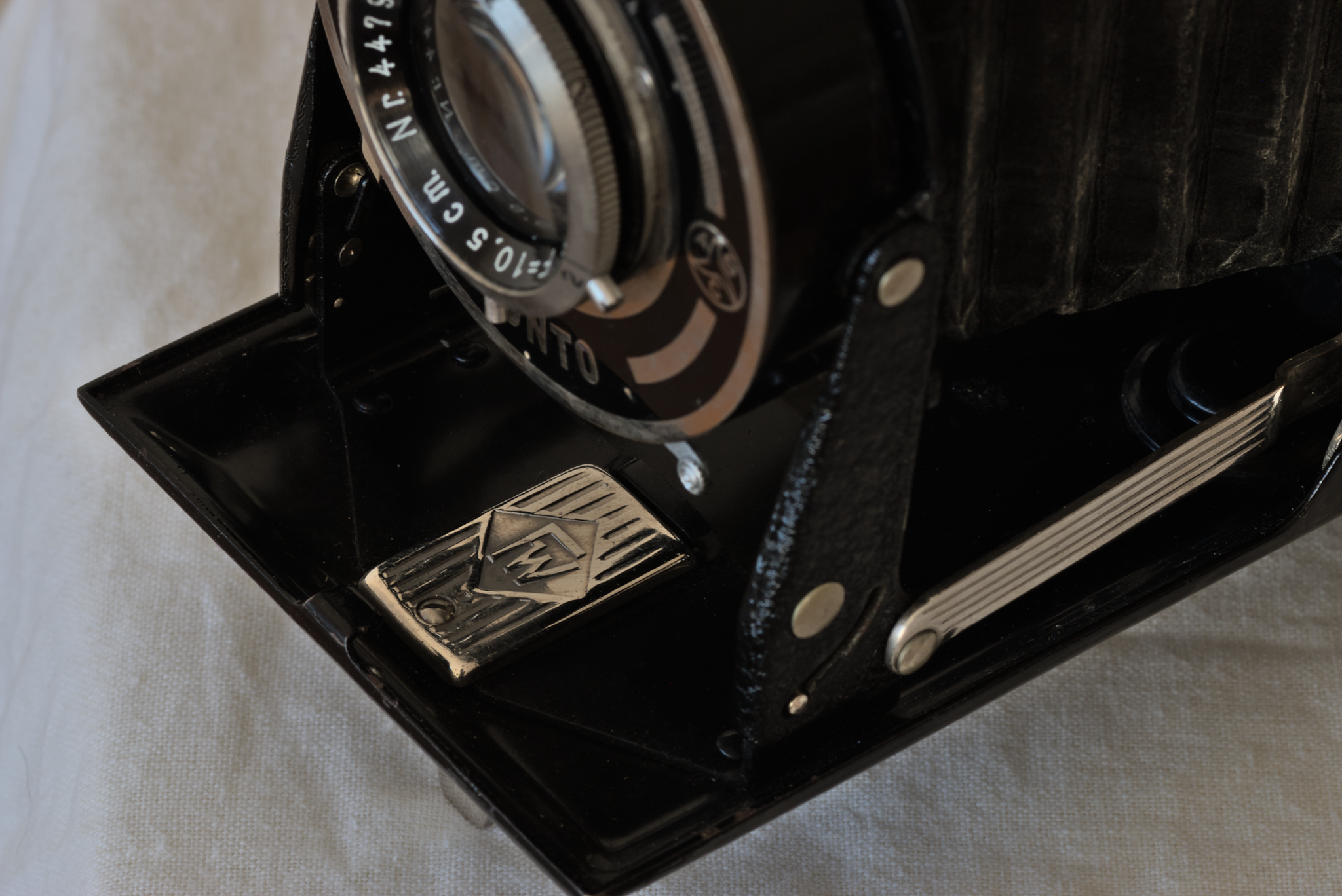
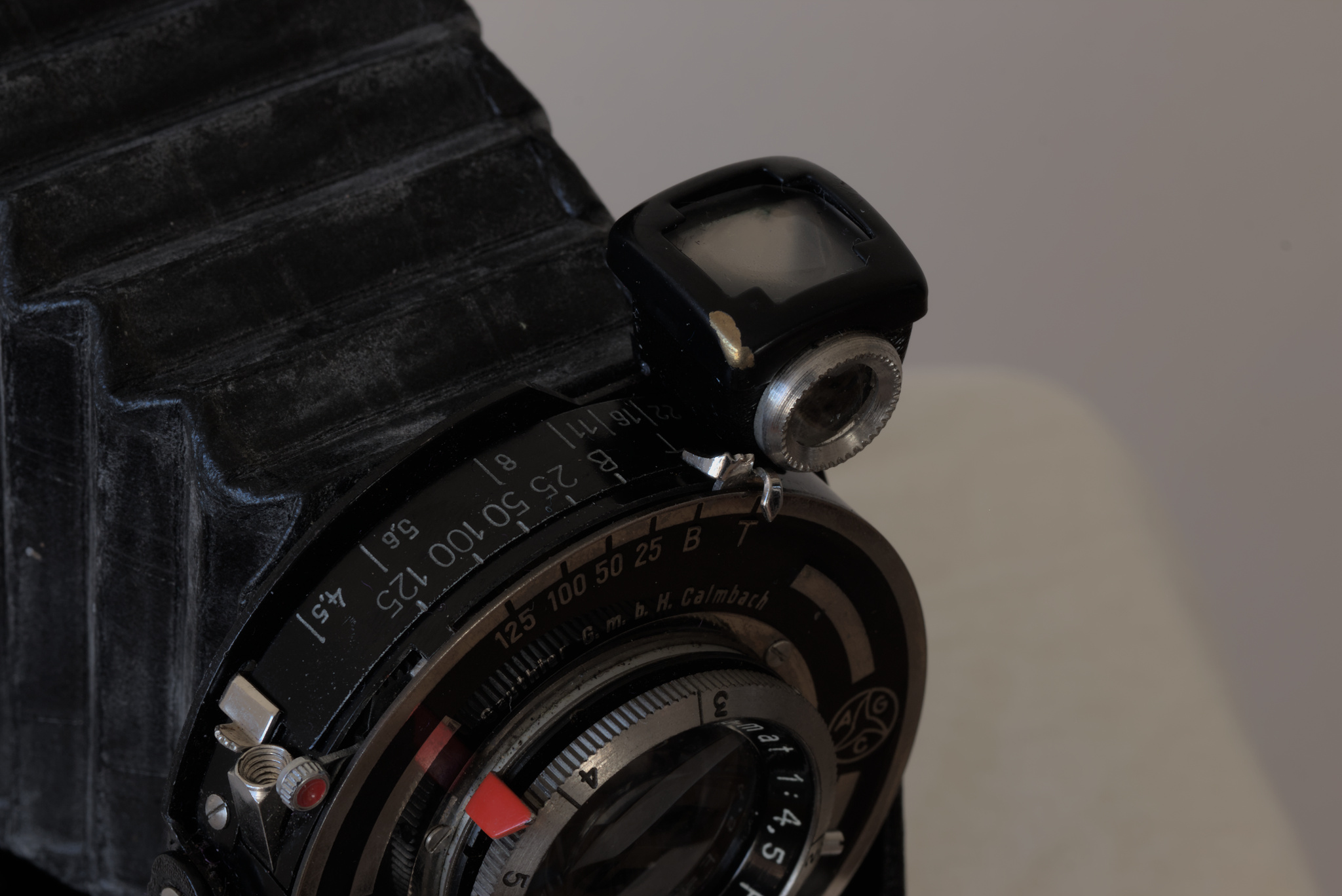
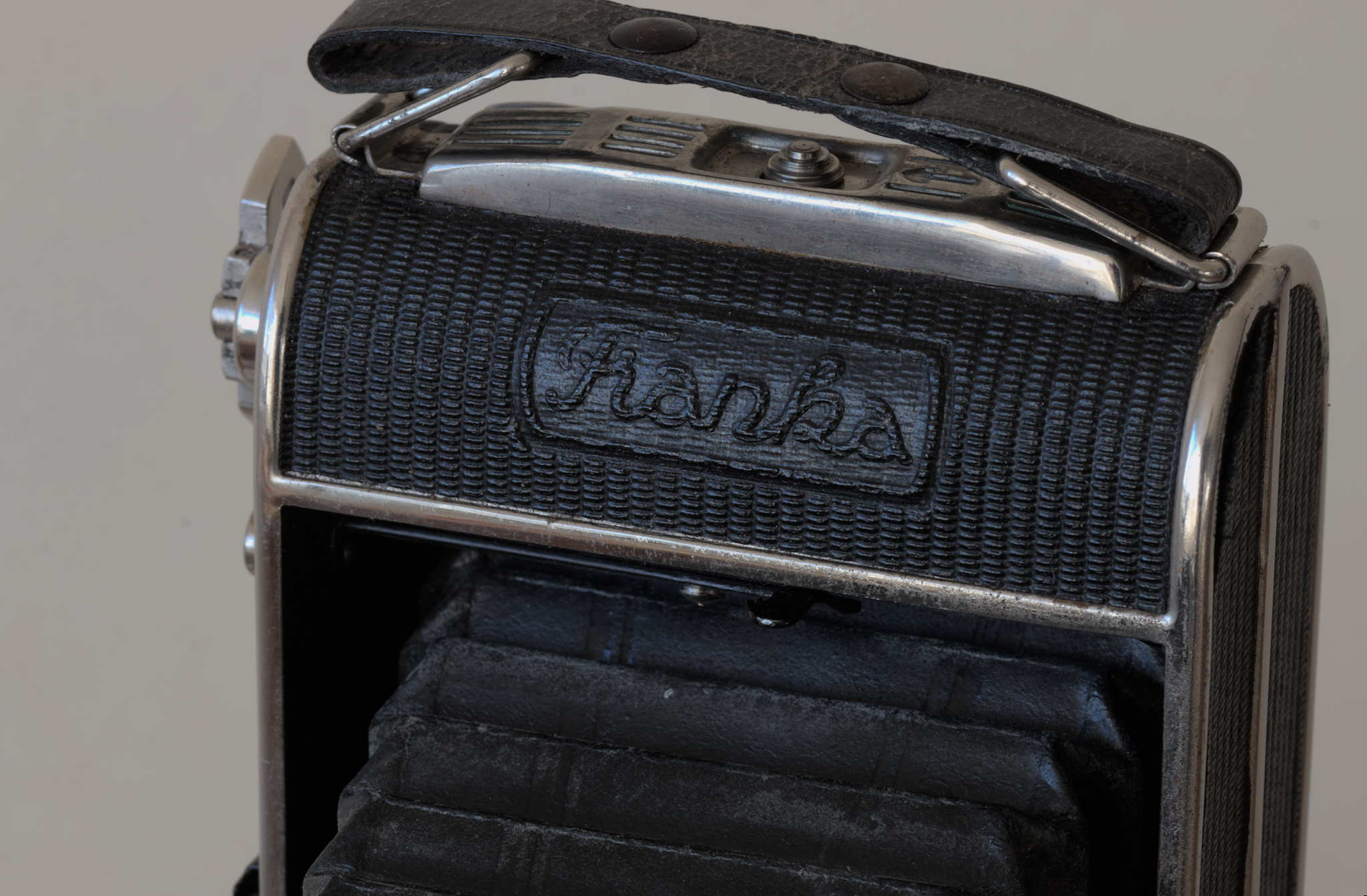
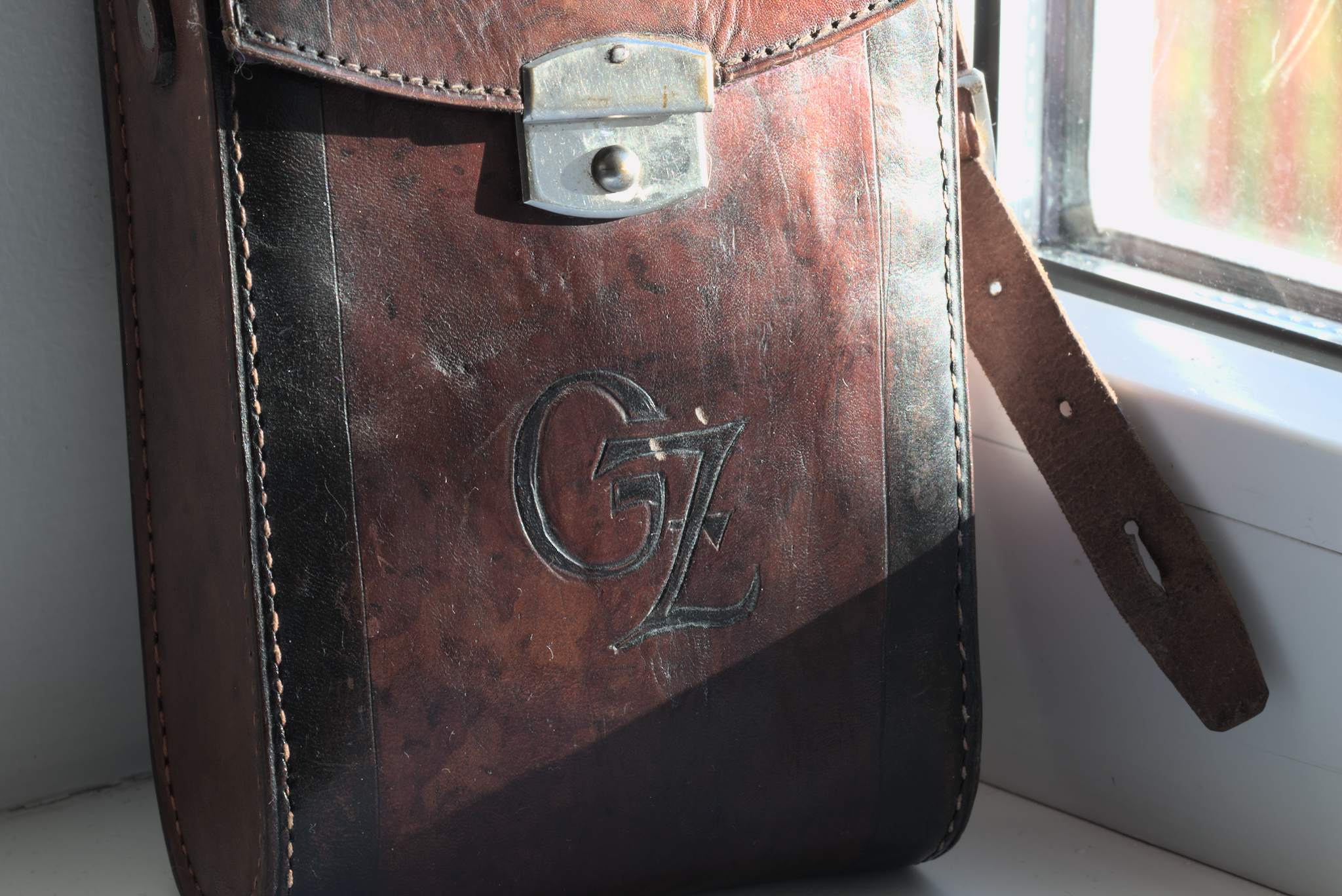
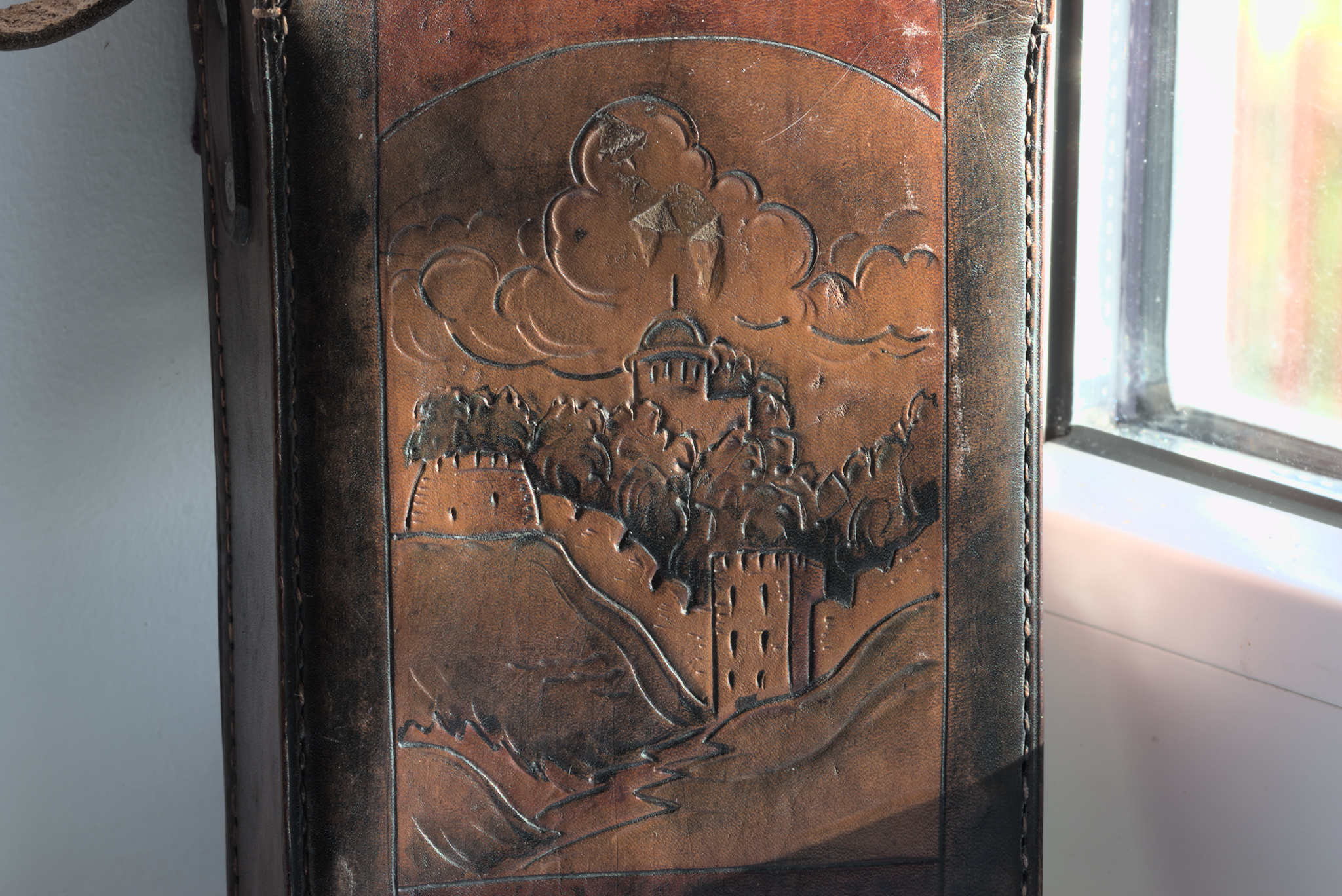
The leather picture depicts the Pskov-Caves Monastery (Petseri Klooster).
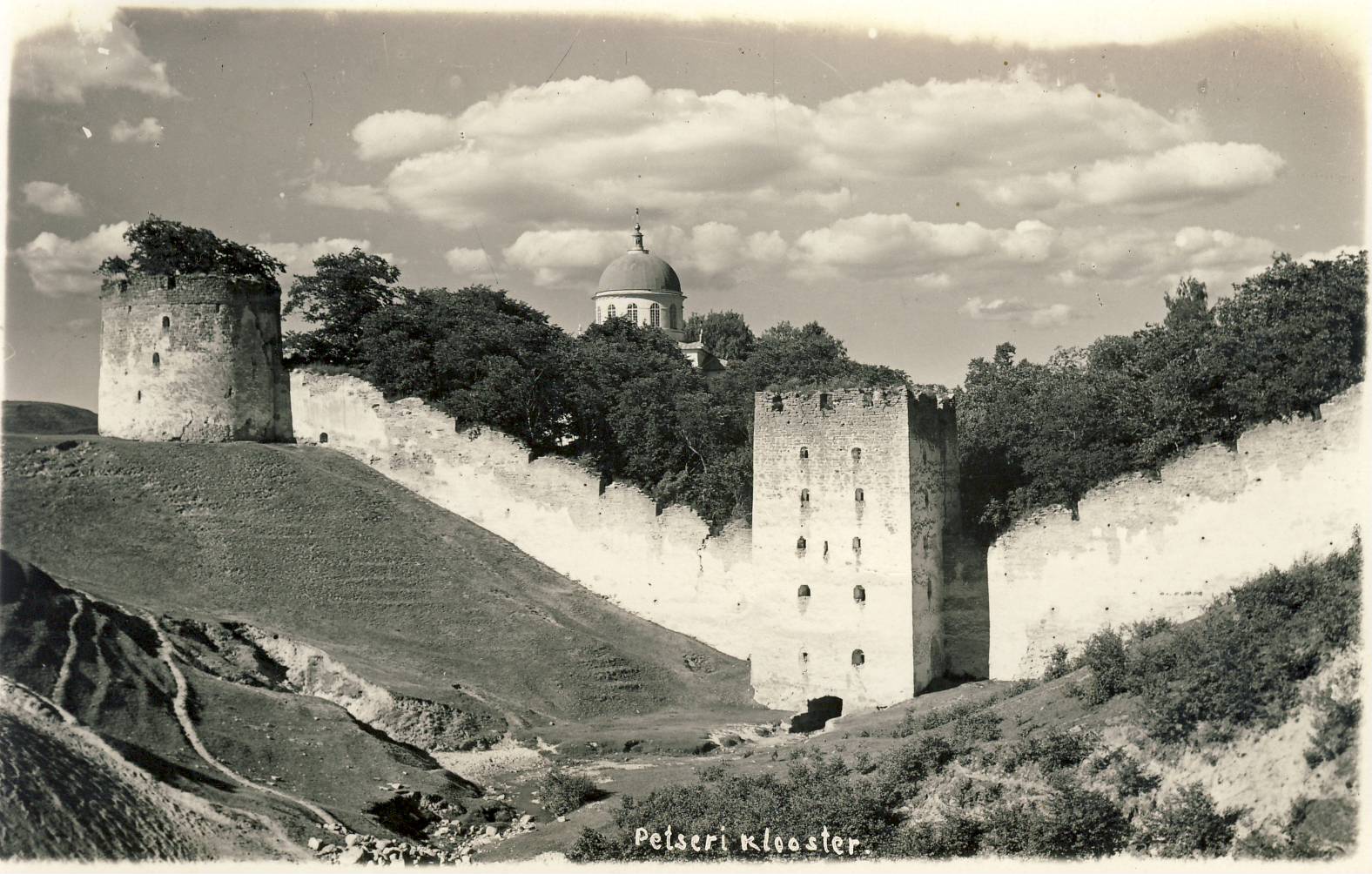
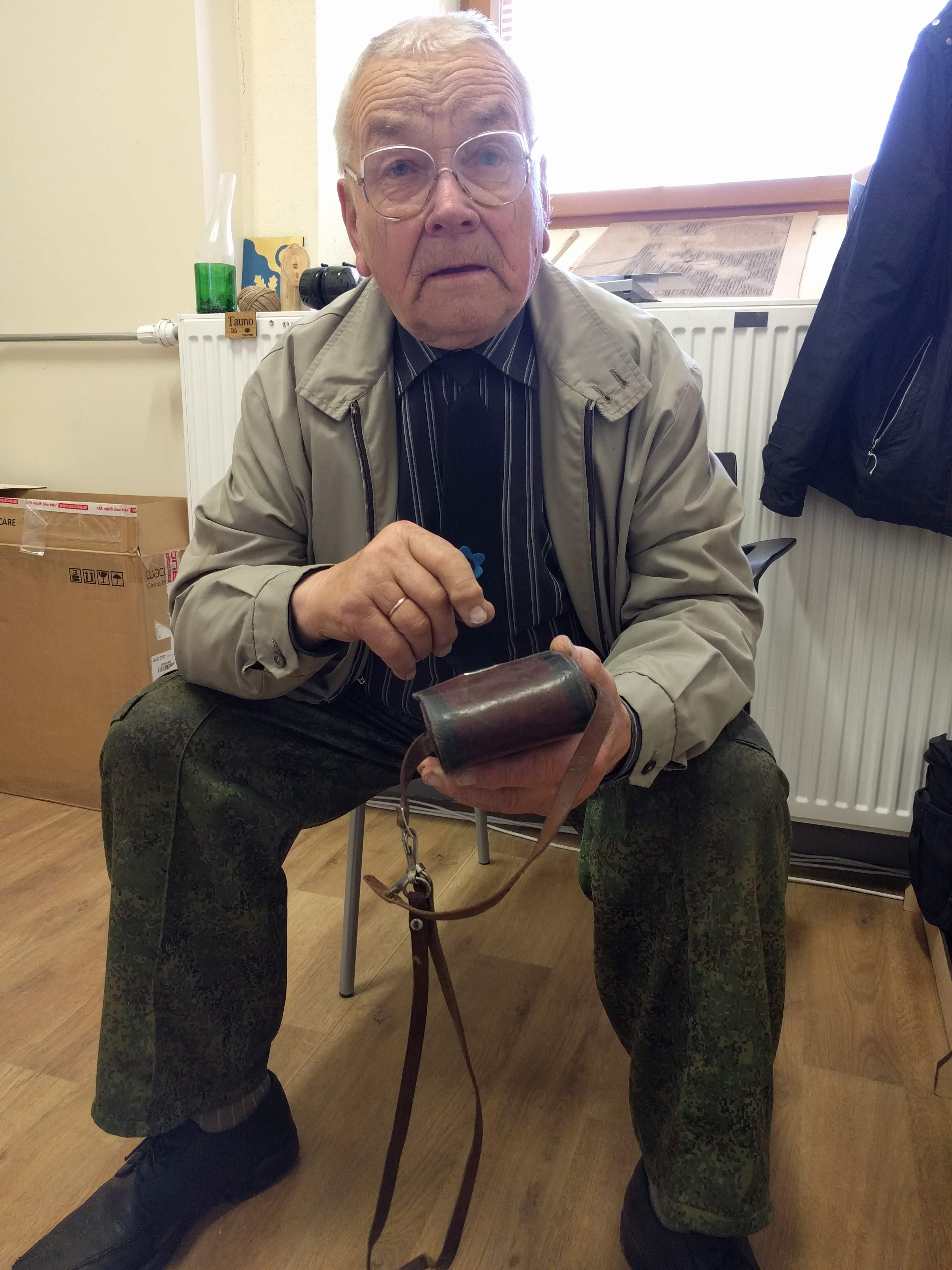
I got it from Madis Järvpõld (b. 1936) in 2020.
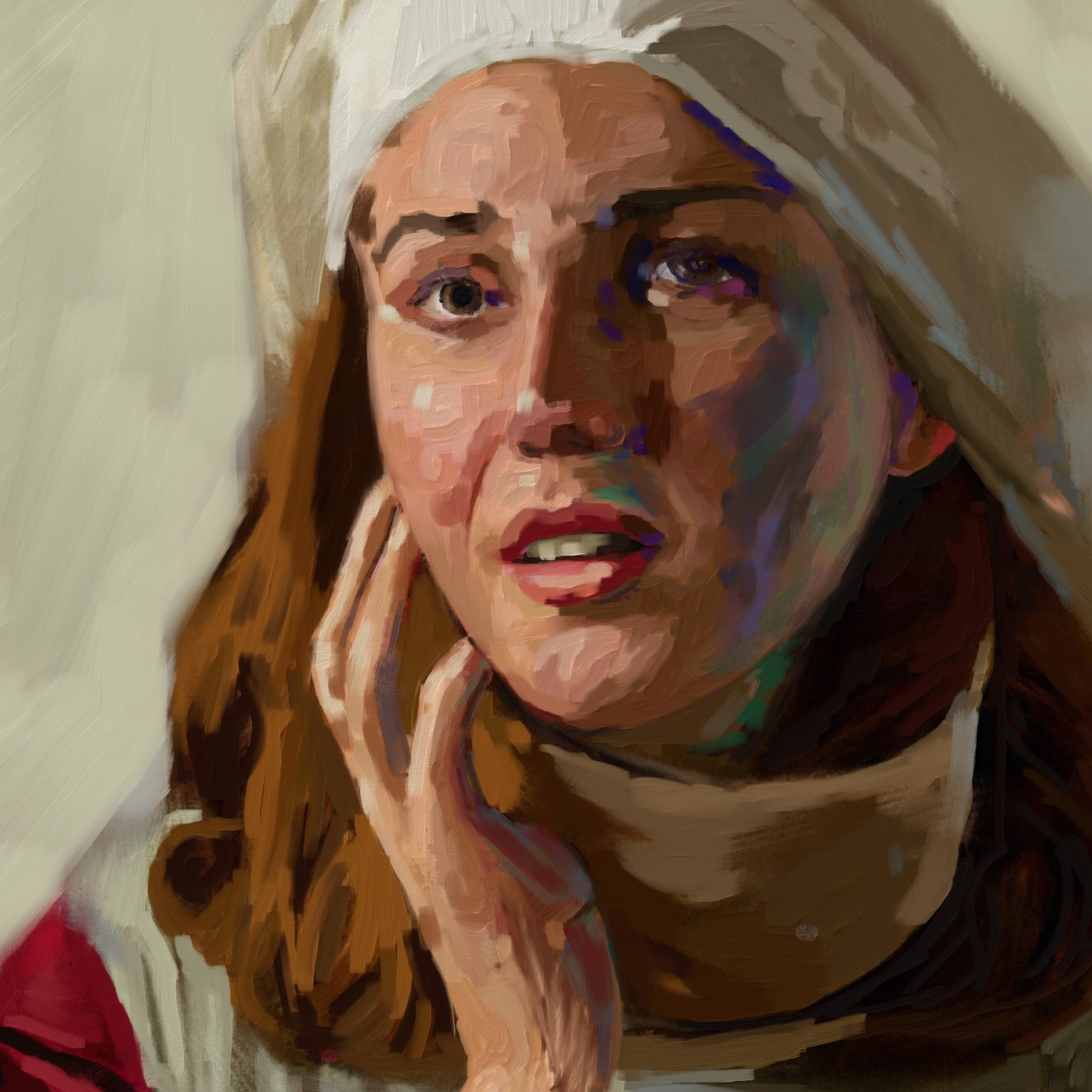
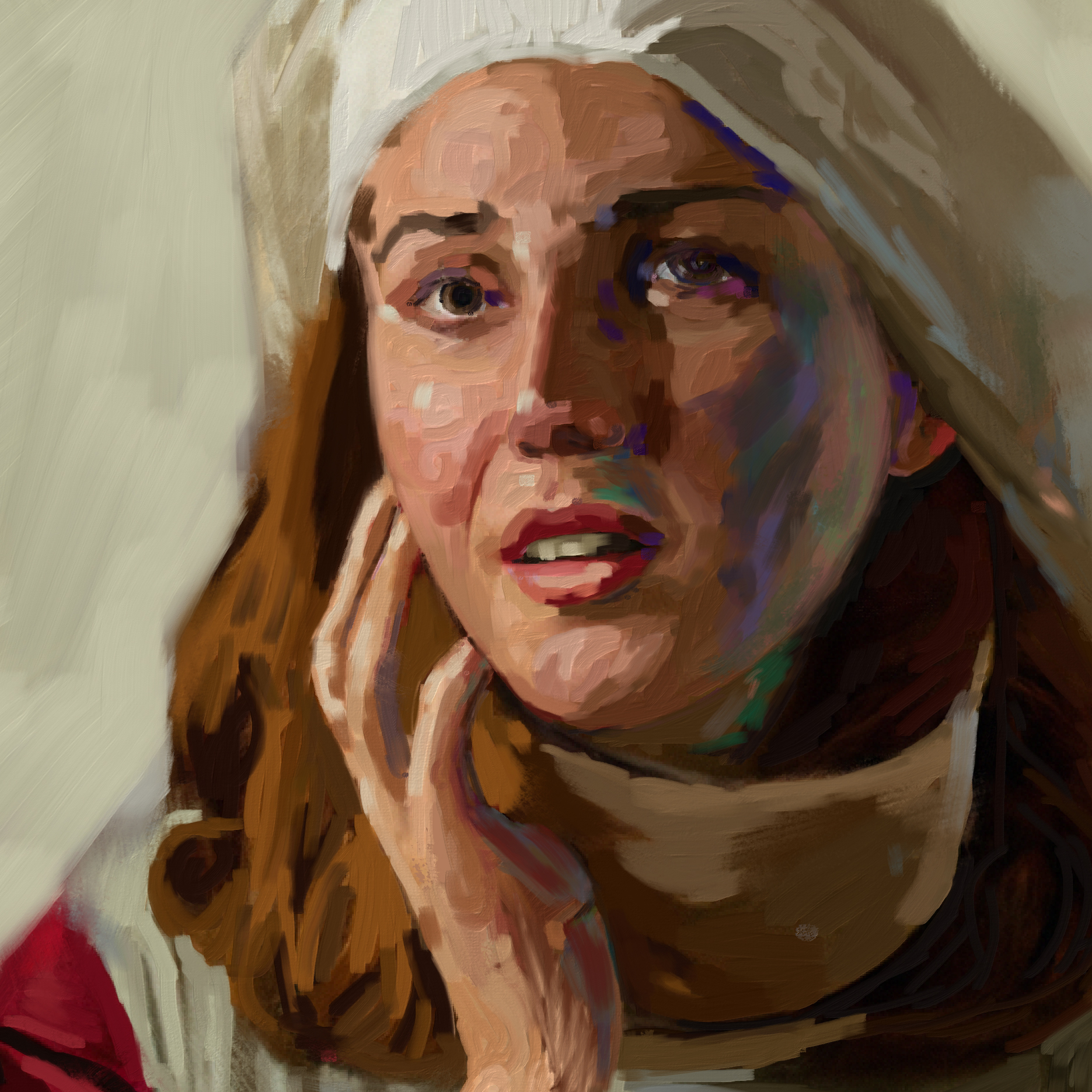
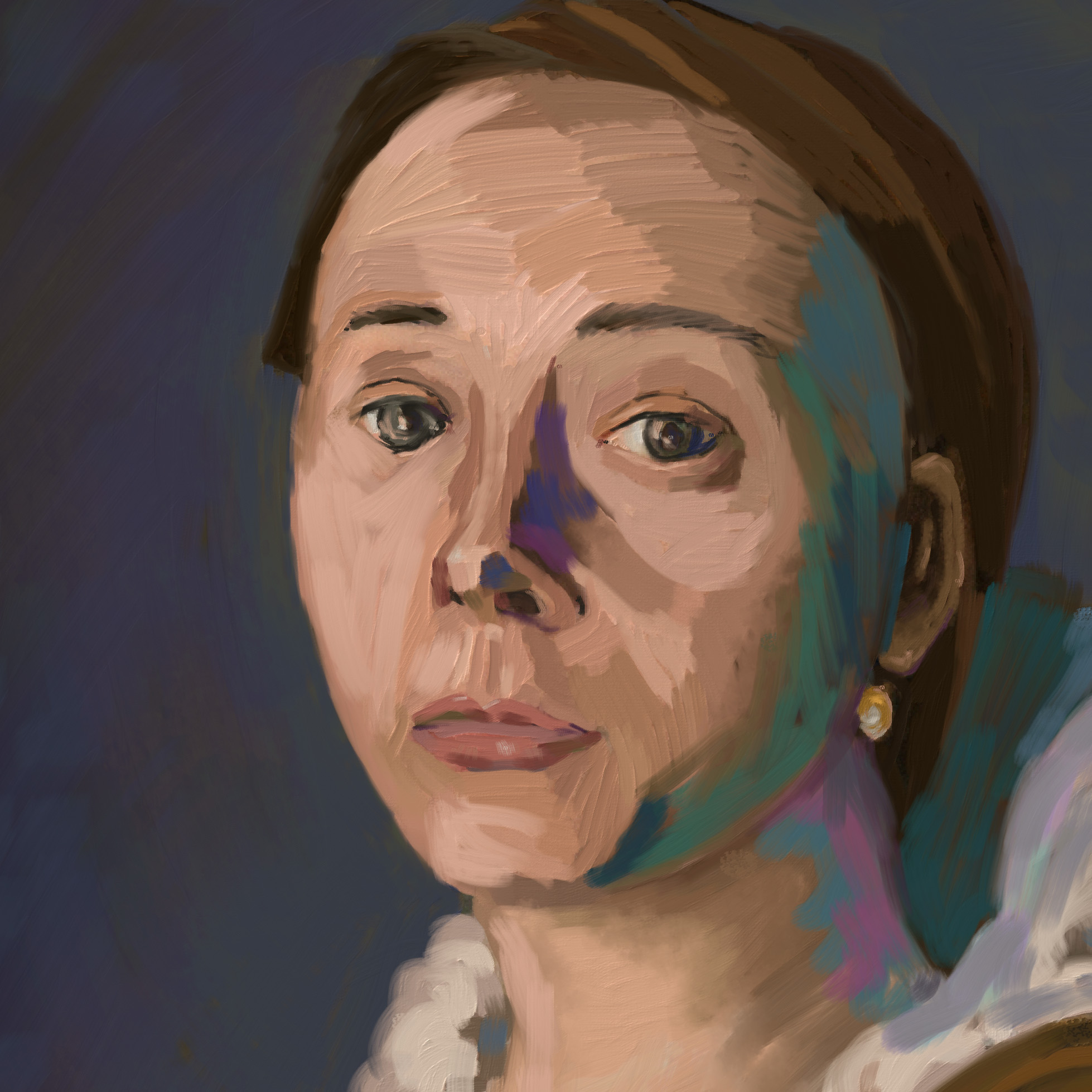
Two digital painting experiments using AI (Dall-e) generated images. And then overpainted by me. The phrase I used to generate images: “A Renaissance painted portrait of a woman who doesn’t know who she is”.
Images generated by DALL-E:
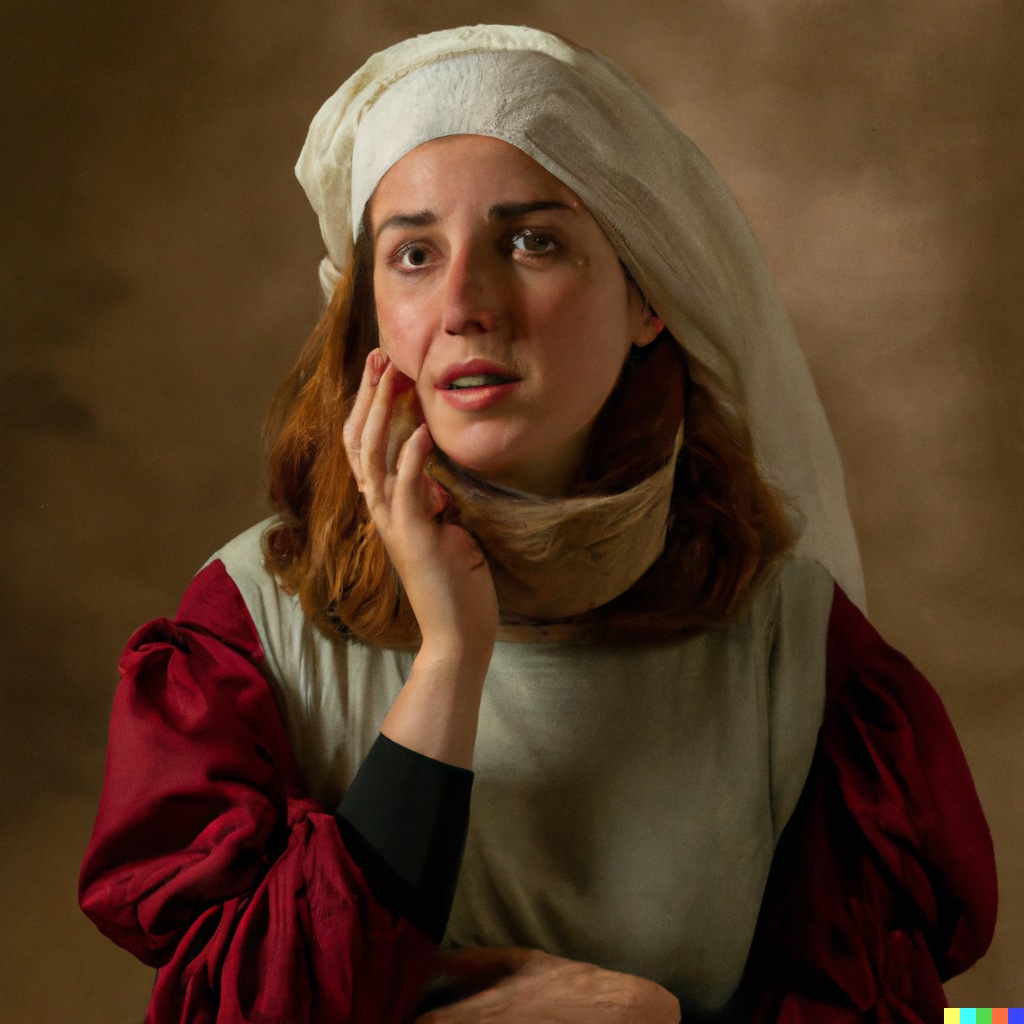
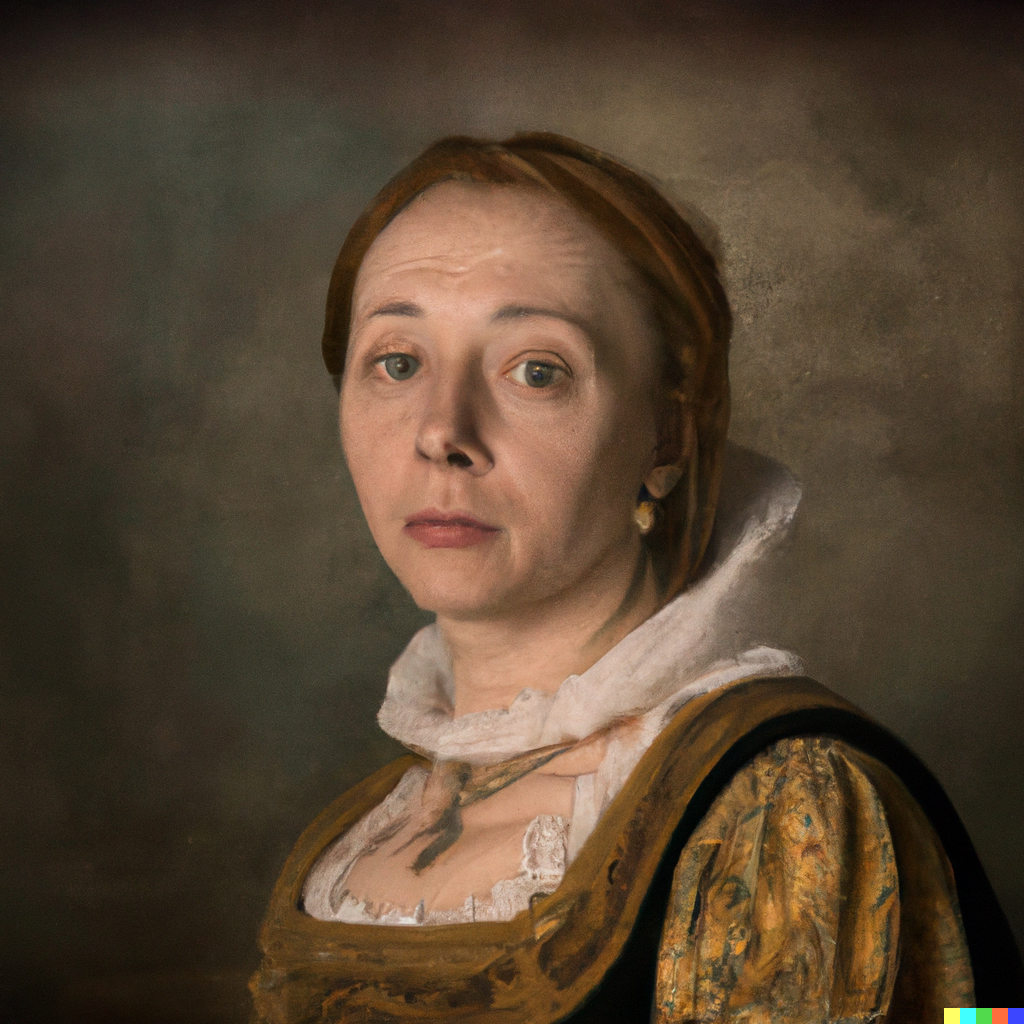
My overpainted versions:
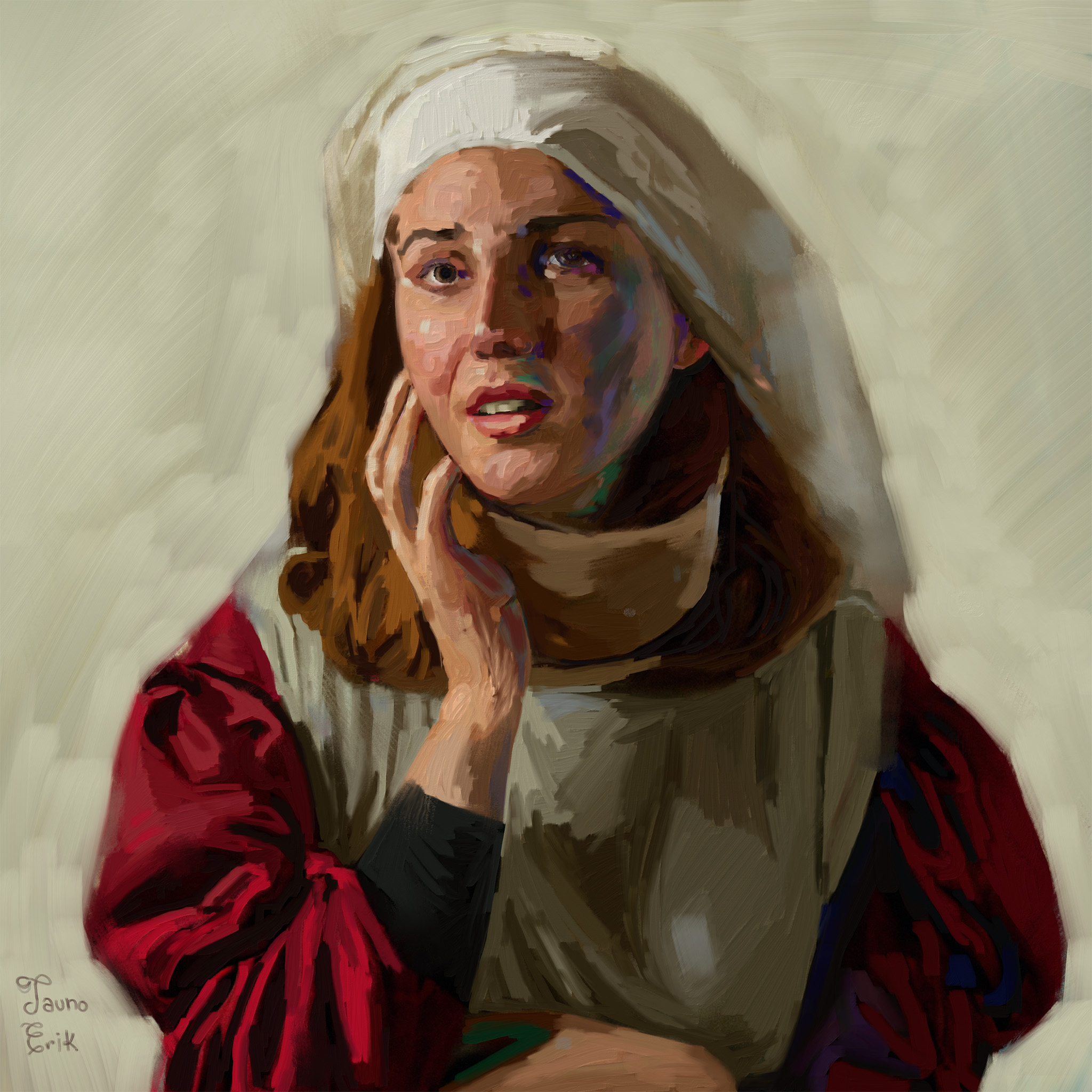
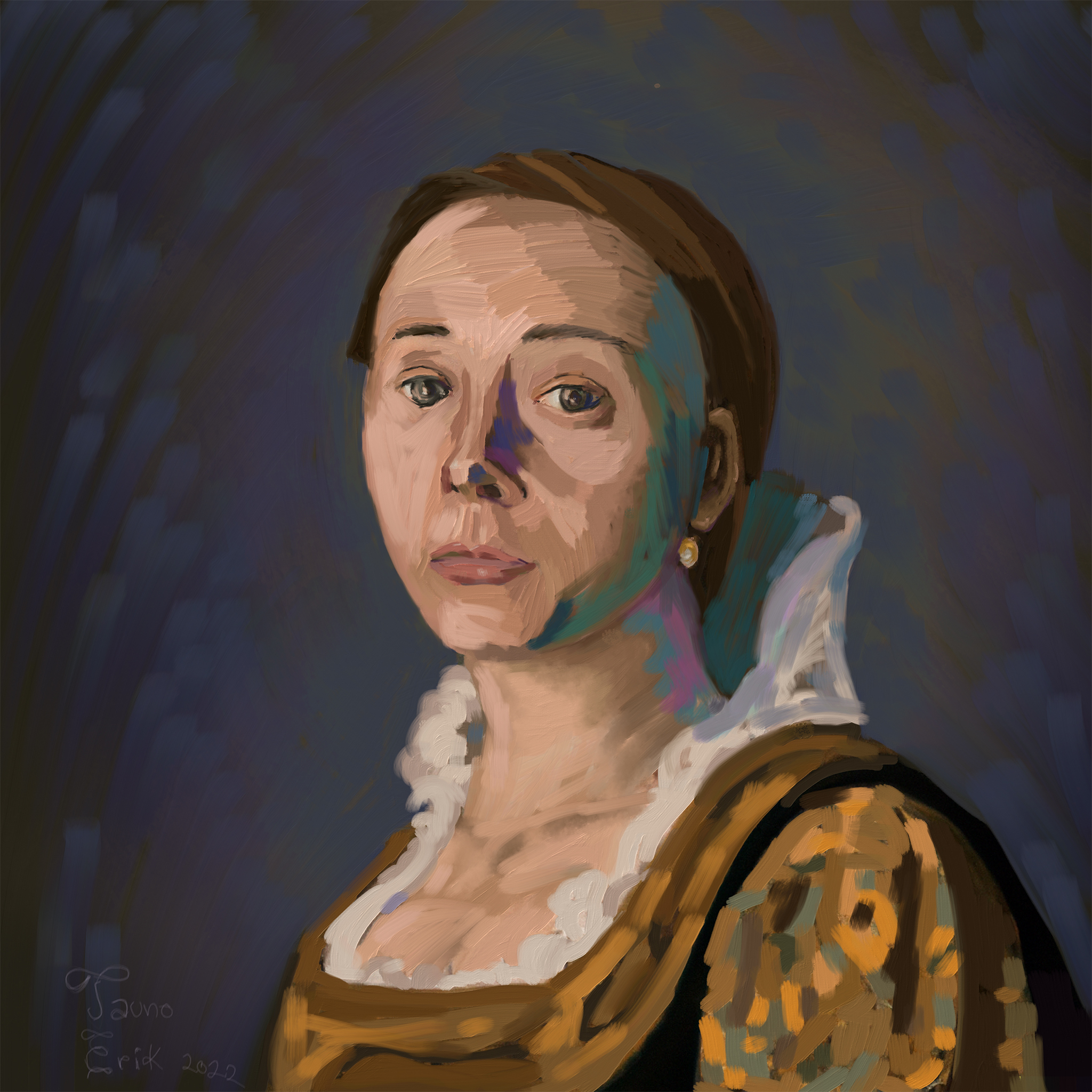
Details:
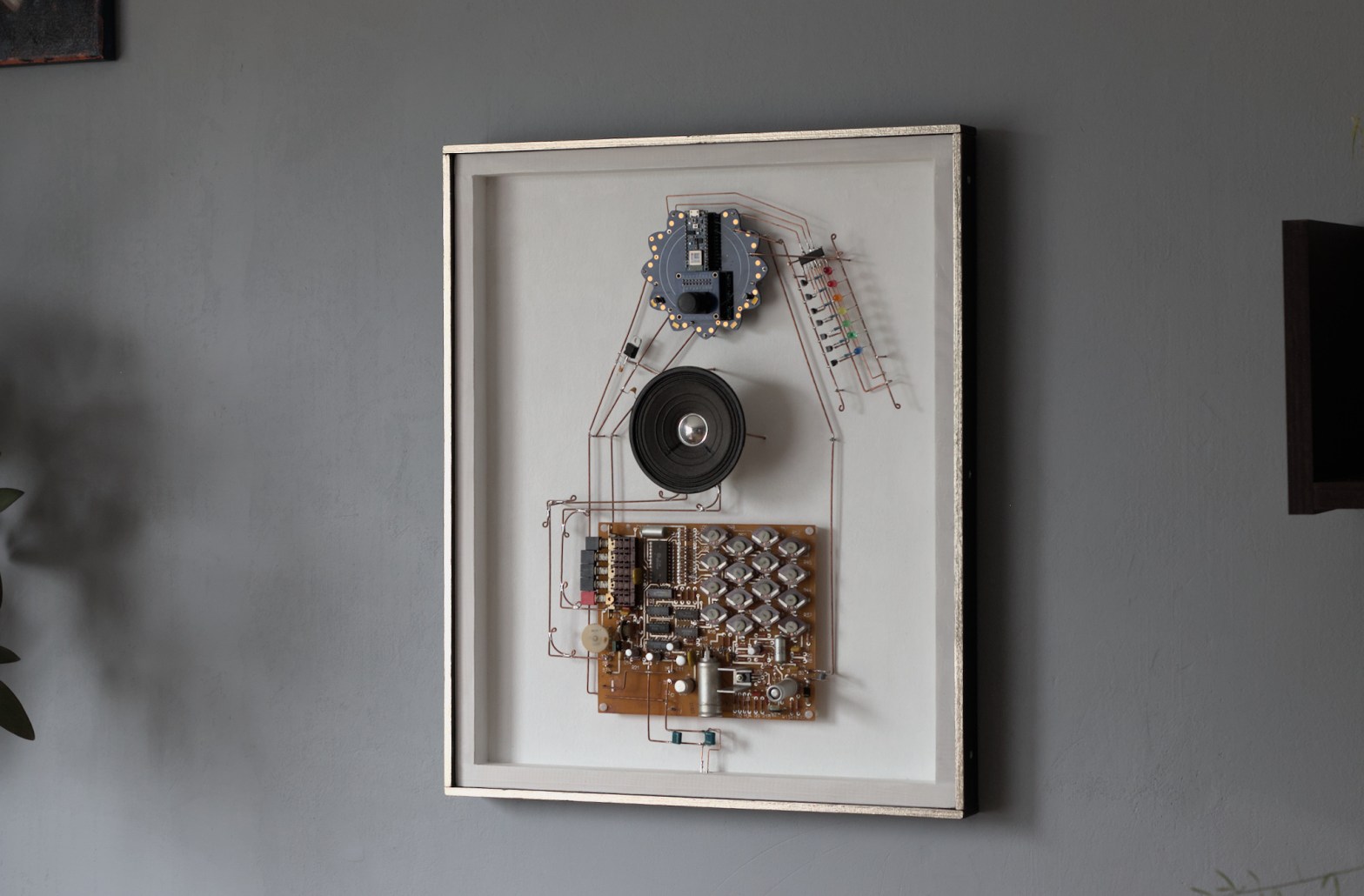
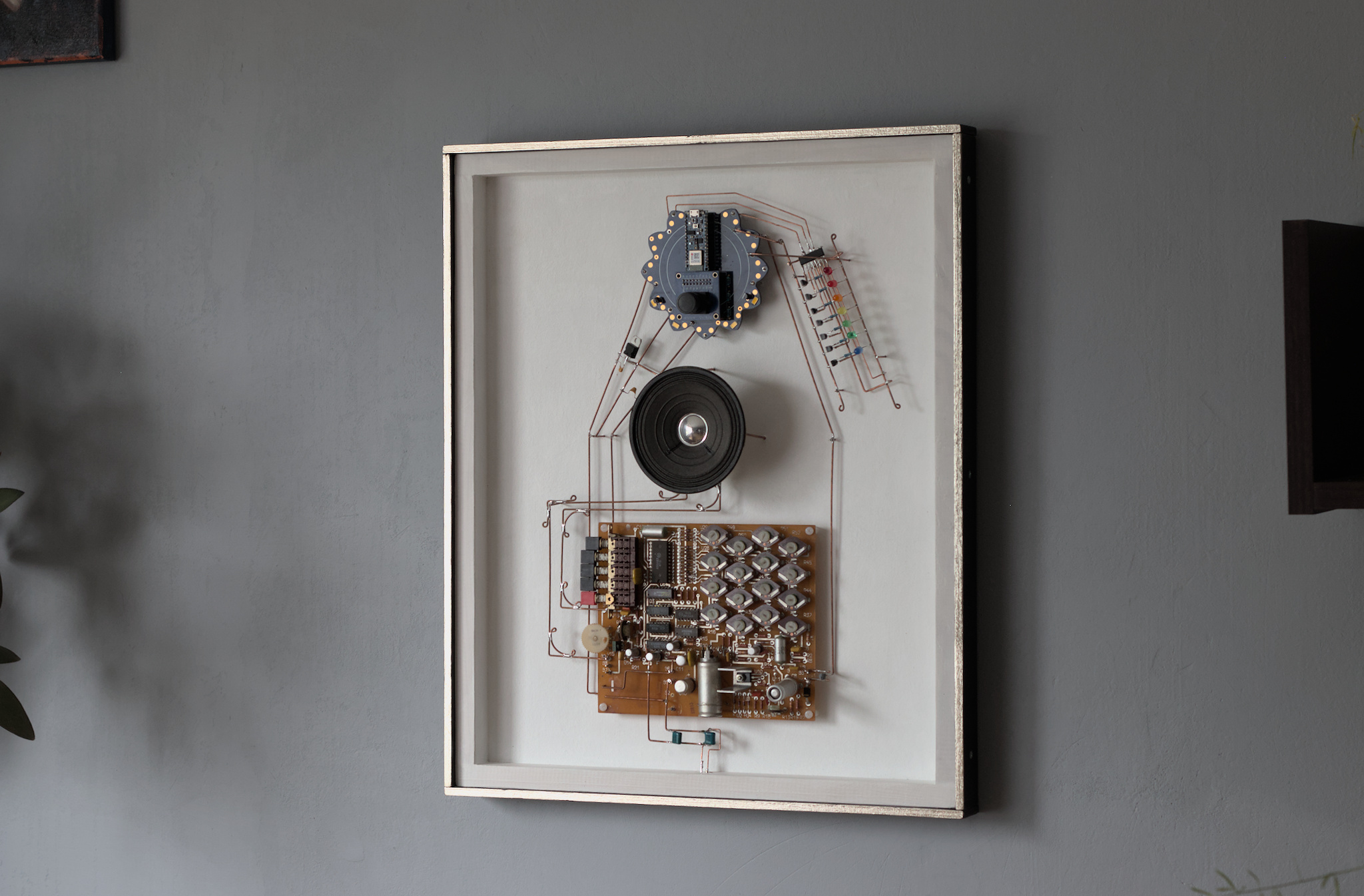
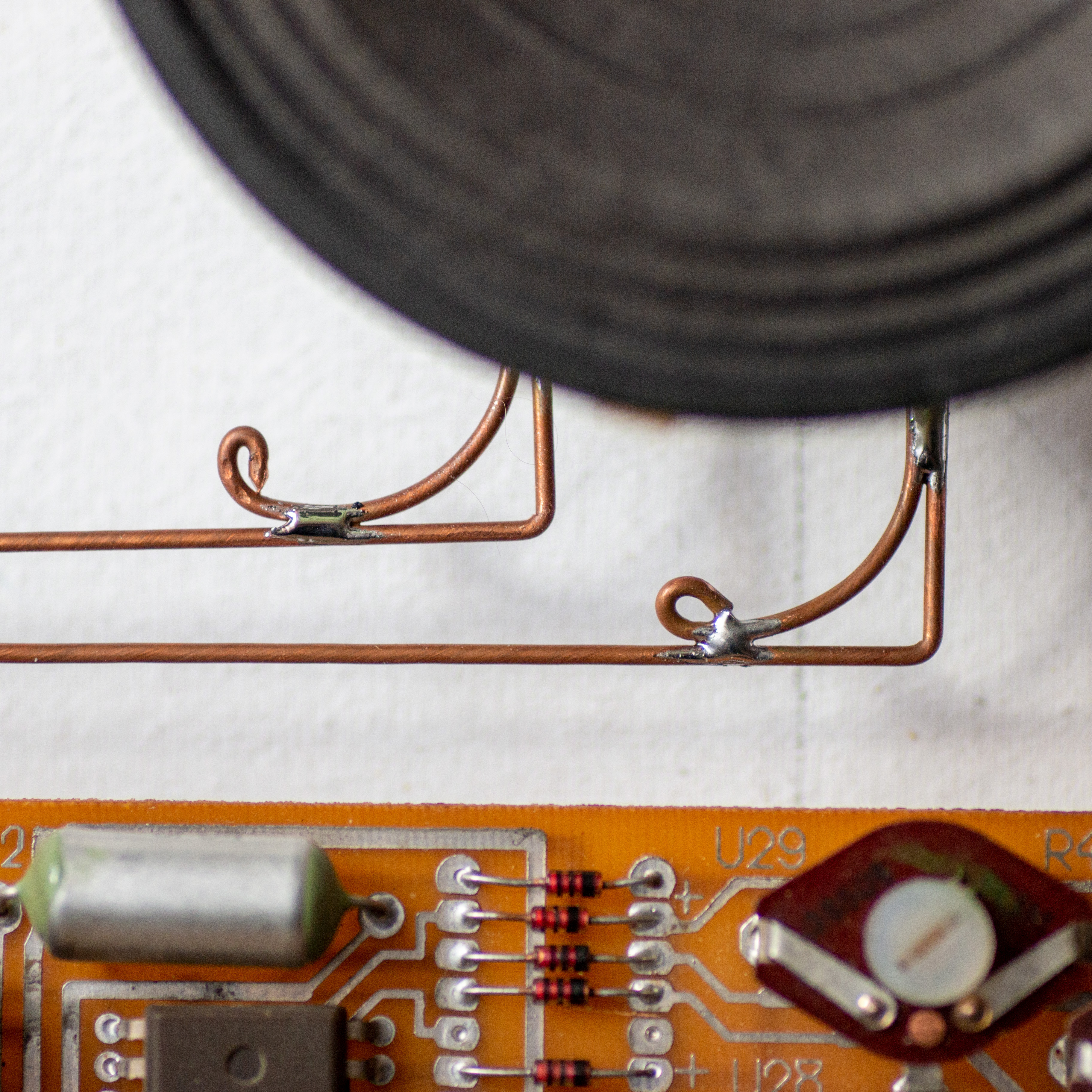
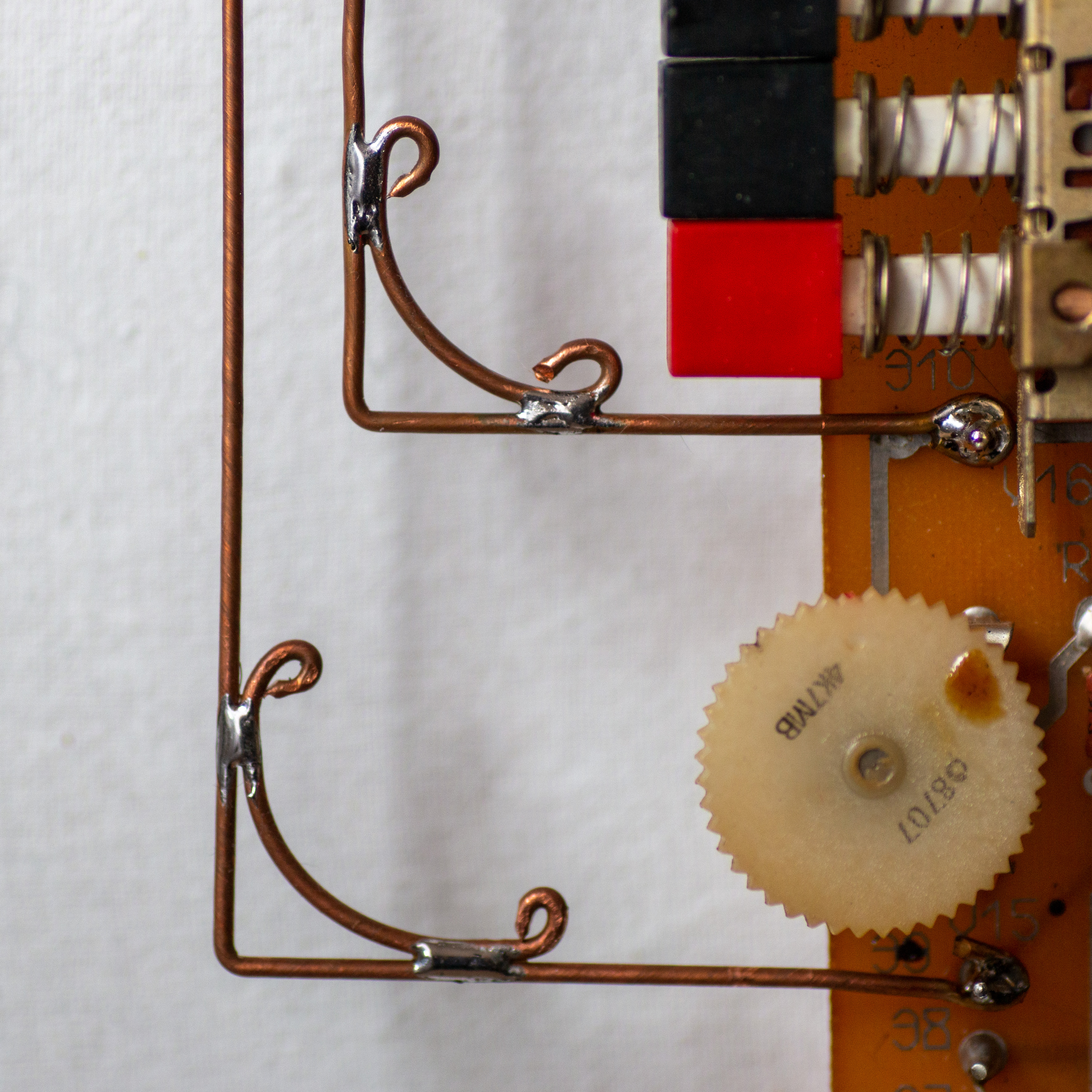
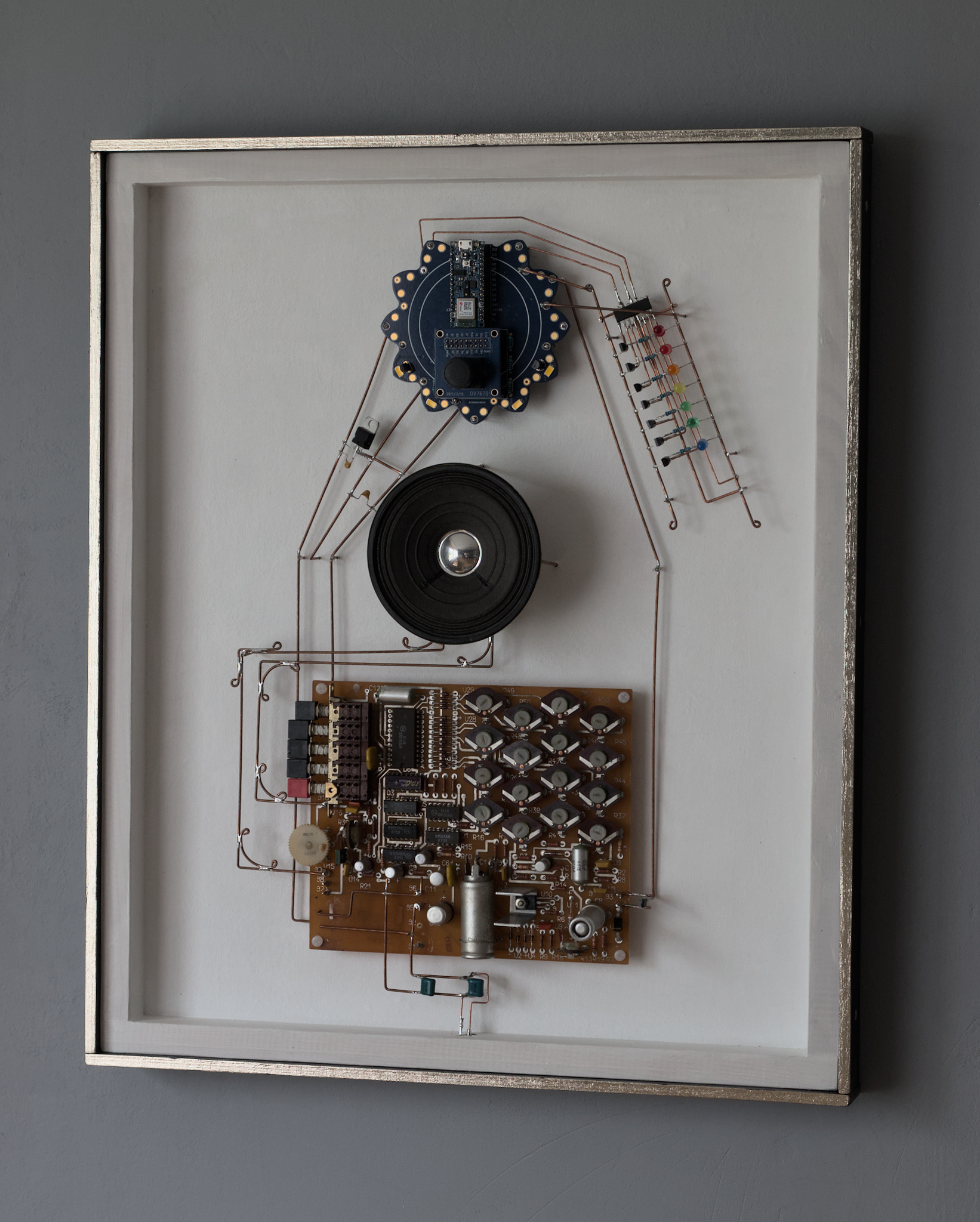
This is my electronic artwork inspired by Peter Vogel’s and Walter Giers works. And I am pretty happy with how it came out. It looks cool and it has artificial intelligence (to a limited extent). It recognizes when you are taking a picture of it with a mobile phone. And it uses only a microcontroller to do it. All thank to TinyML.
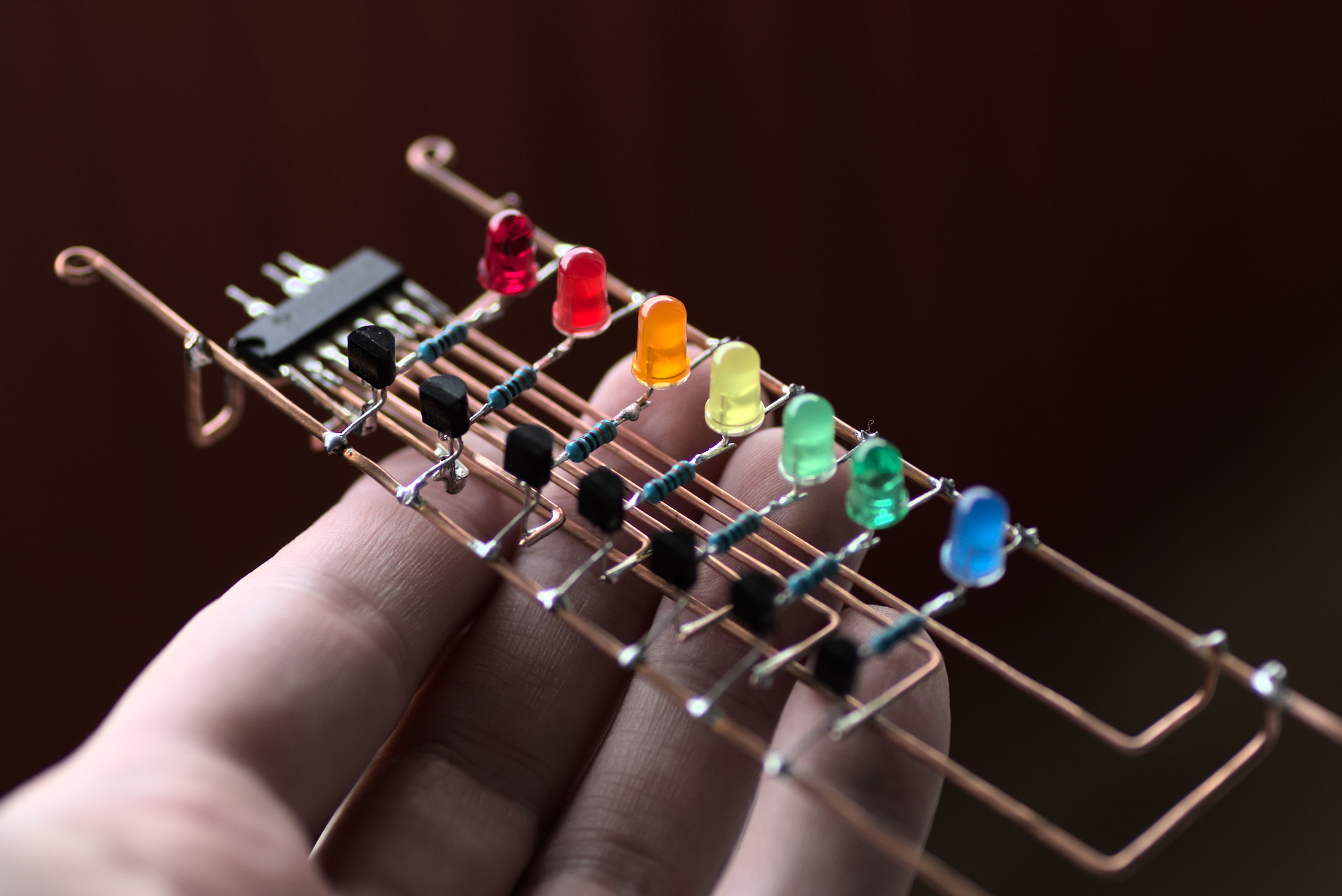
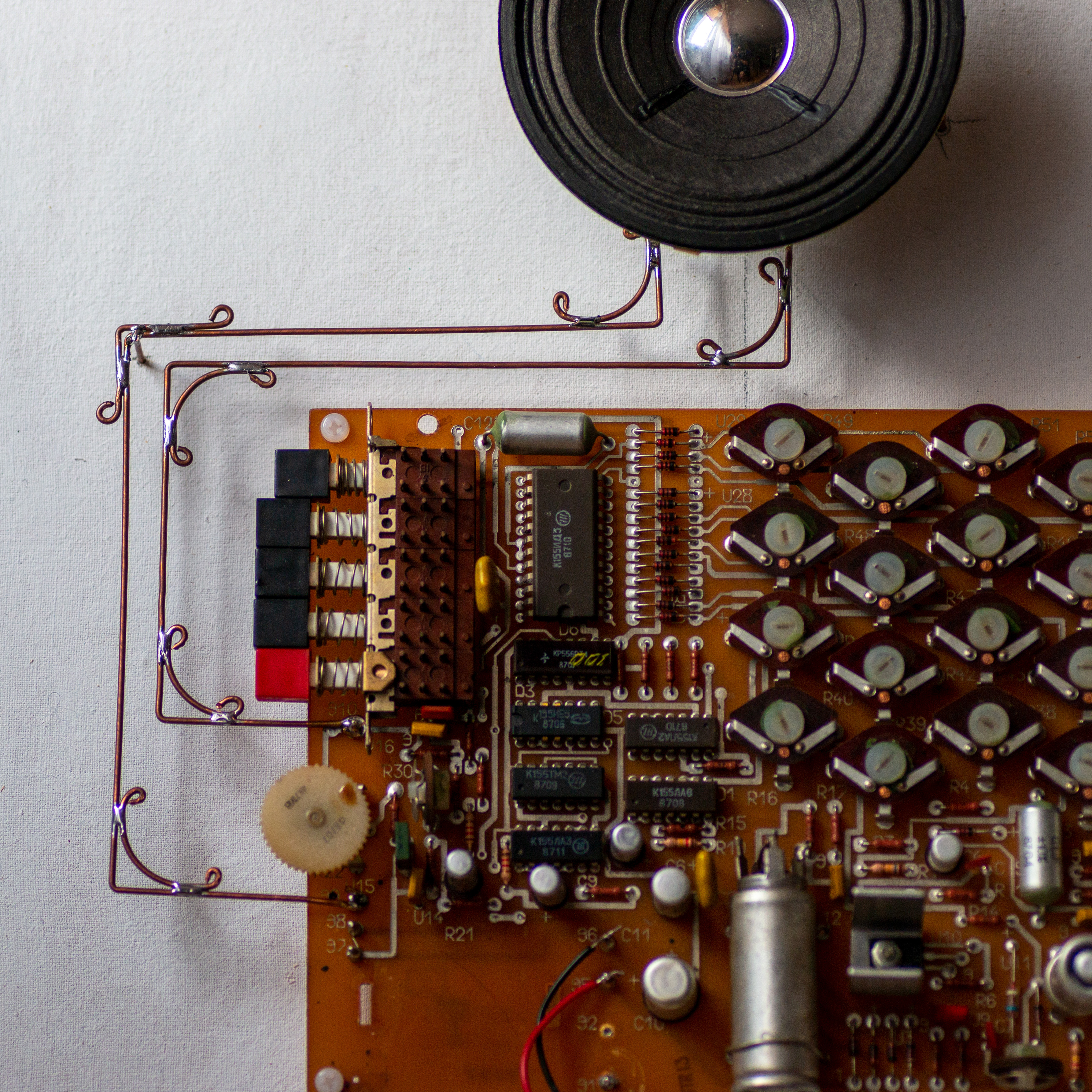
It consists custom-made PCB (made by PCBway) where plugged MCU (Arduino Nano PLE sense), a camera (OV7670) module and some LEDs. The largest part is the old soviet doorbell module, made in 1987. And then the speaker is connected there. I also added some status LEDs, so I will know what the MCU is currently doing.
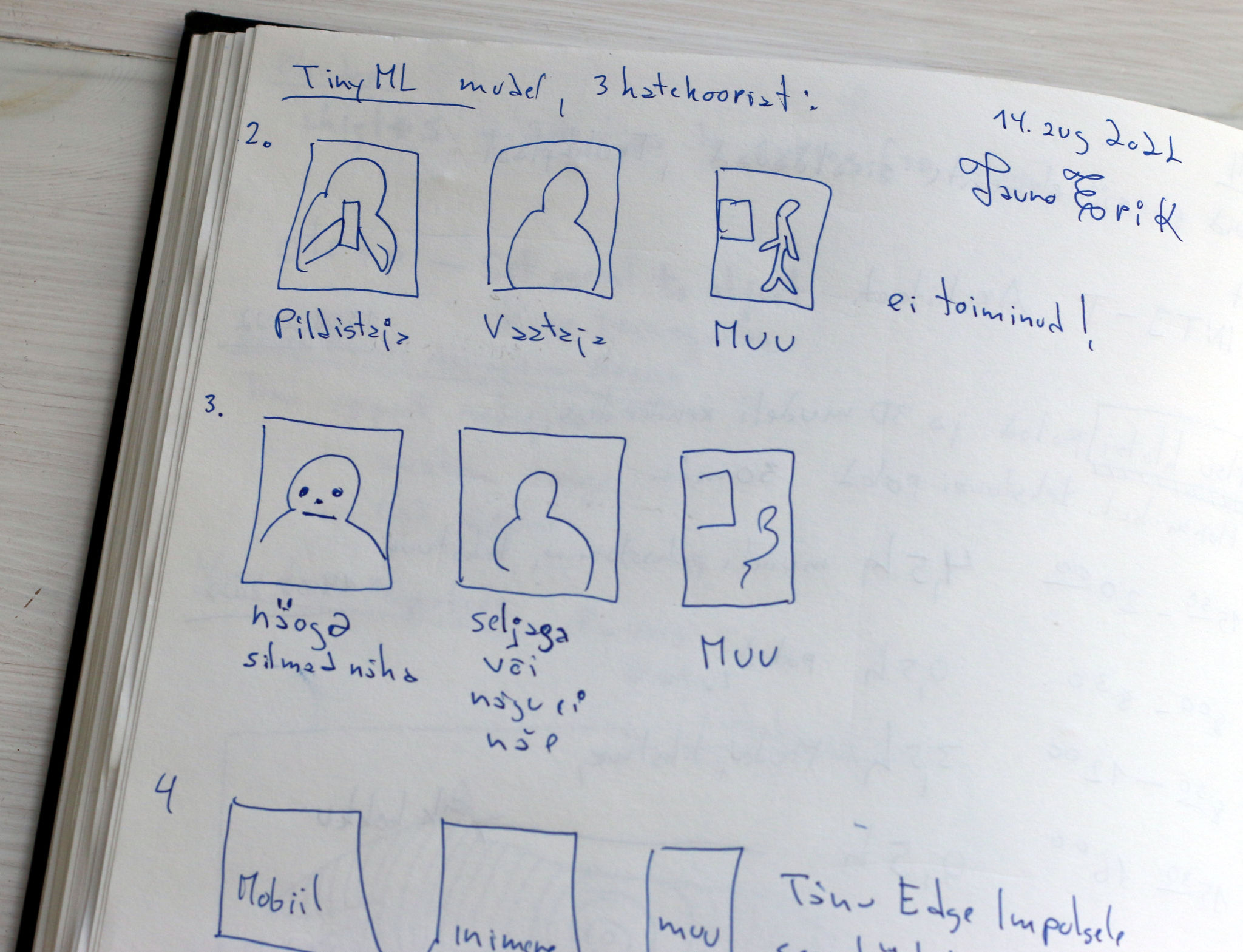
The camera takes a picture every few seconds and MCU analyzes it. It detects things in three categories: 1) humans, 2) when someone takes a picture of it with a cell phone 3) and all other scenes.
There are also some sensors that can sense the environment:
And there is a Bluetooth module. But I have not used it so far.
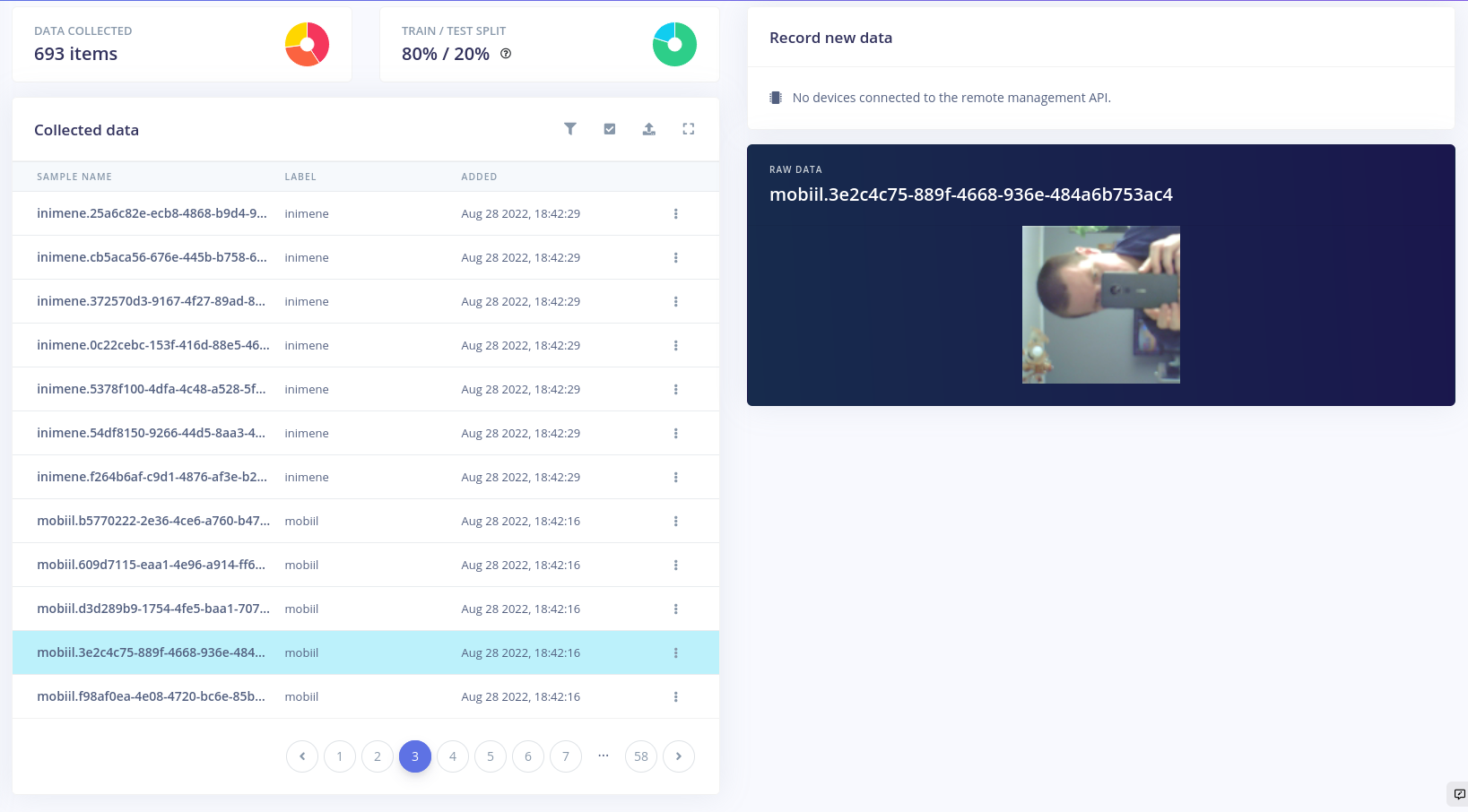
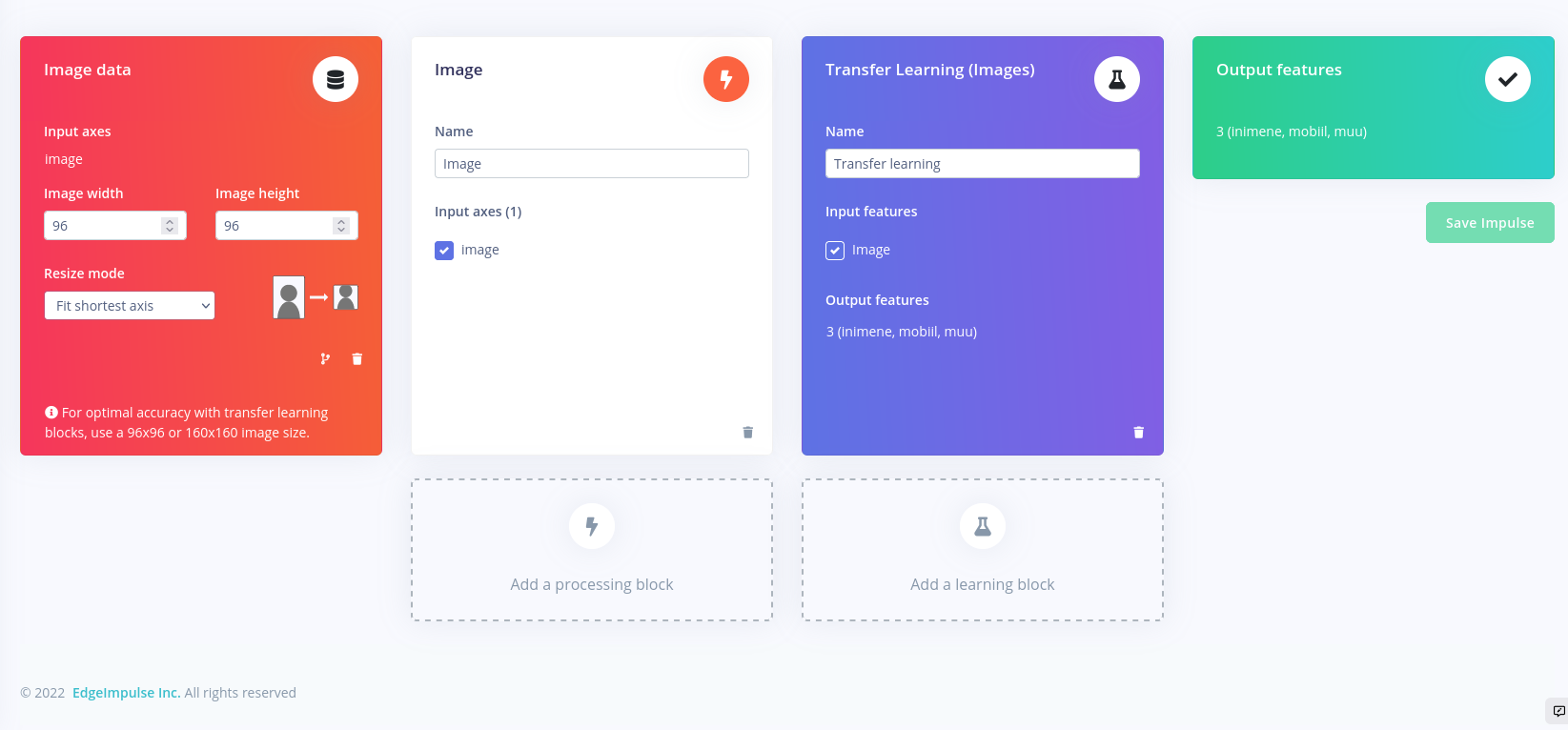
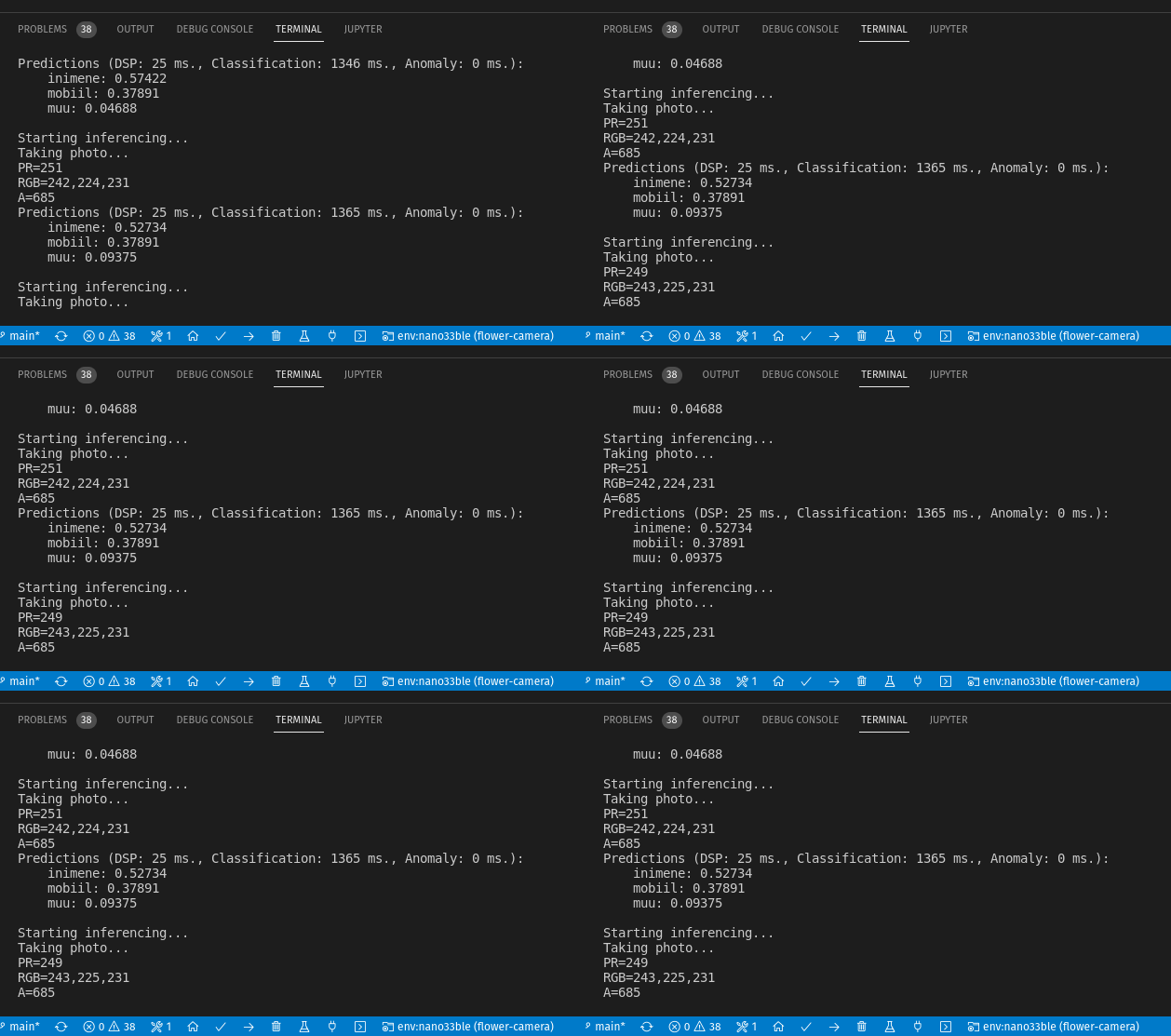
Most of my effort and time have been spent building a Machine Learning model to process images and recognise scenes. So far I have collected almost 700 images with this camera. And labelling all of them. I use Edge Impulse and it makes the process to build an ML model and library to embed it very easy.
This camera can take colour images in sizes 160×120 px, but the model uses size 96*96px. And it is quite small. You can imagine how few pixels take a mobile phone on these images. It’s just a black blob.
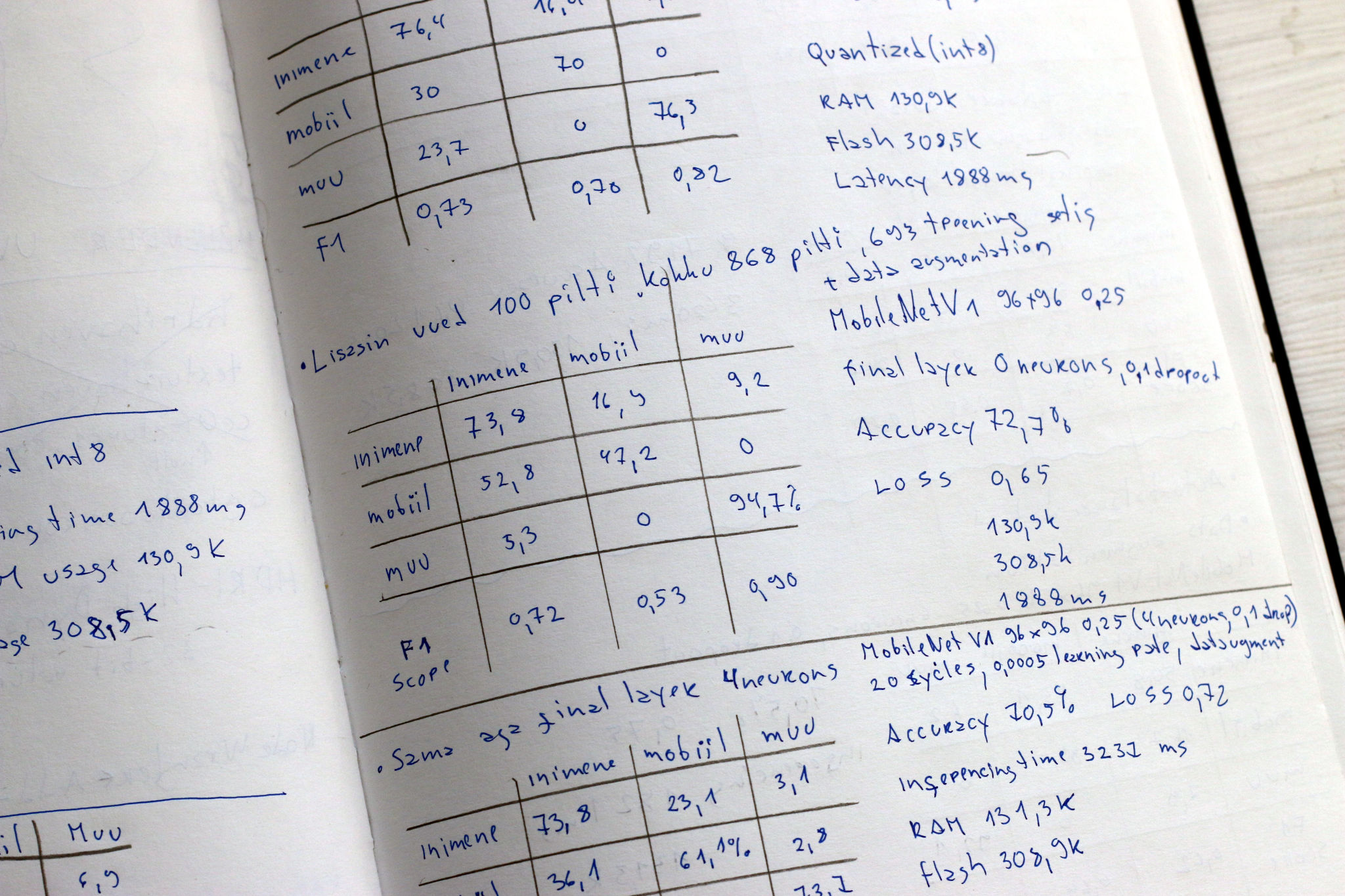
There is a big difference in model performance whether to use an unoptimised (float32) or the quantised (int8) model. The microcontroller’s small resources force us to use the quantised (int8) model. I have experimented with model parameters and found optimal results that work for me.



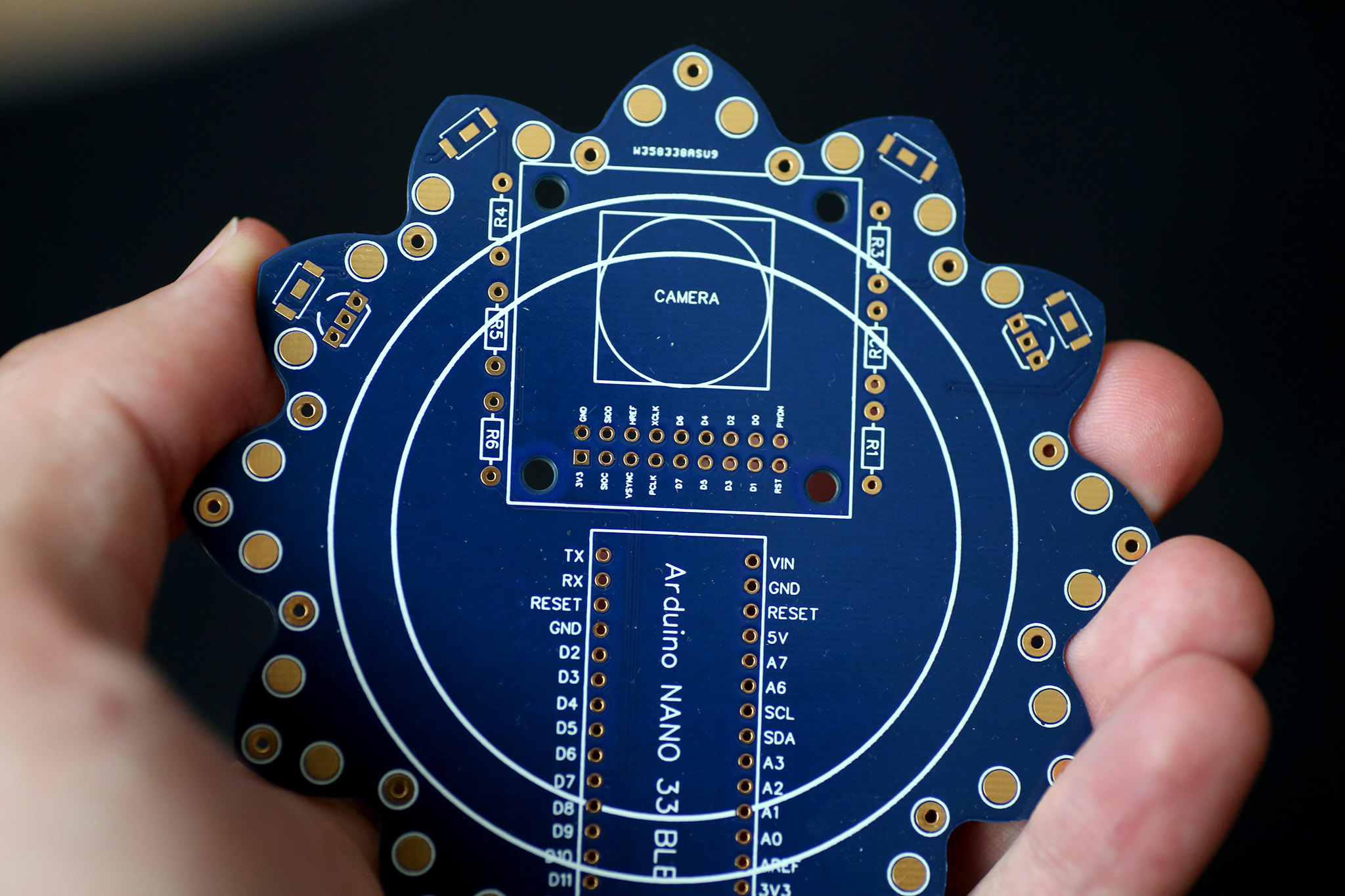
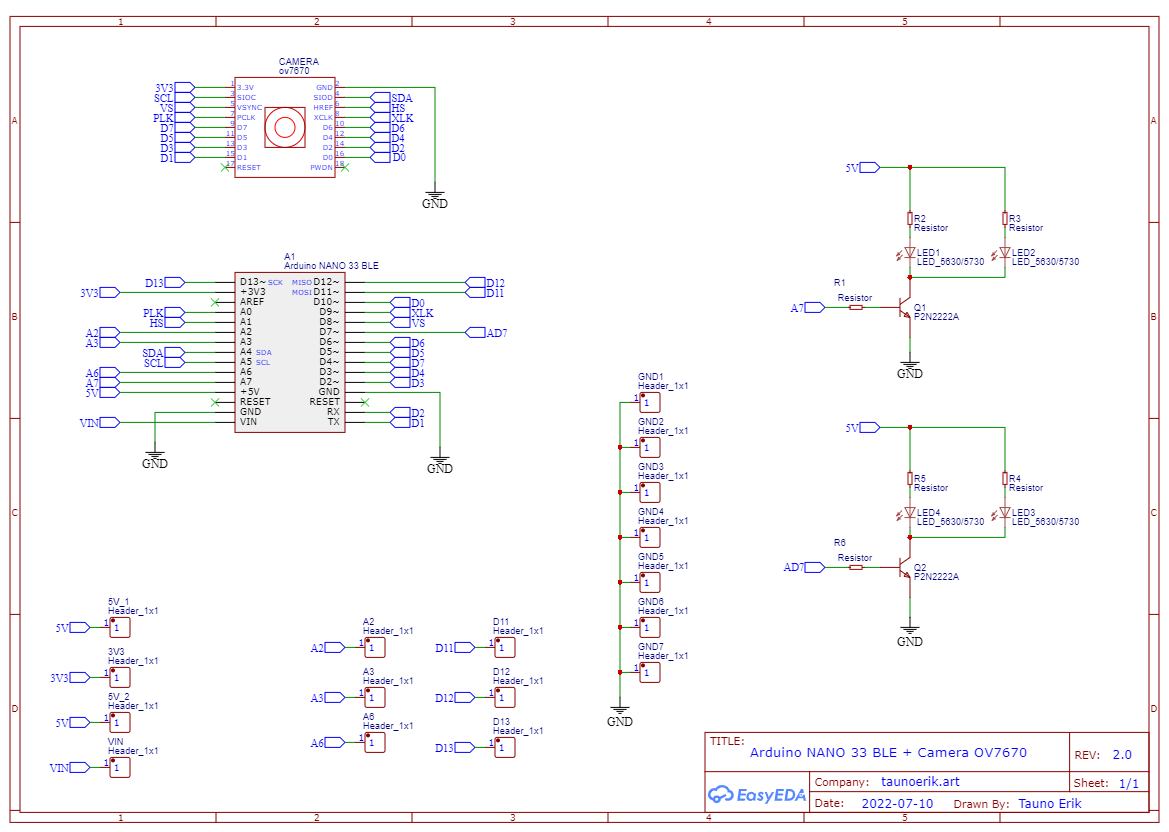
Schematic:
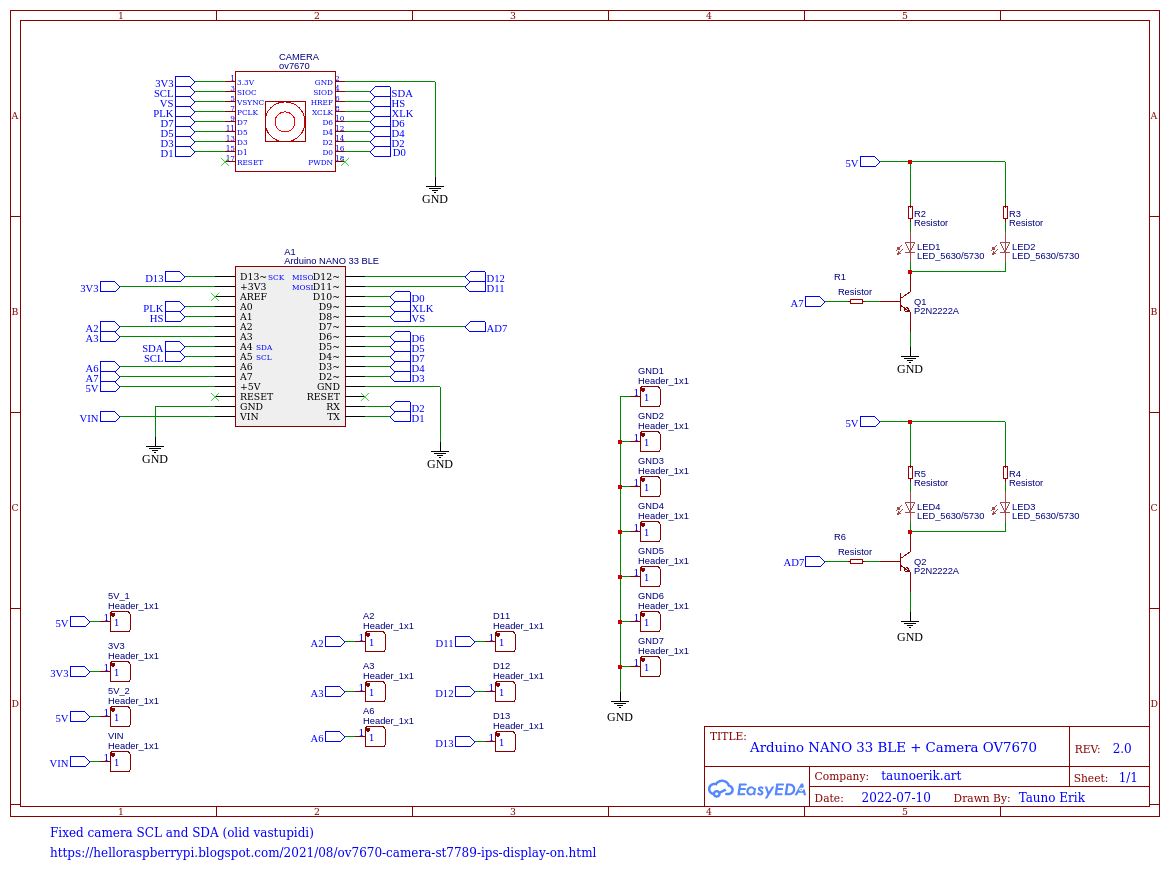
Pin layout may be different on different camera modules!

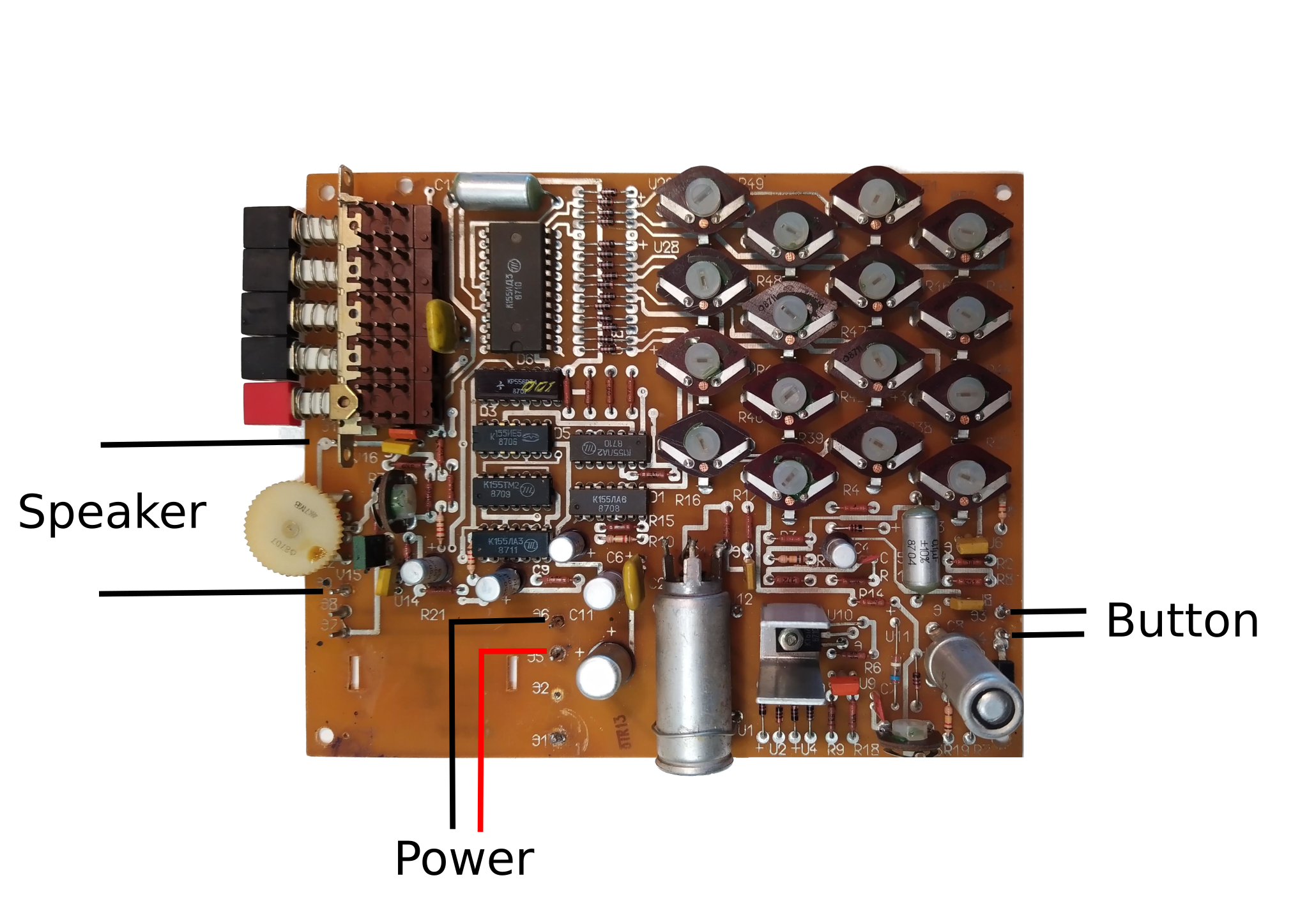
The Soviet doorbell electronics board
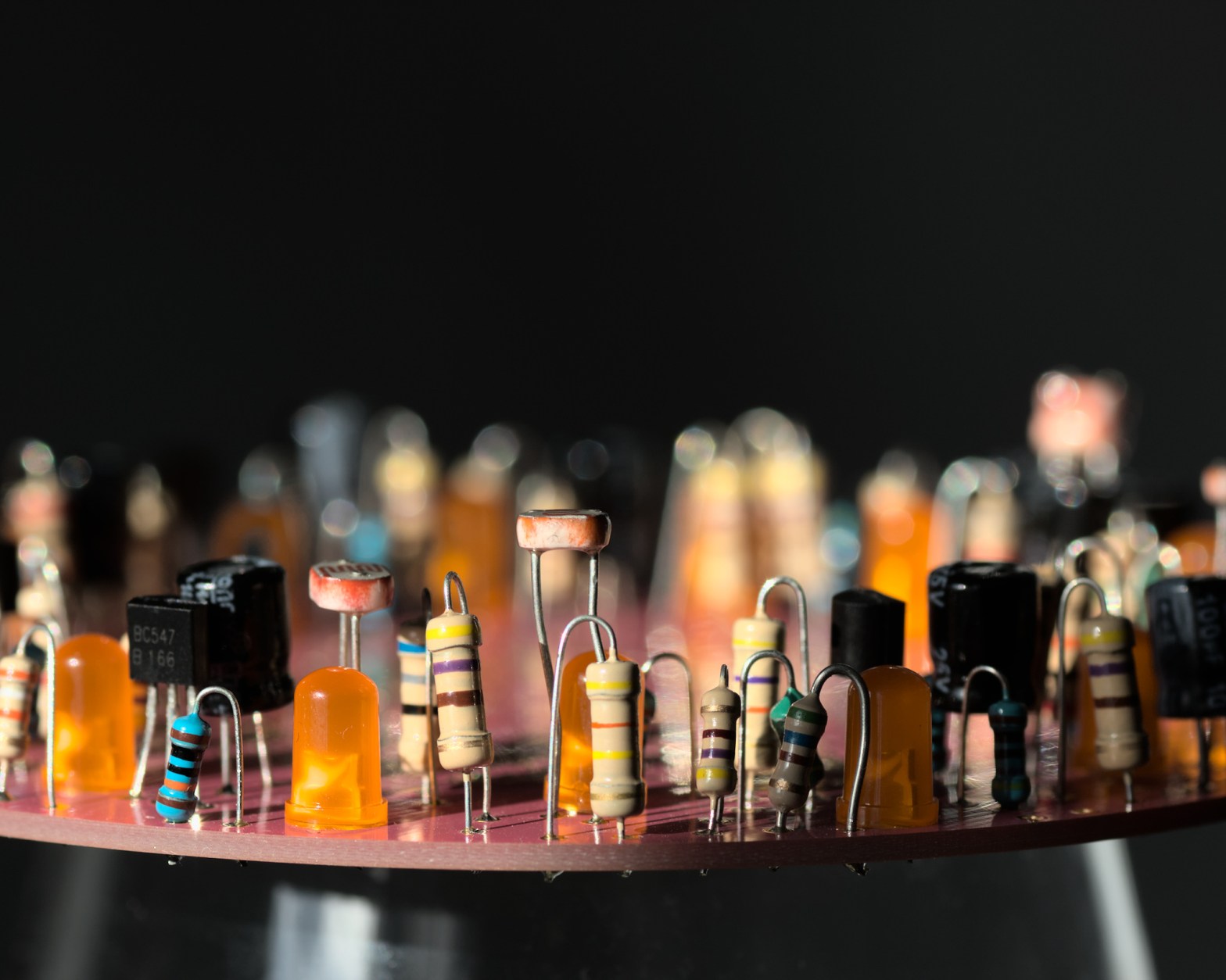
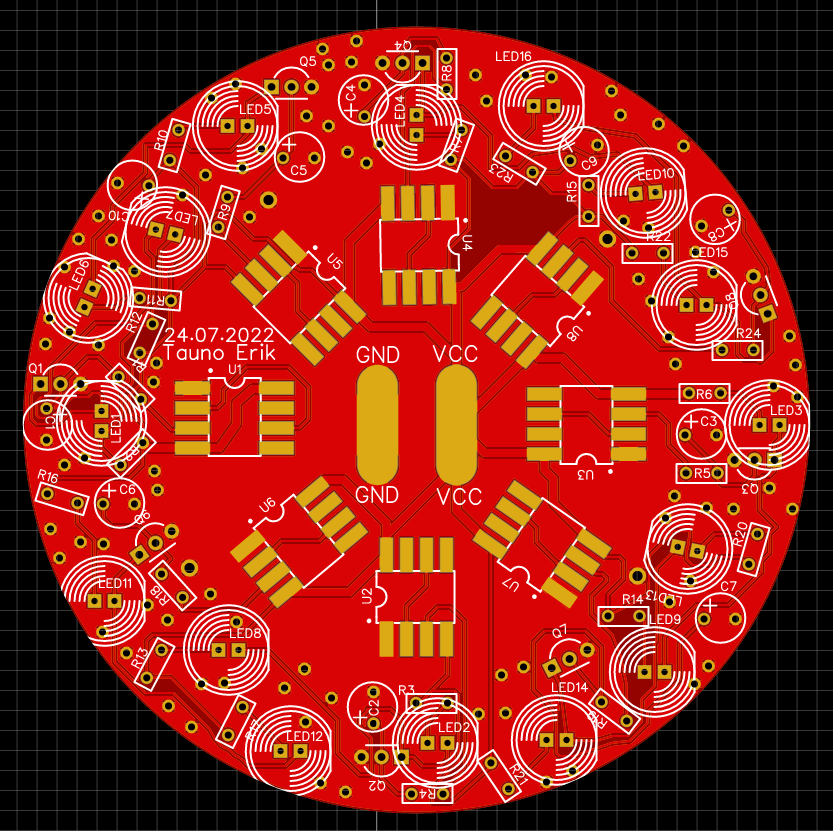
Soldered the components to my pink PCB. It looks good. but not everything works as I planned.
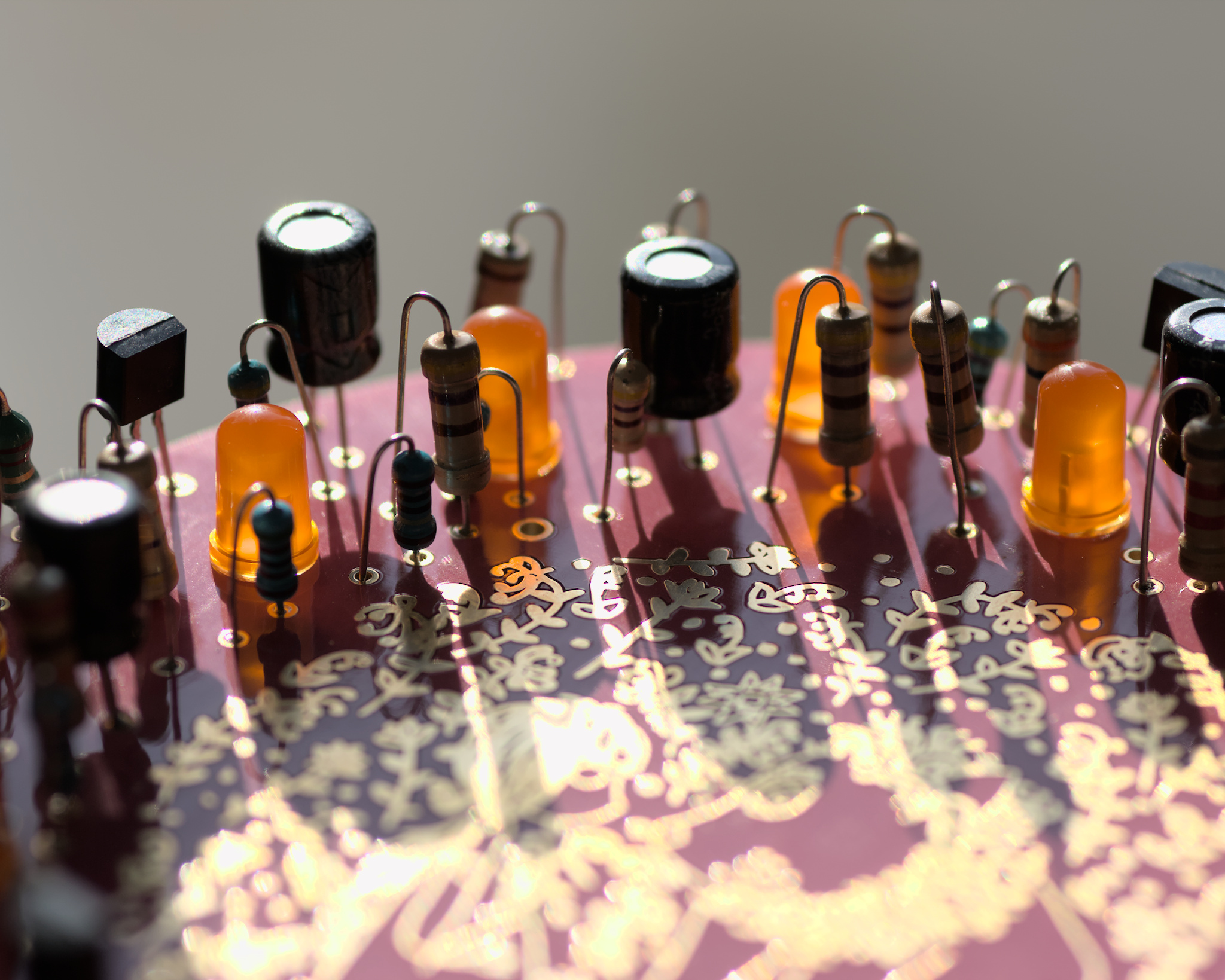
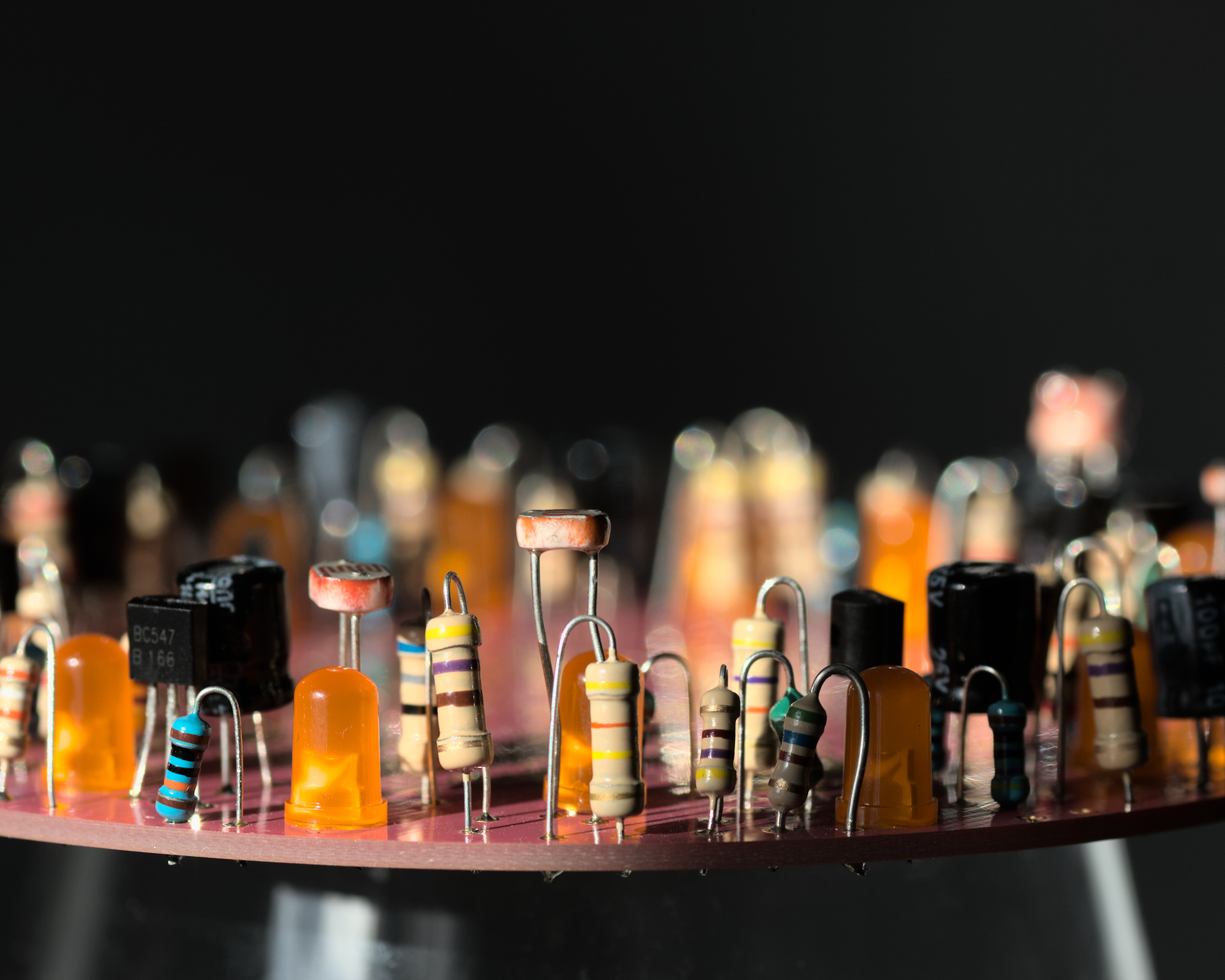
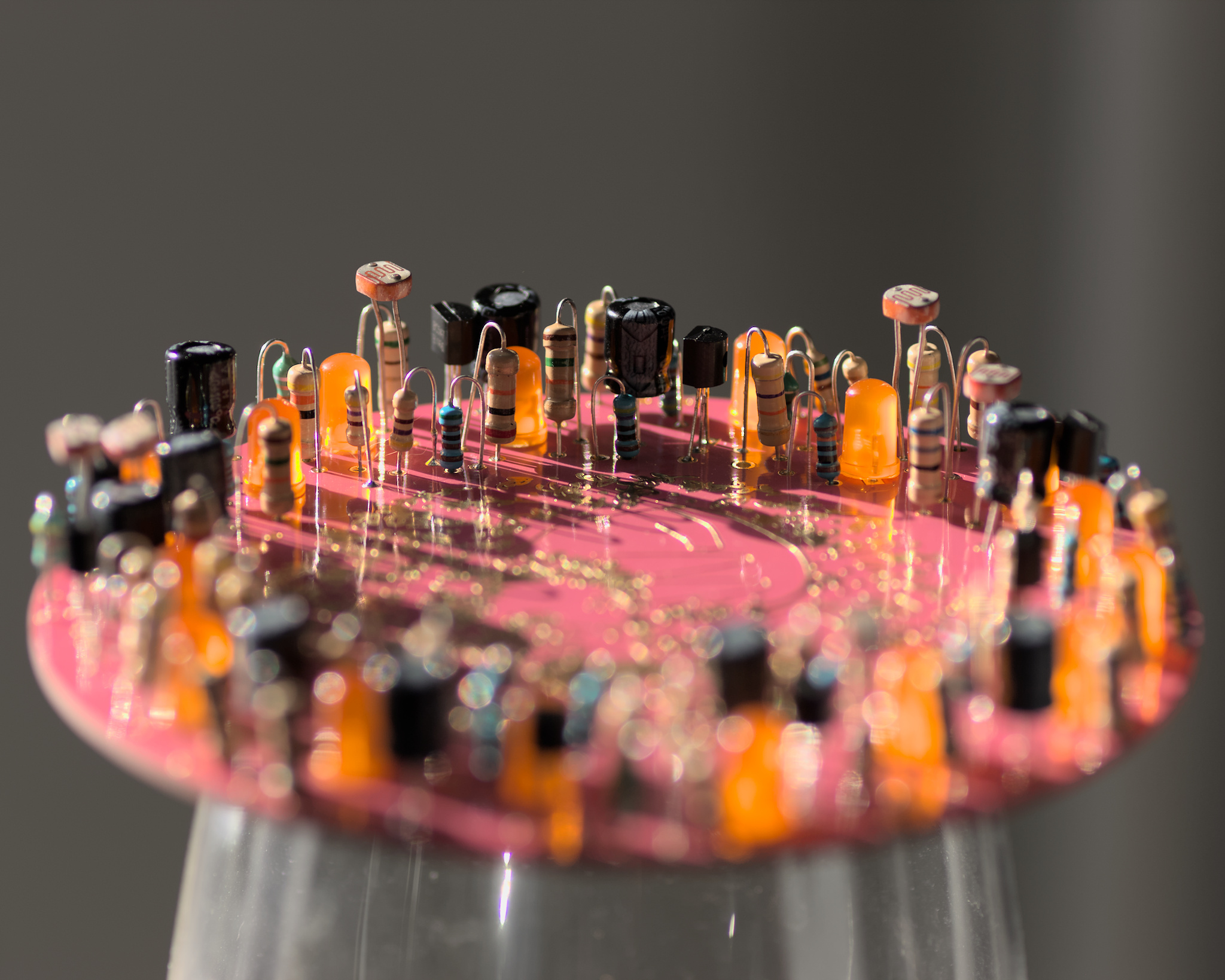
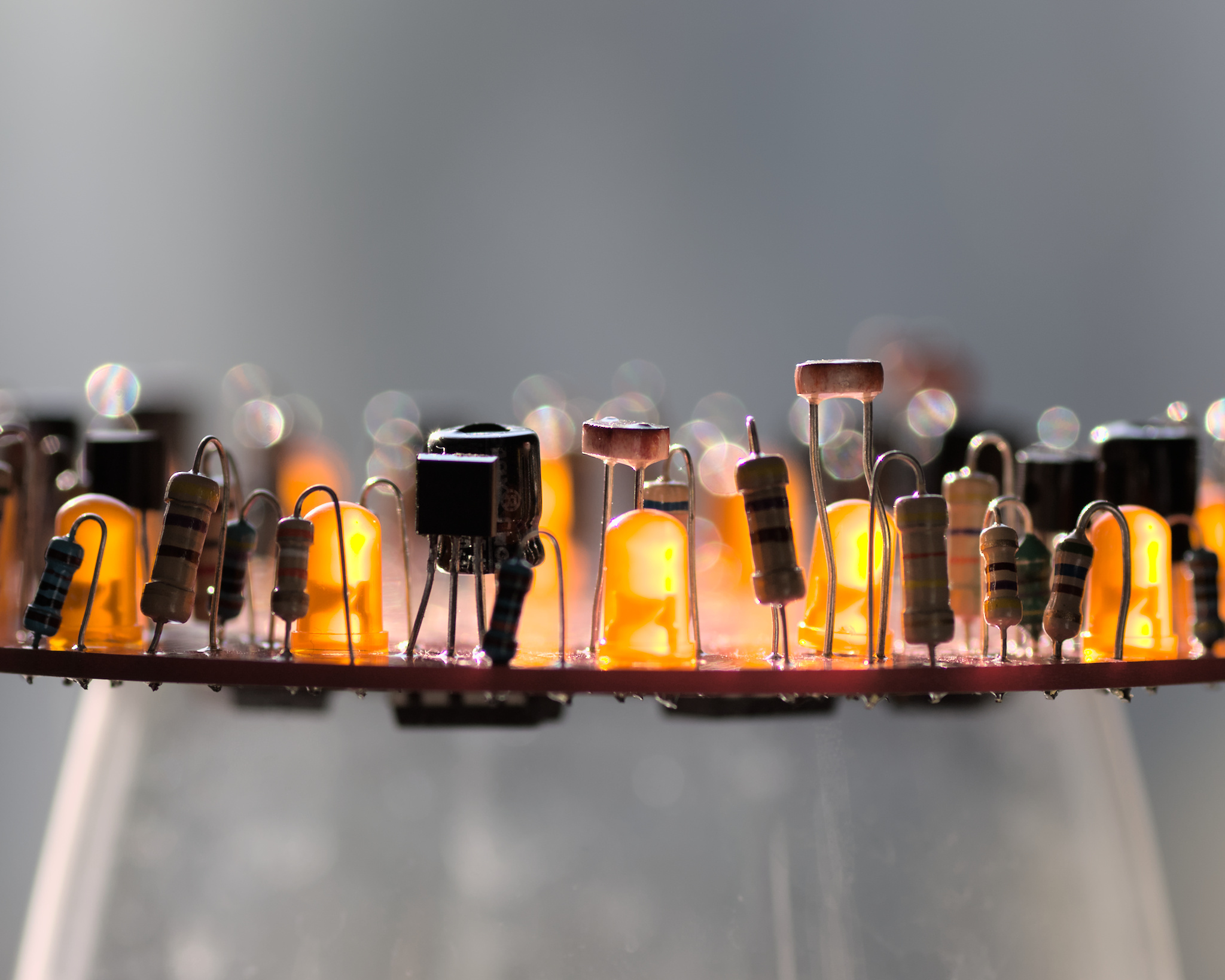
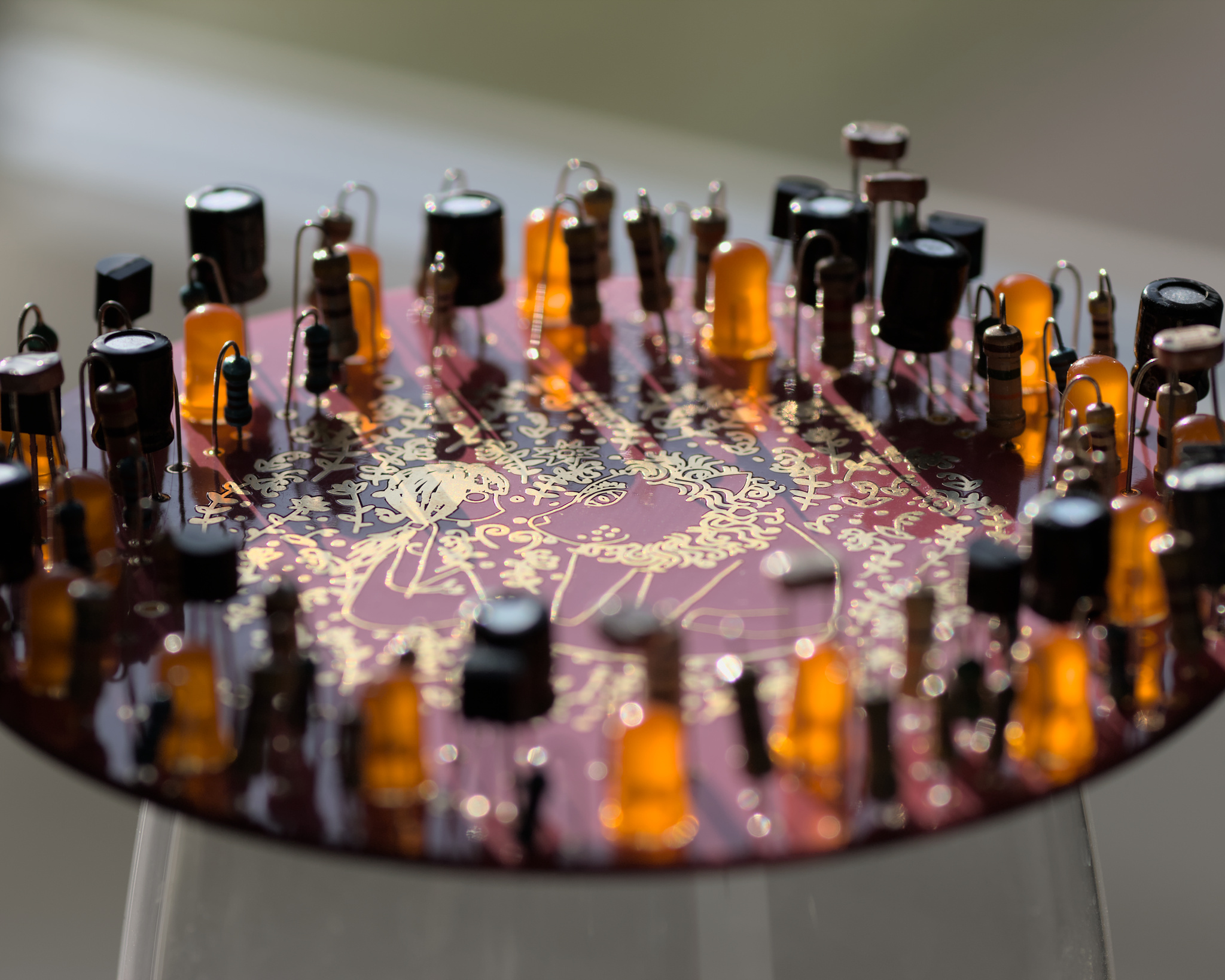
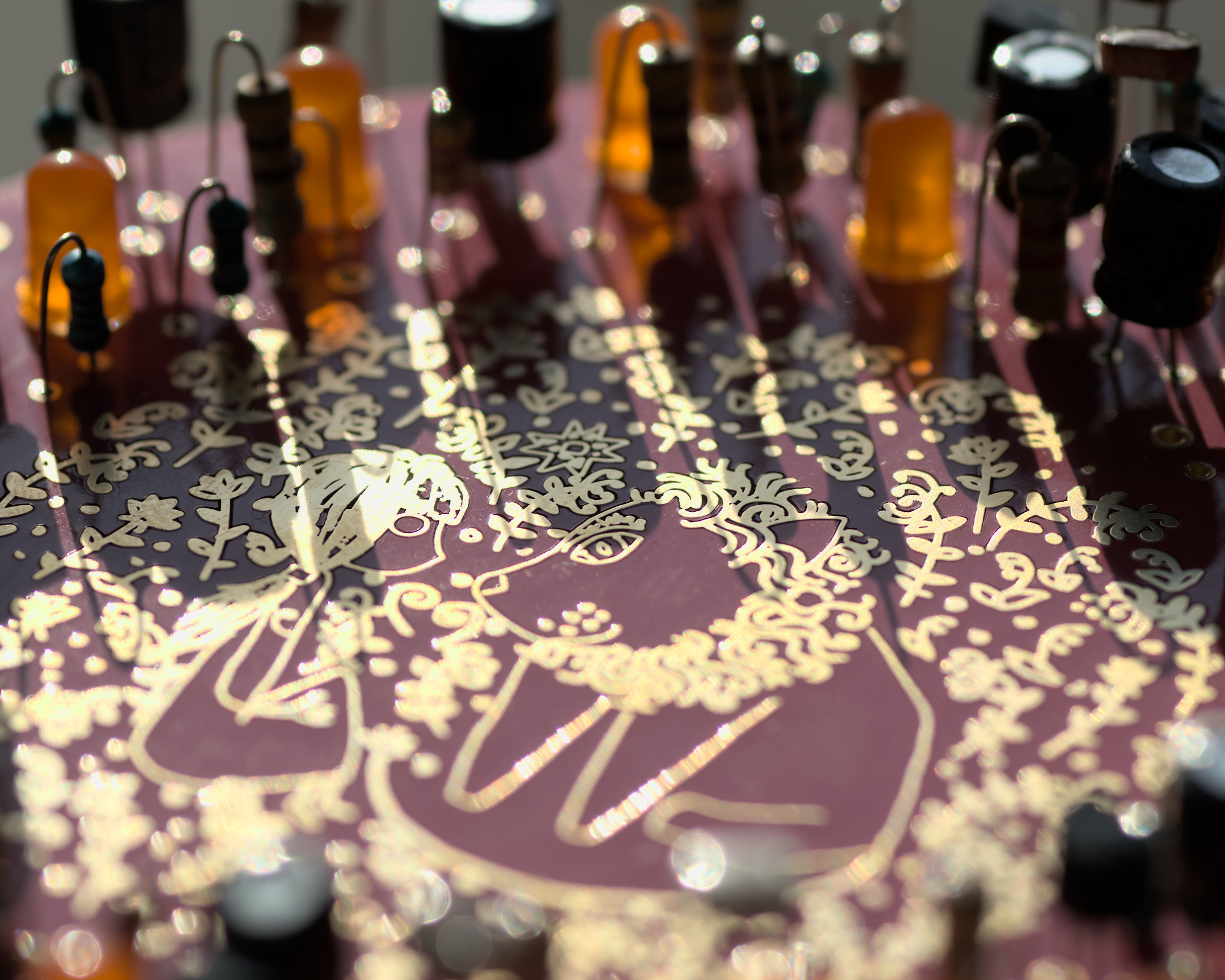
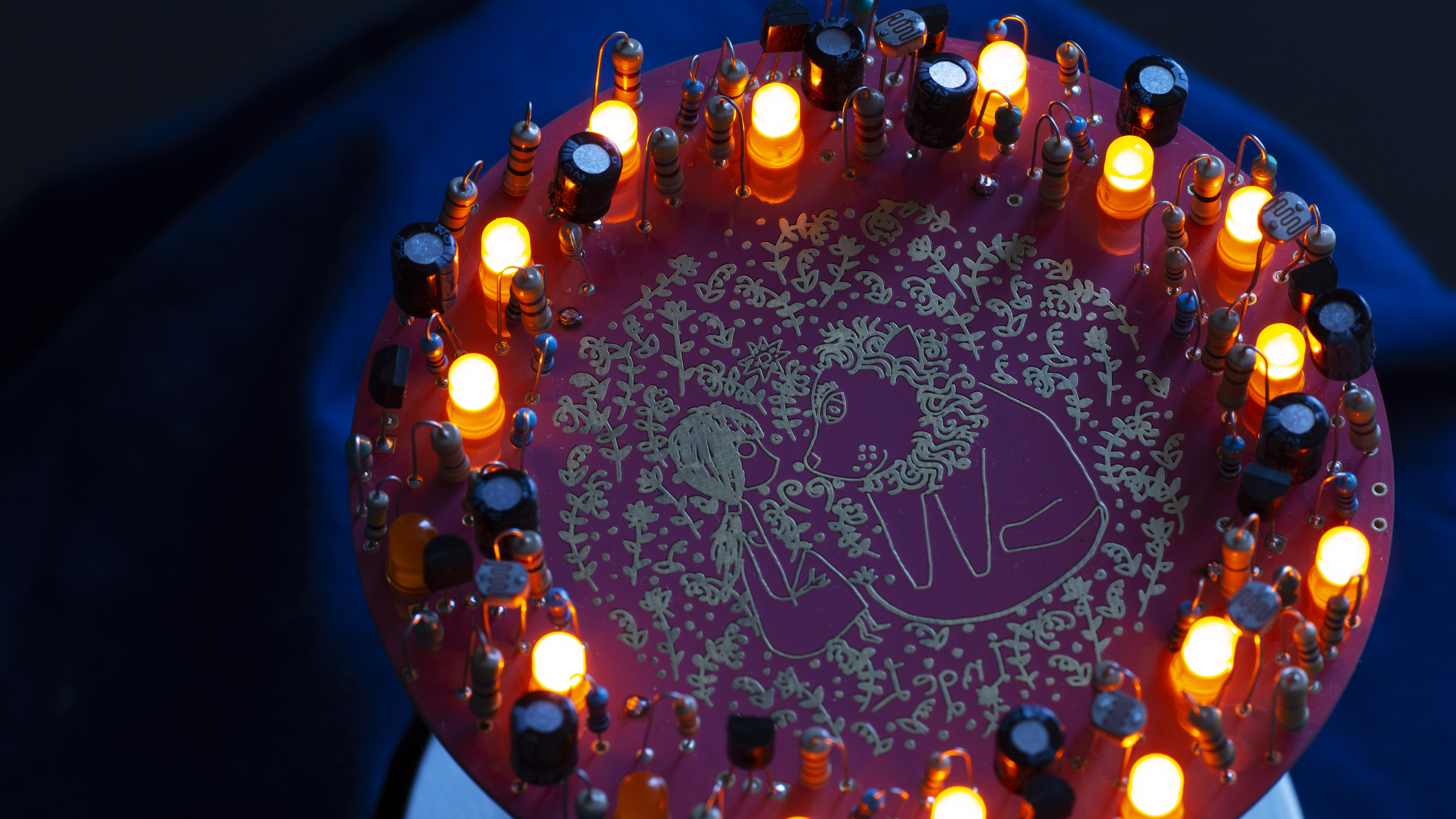
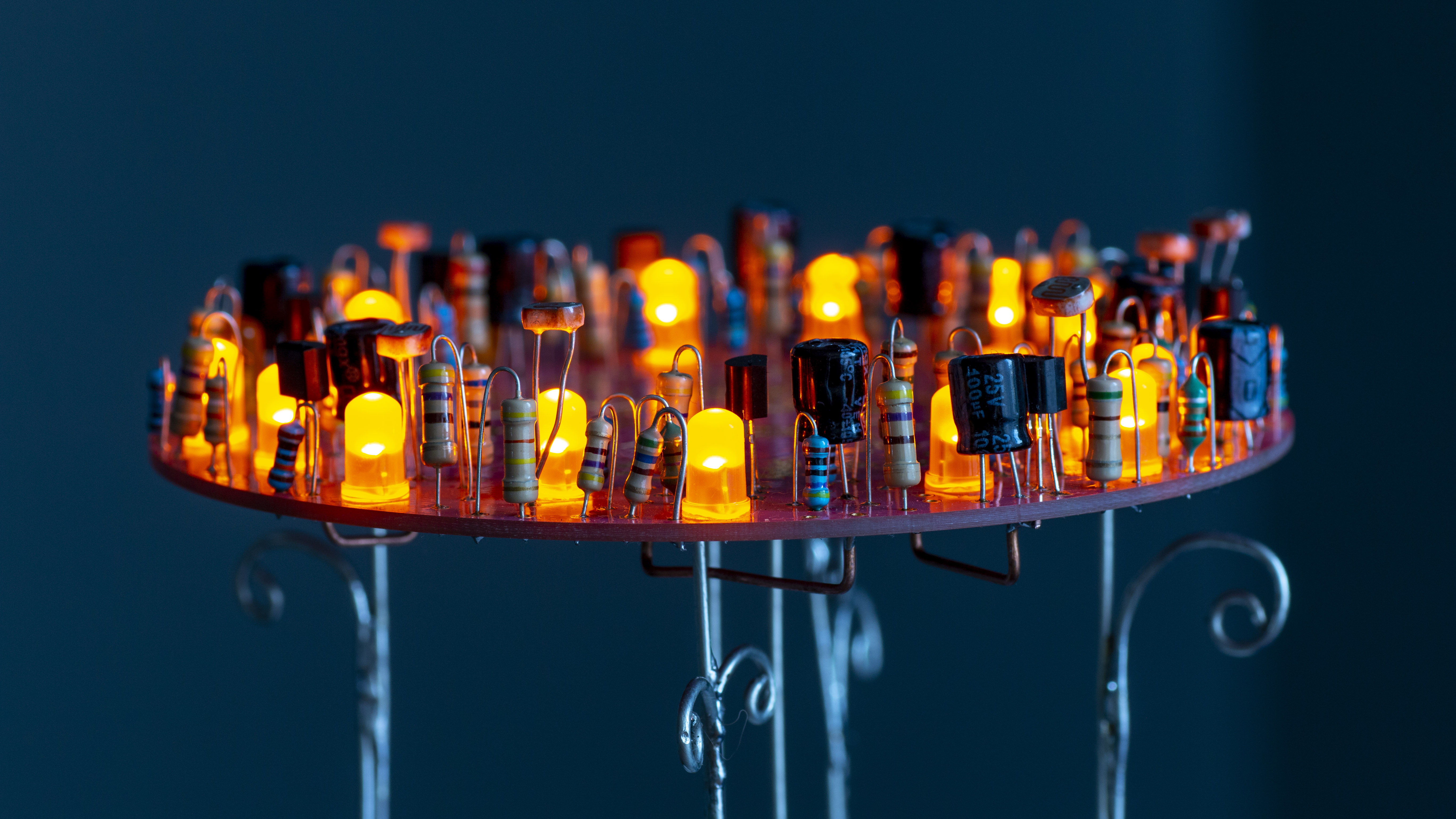
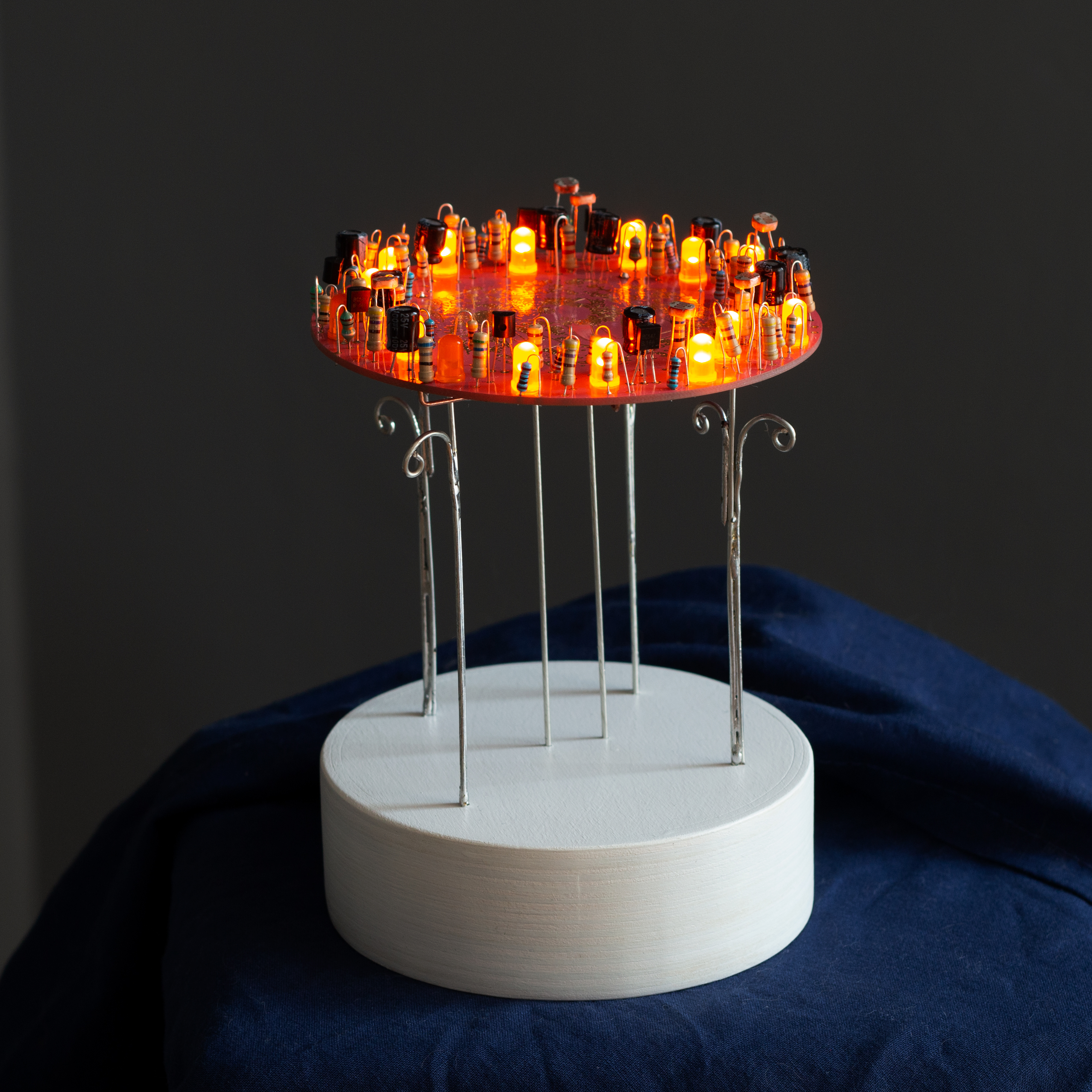
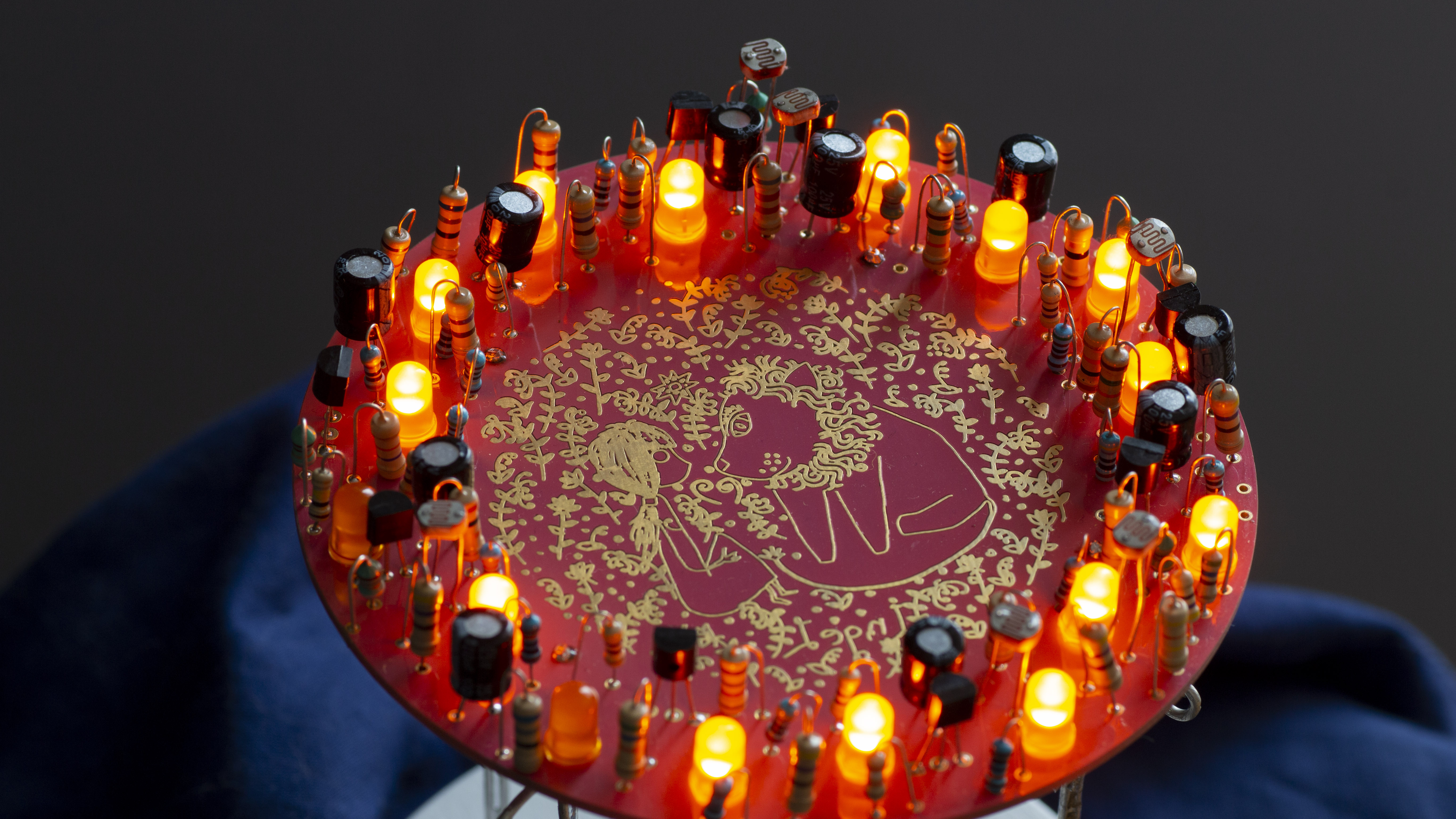
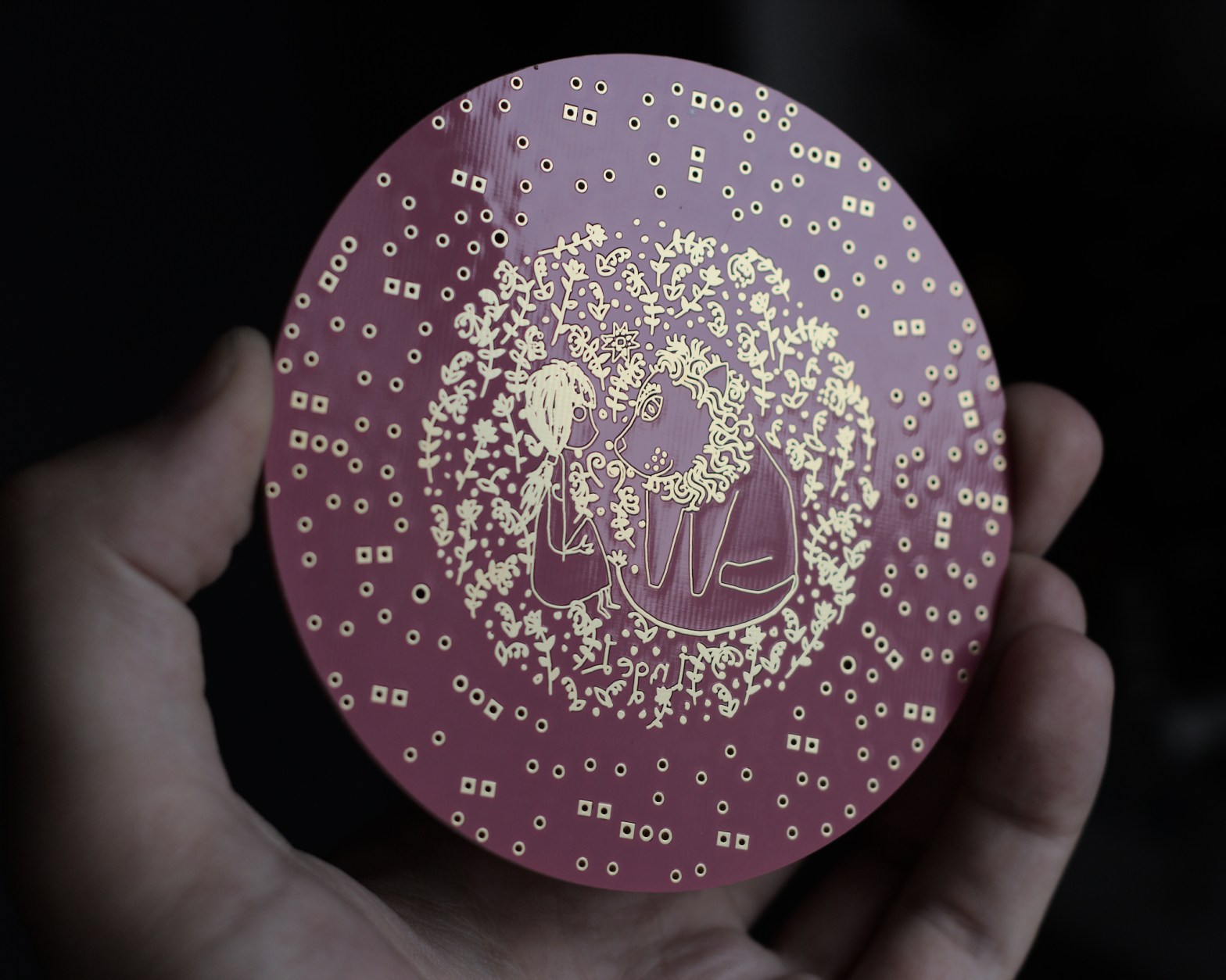
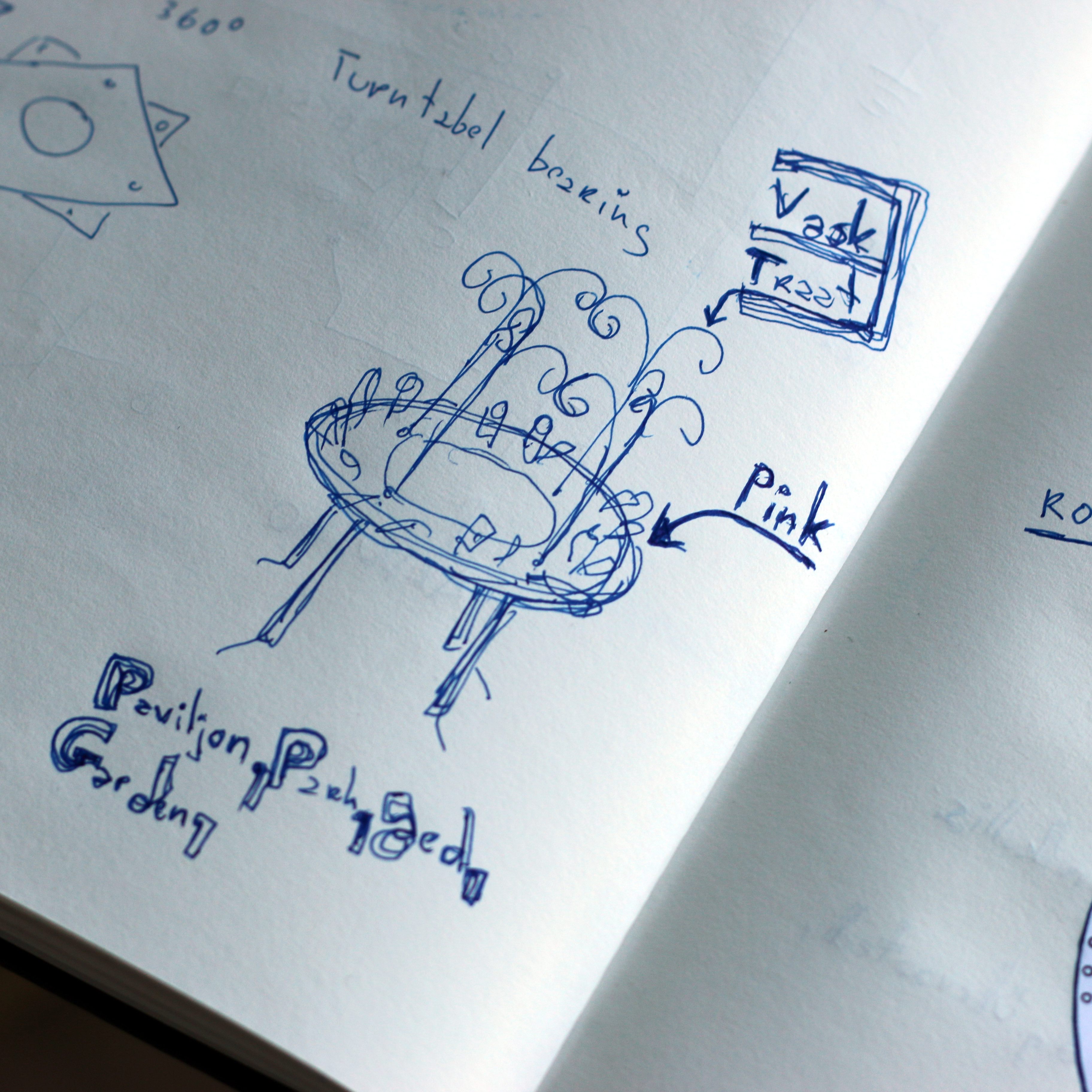
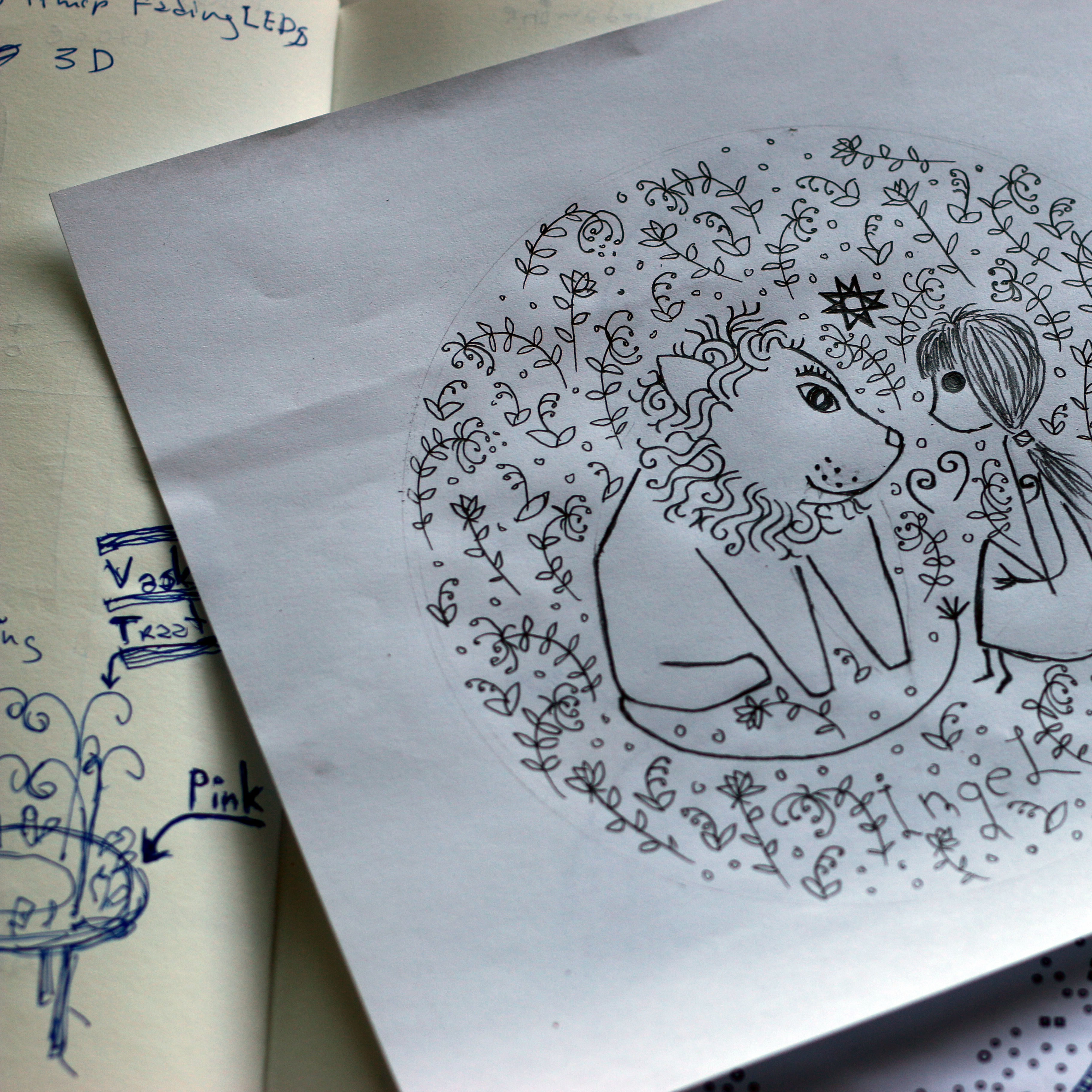
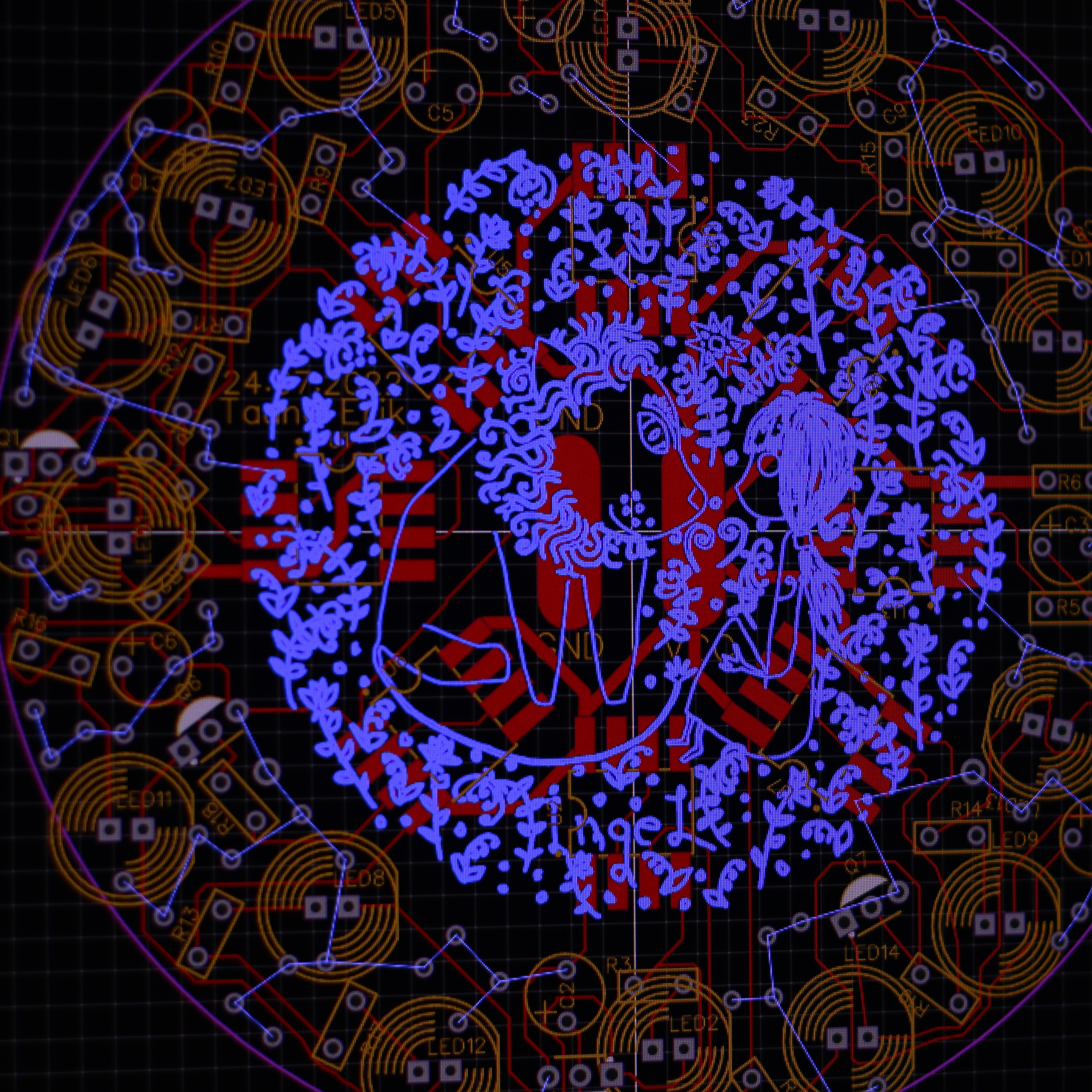
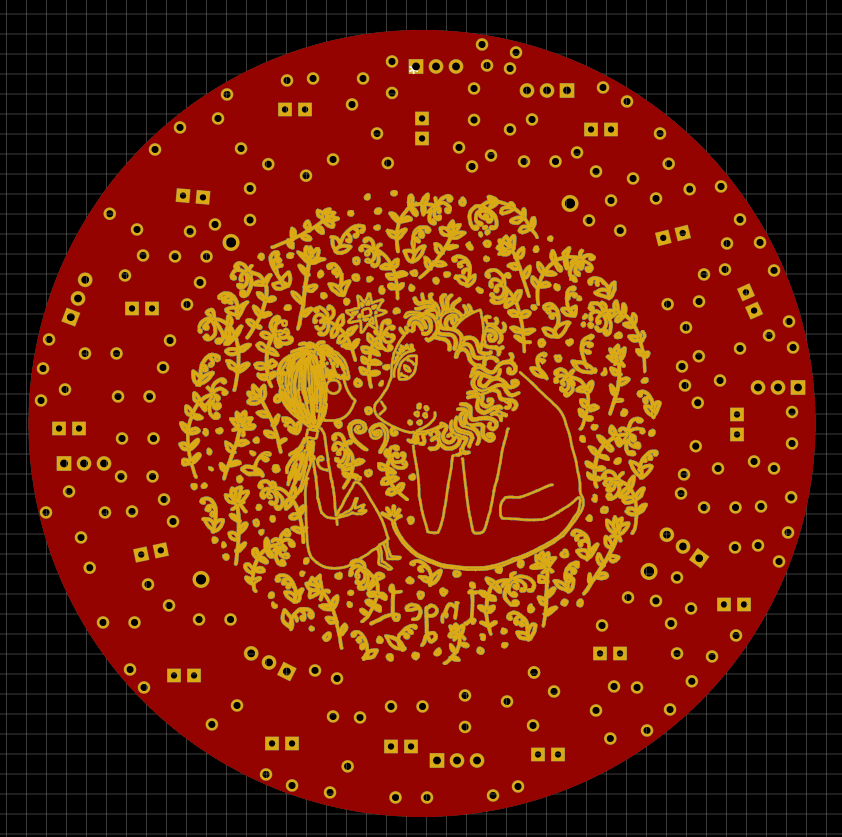
New and pink with gold! One of my experiments to combine electronics and illustrations. And actually, it will be a sculpture.
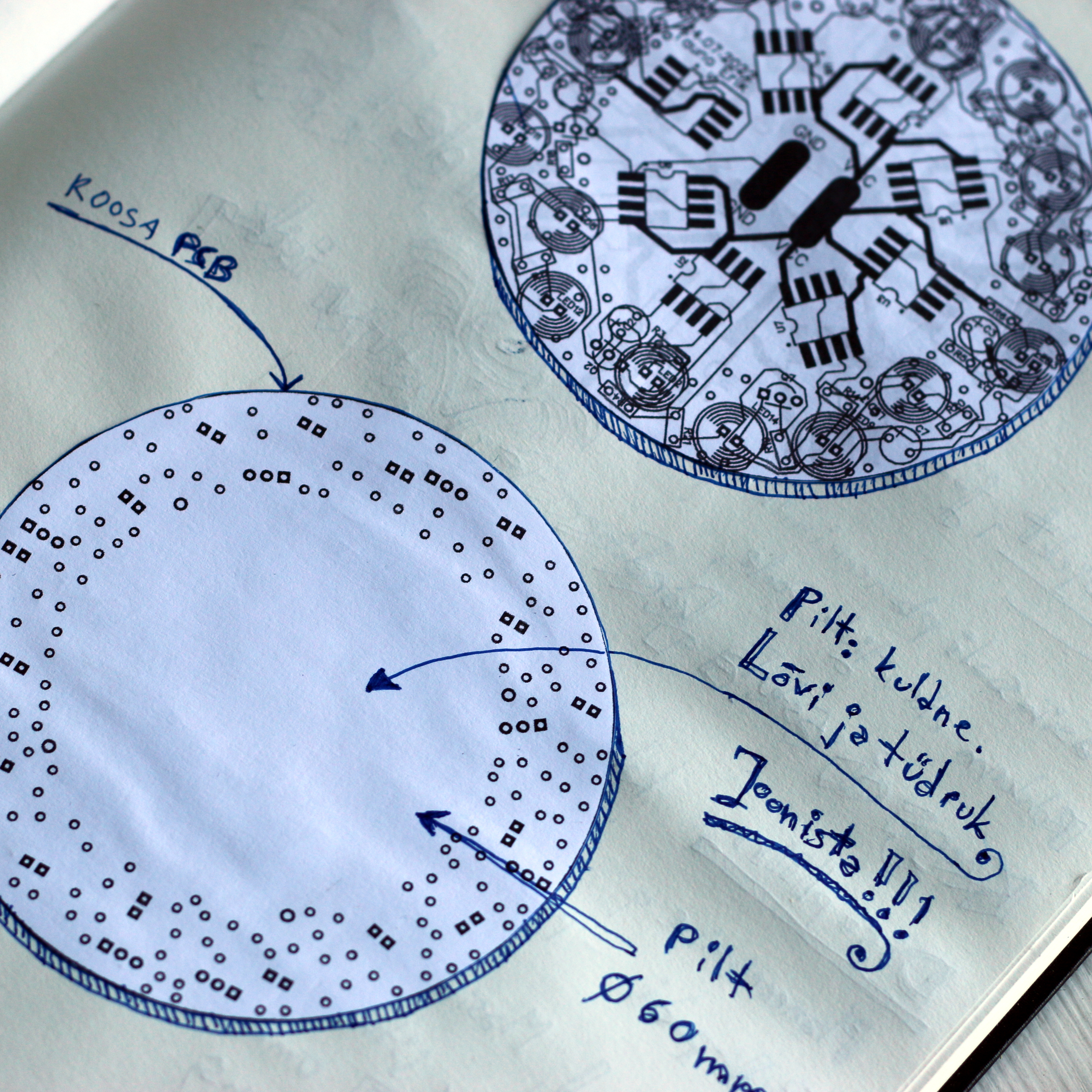
Assembly will be difficult because some holes and components are purely decorative. But others must be precise.
Final PCB made by PCBWay:
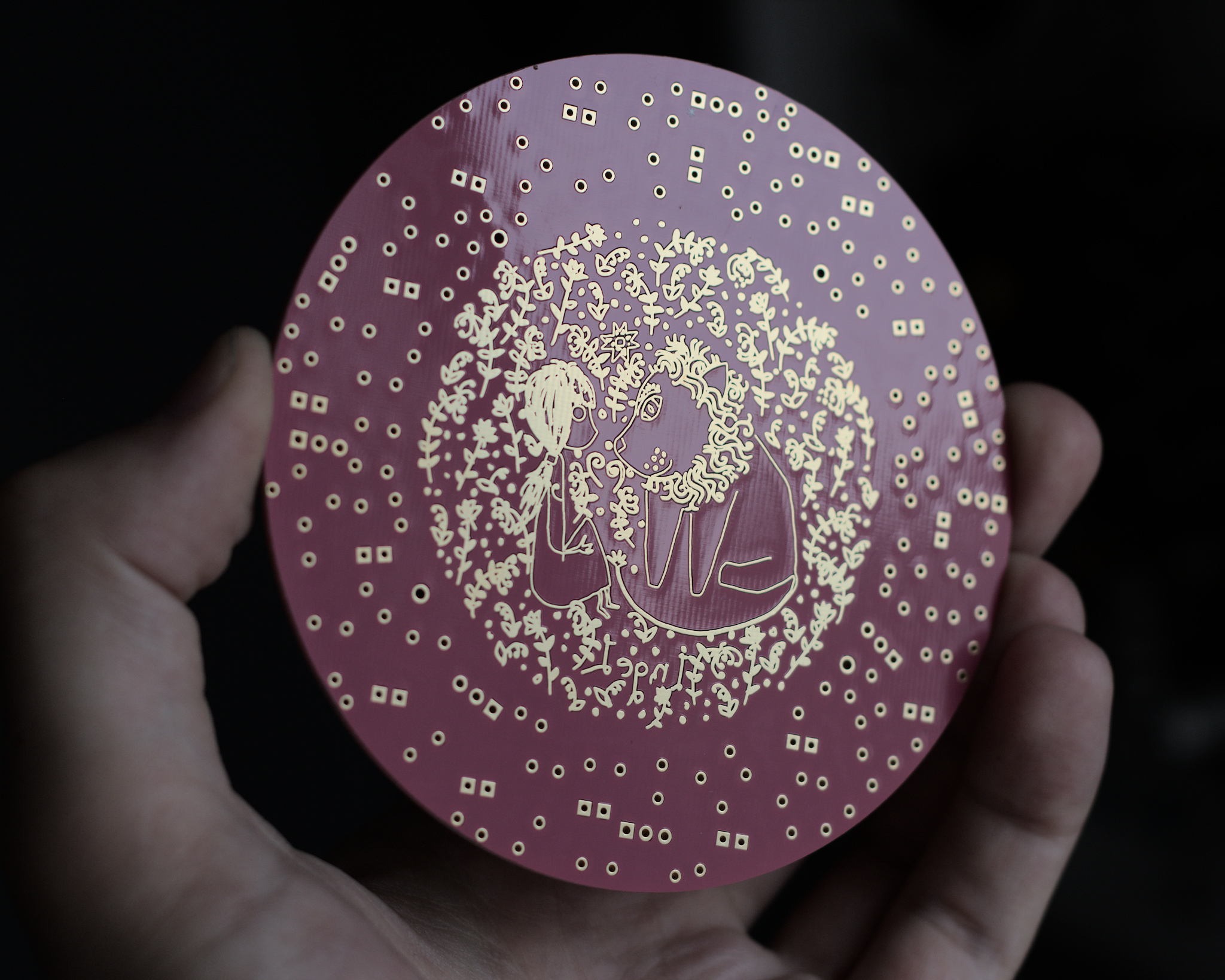
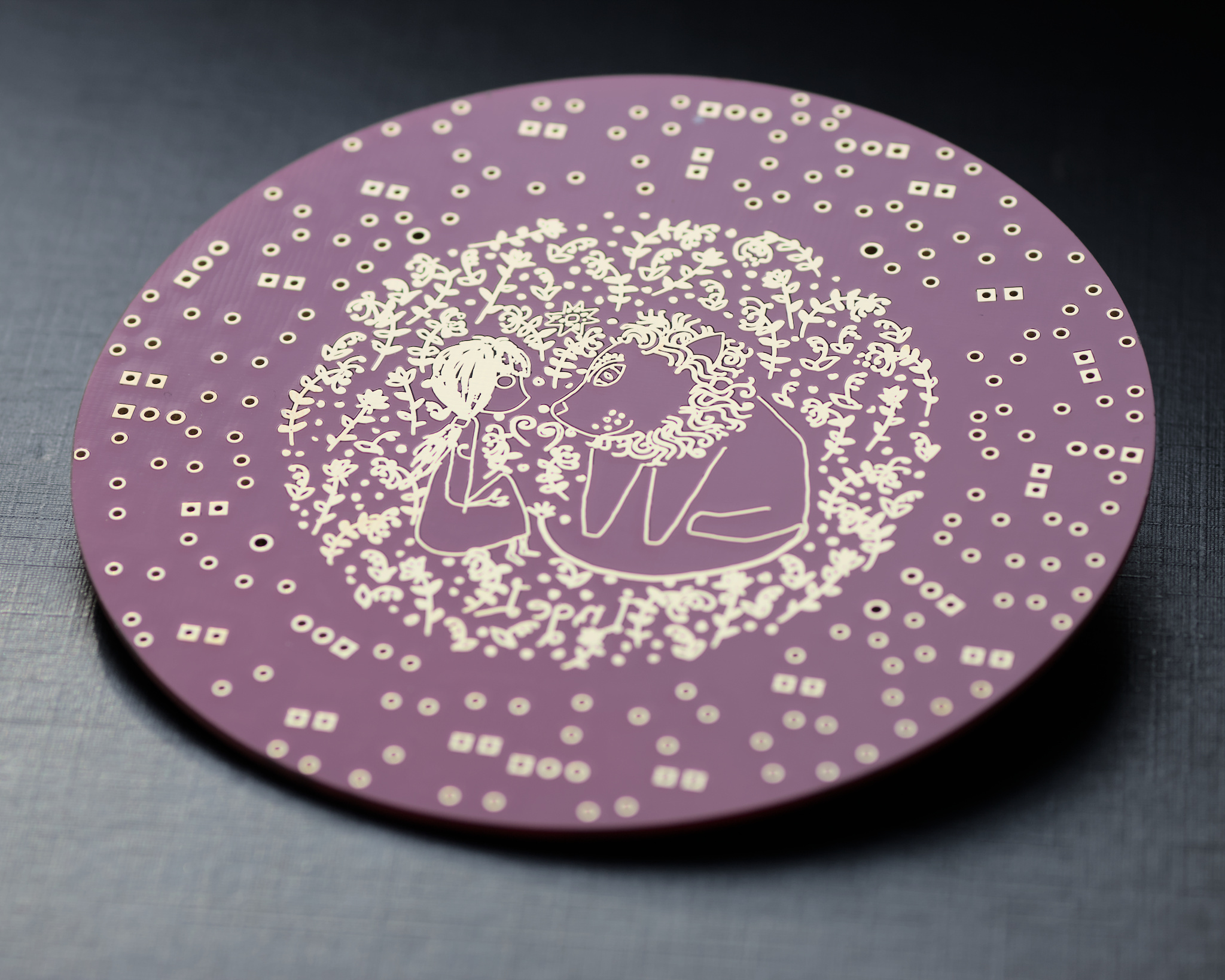
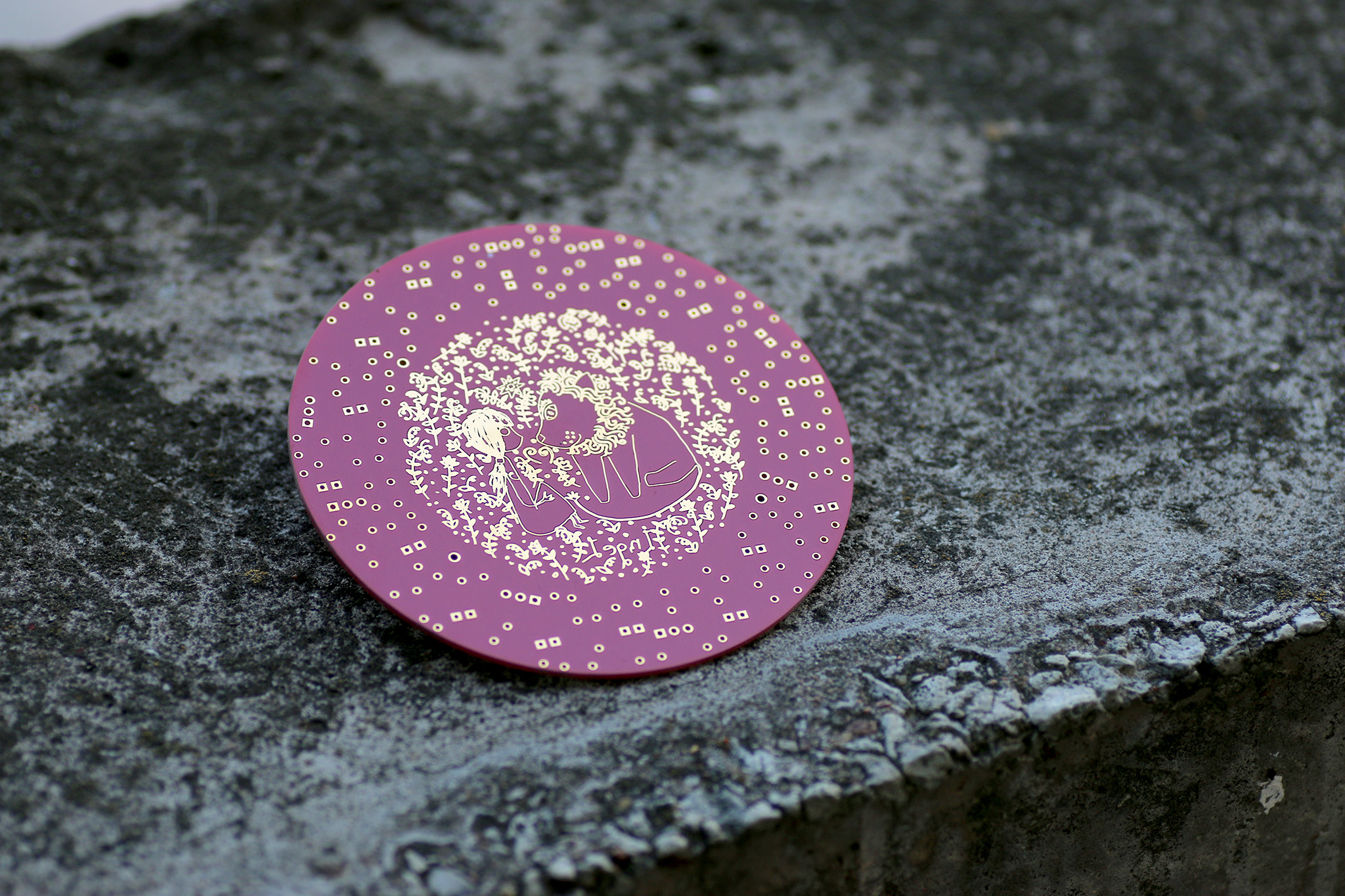
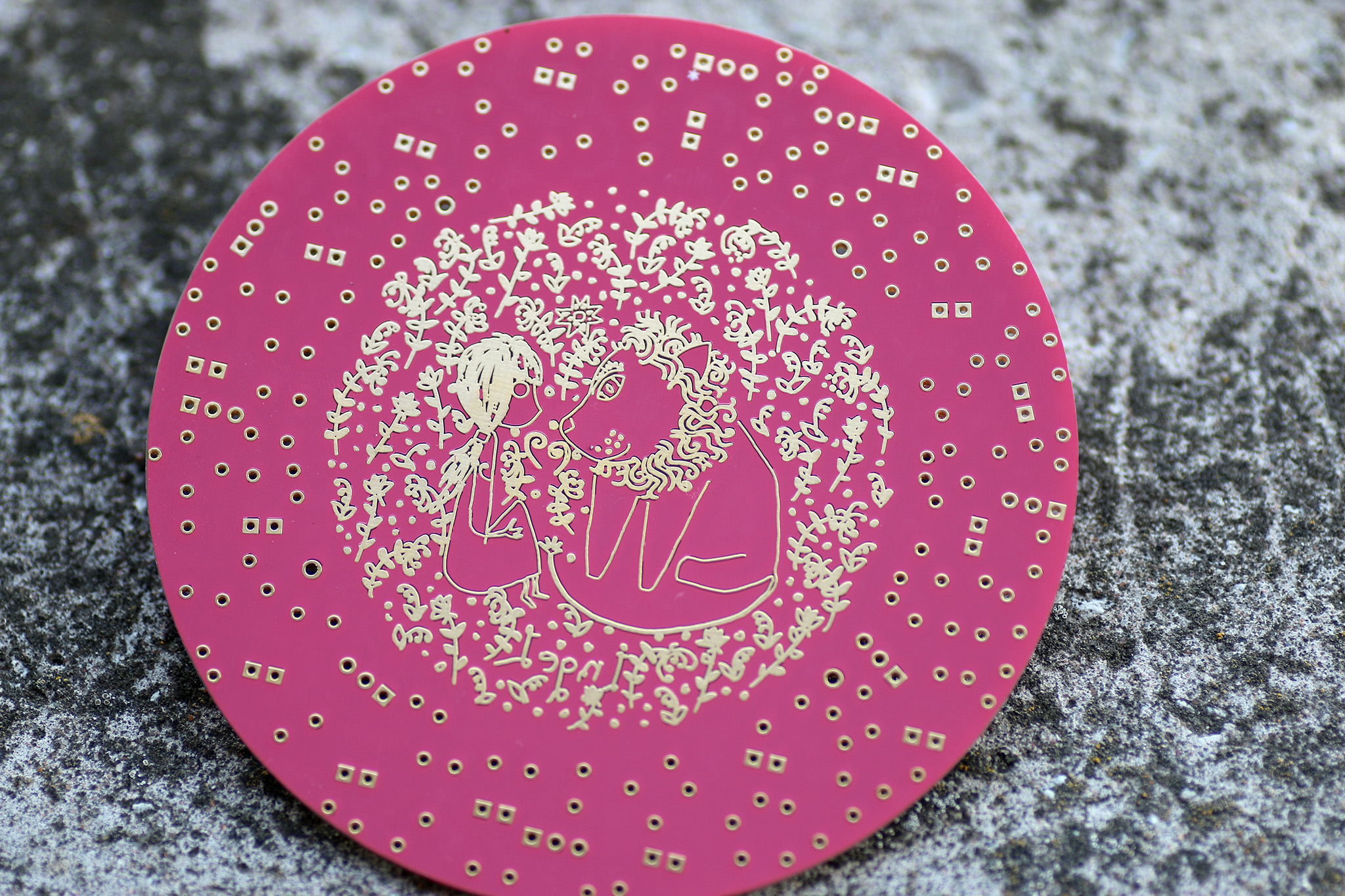
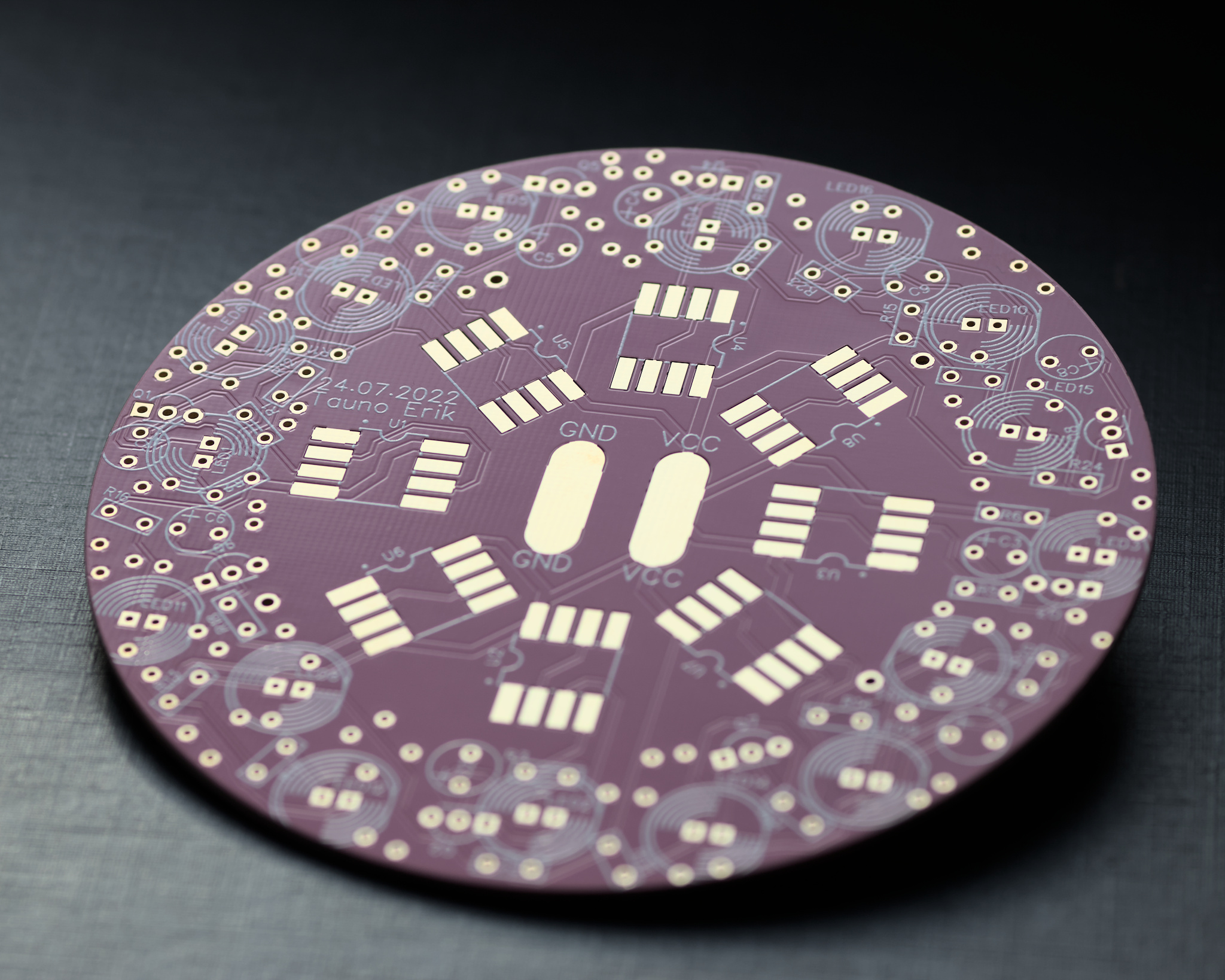
Different PCB colours at different angles!
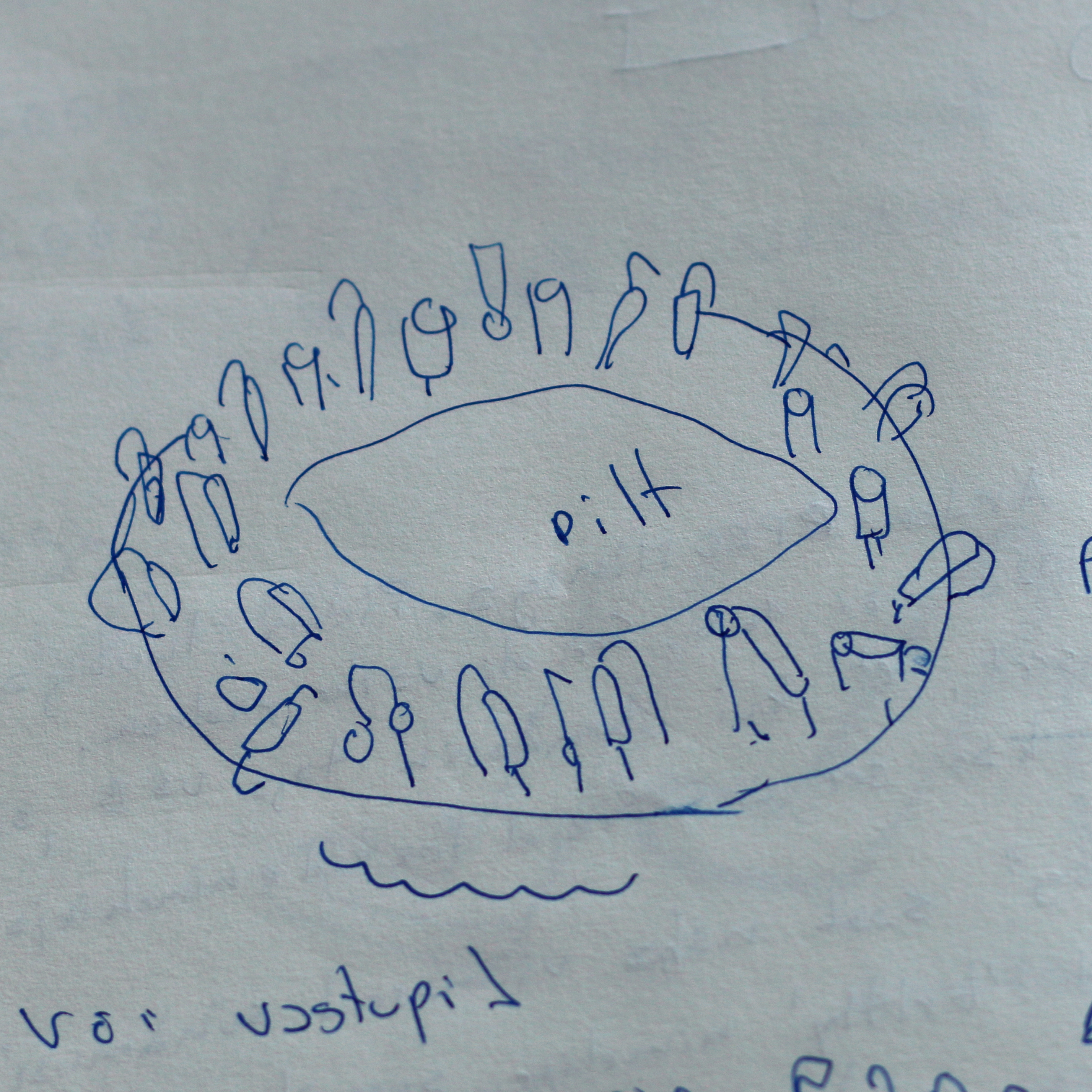
Design ideas and sketches. Although there is a lot of resistance from the software to deal with these complex graphics.
Some short animations I’ve made recently. Mainly with Blender. The main goal is to learn.
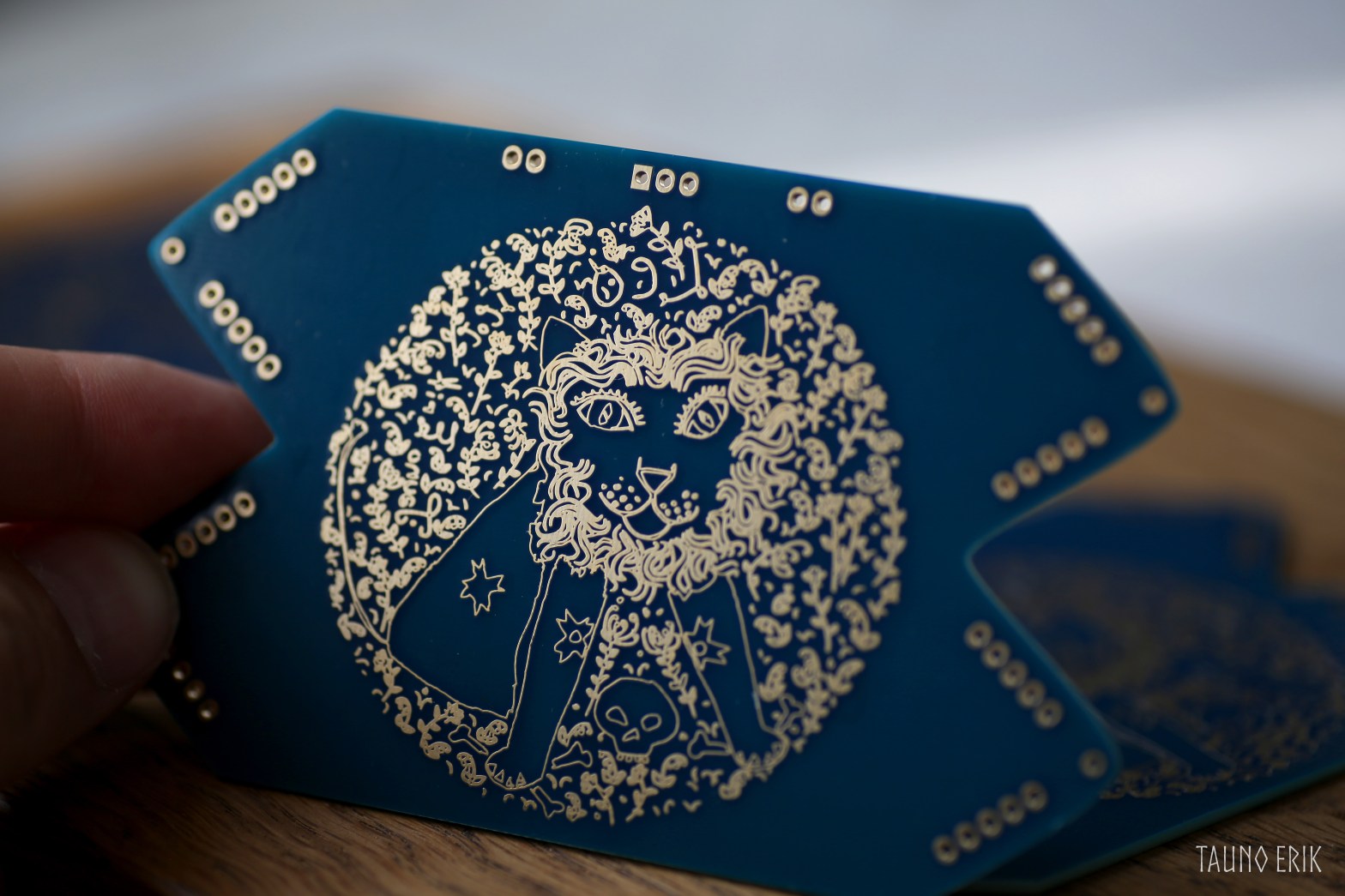
I really like these golden lions. They have good contrast and blue with golden is a classic combination. There has a lot of coats of arms with this combination.
The board is just a Raspberry Pi Pico carrier board. I only needed to change the Pico footprint to remove all through-hole pins and pads from the centre of the plate. This blue colour is also different from the previous ones. It feels semi-transparent. All the fine details in gold look excellent. Manufactured by NextPCB.
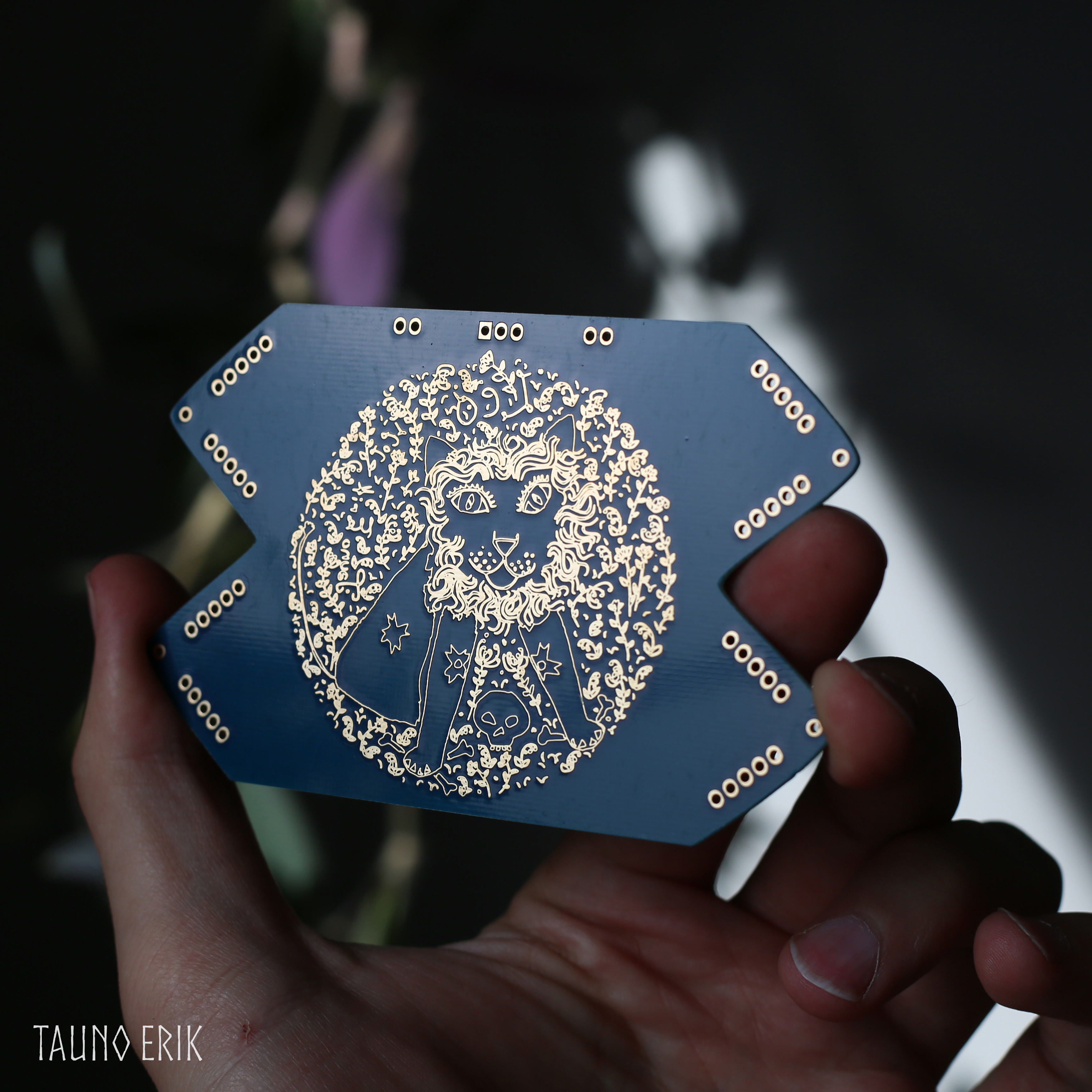
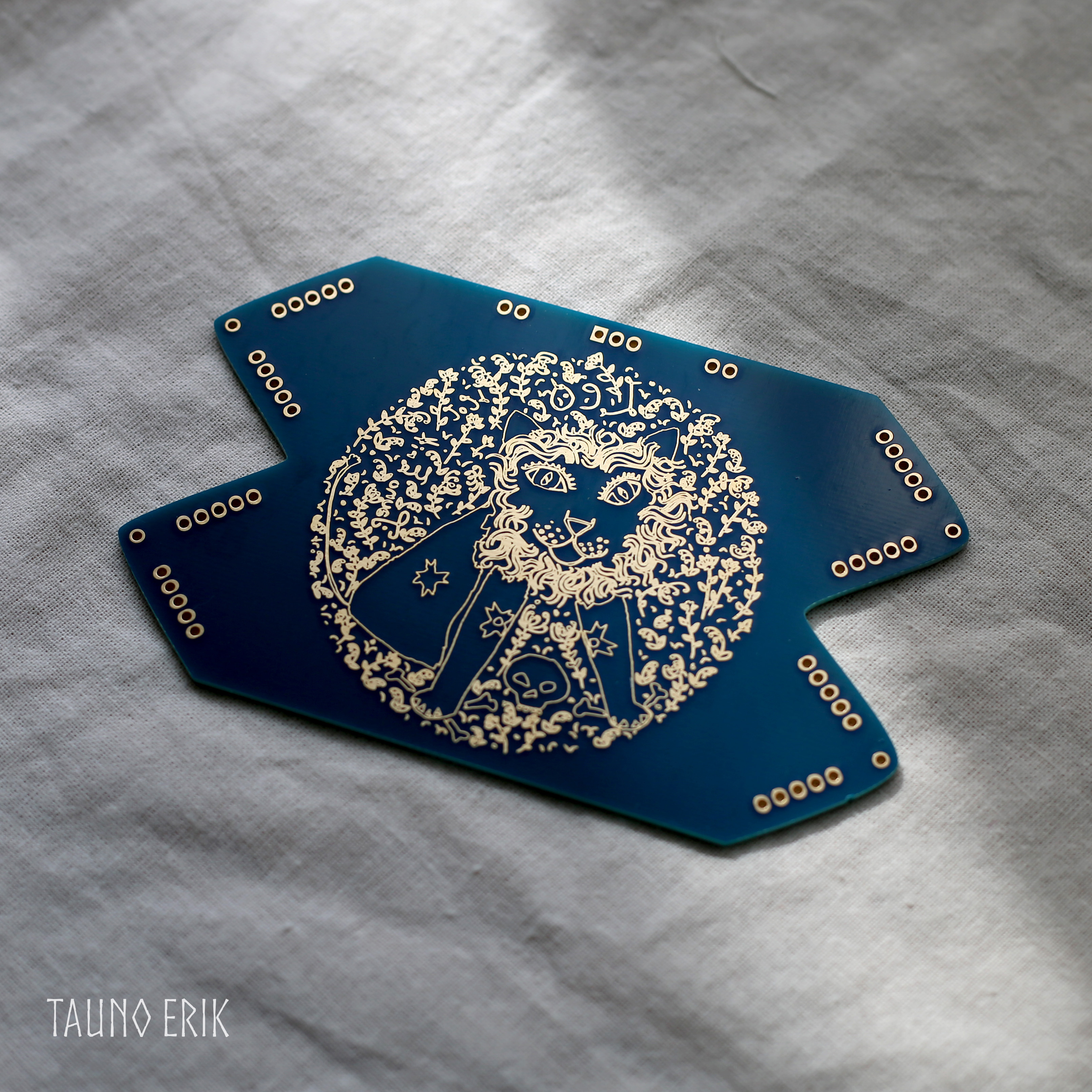
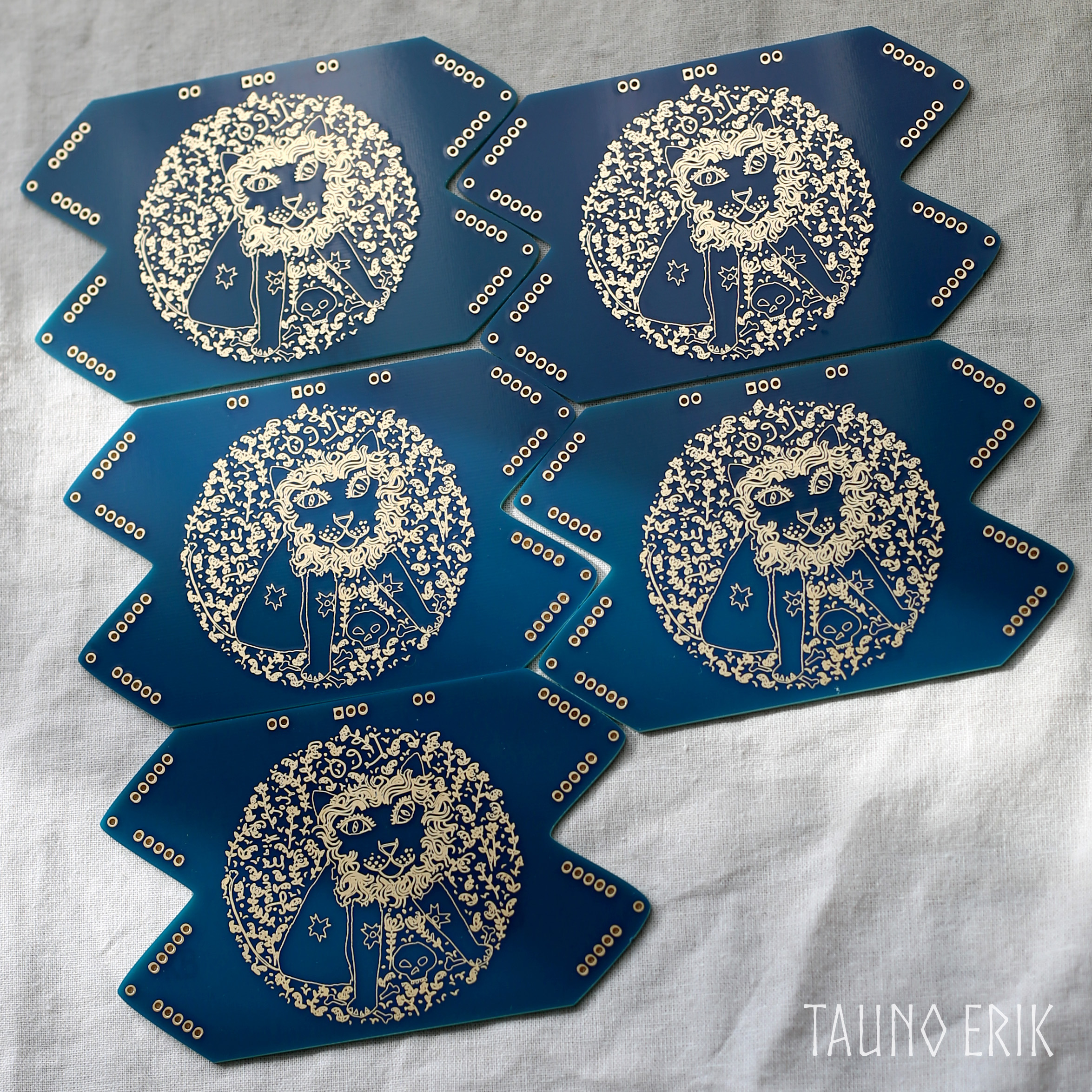
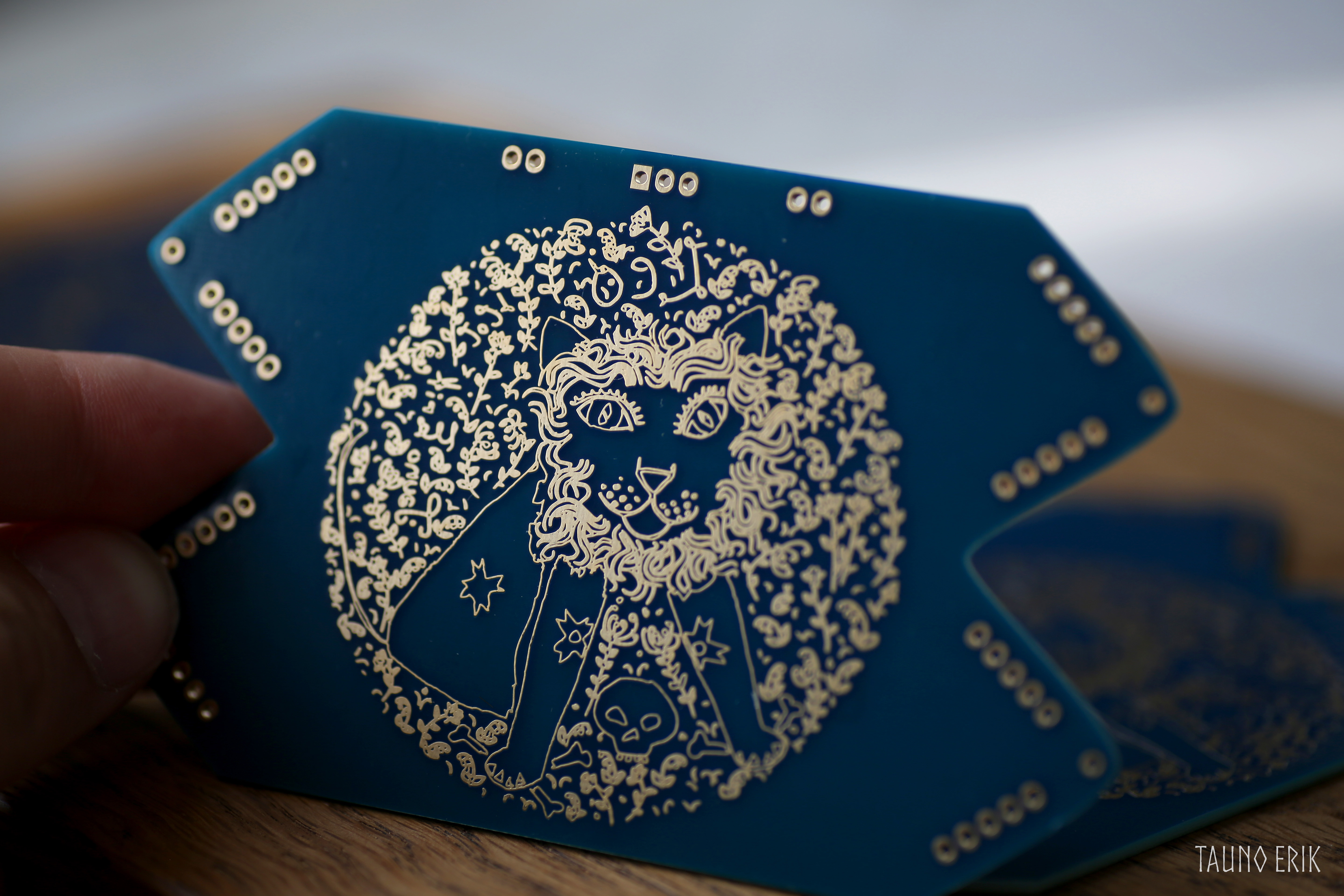
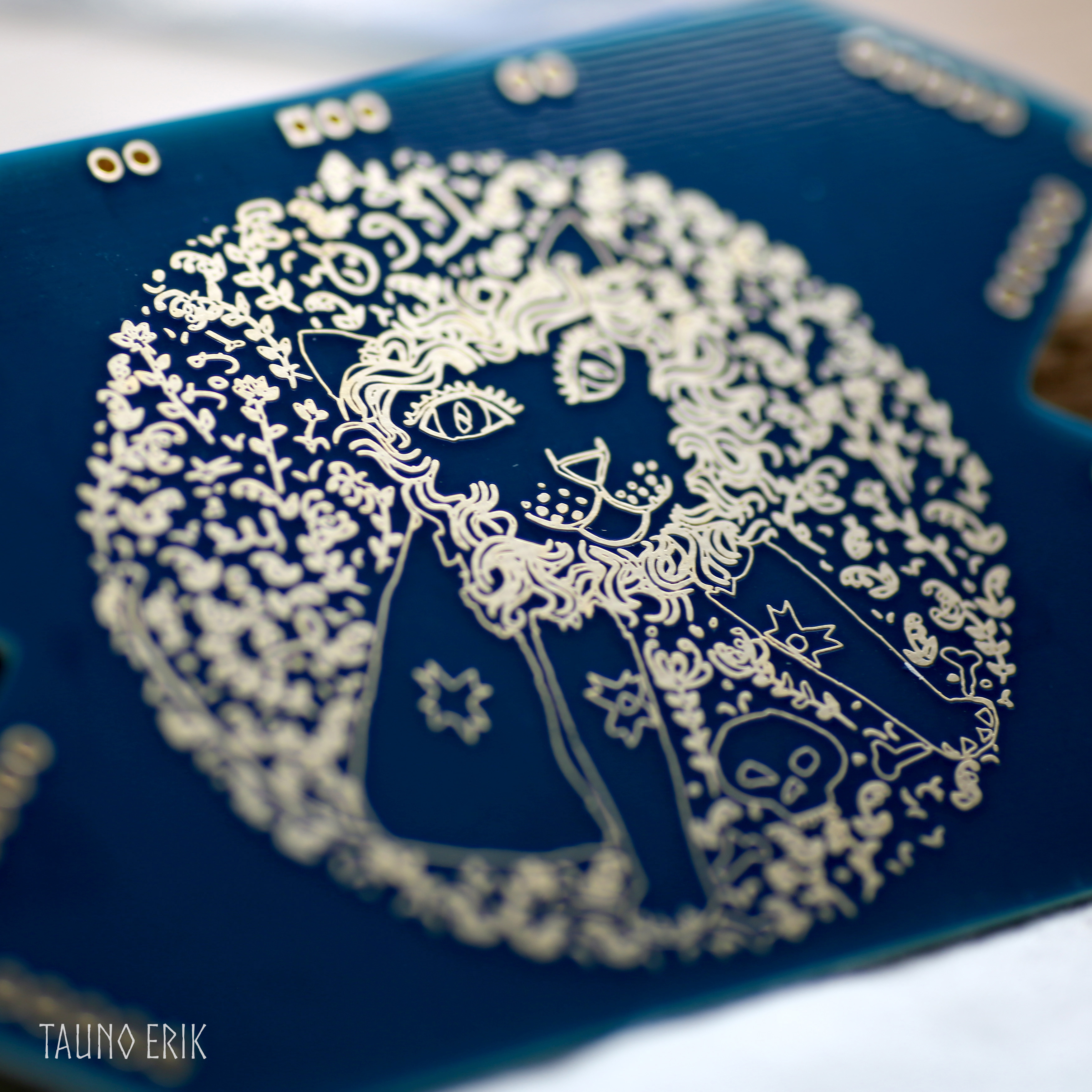
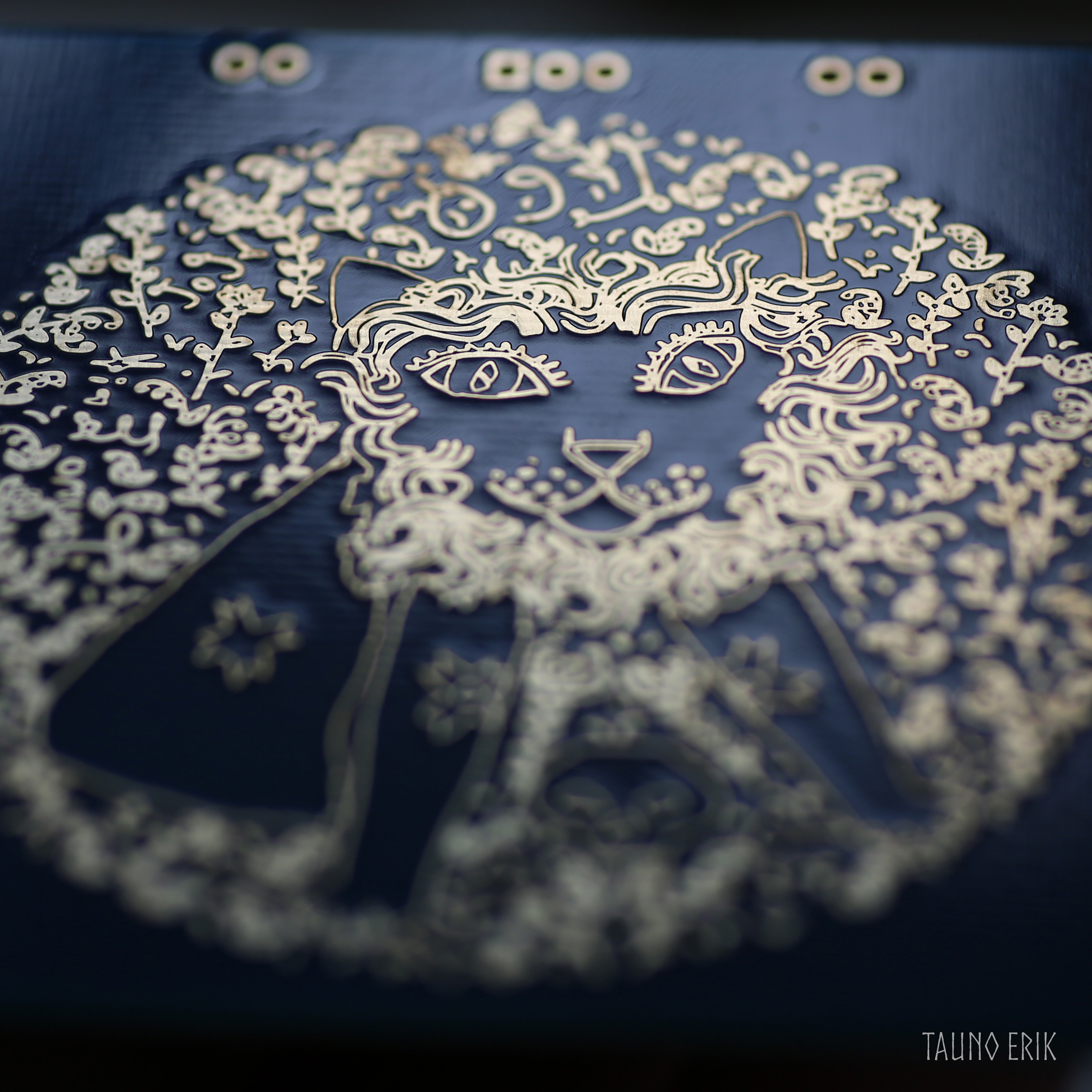
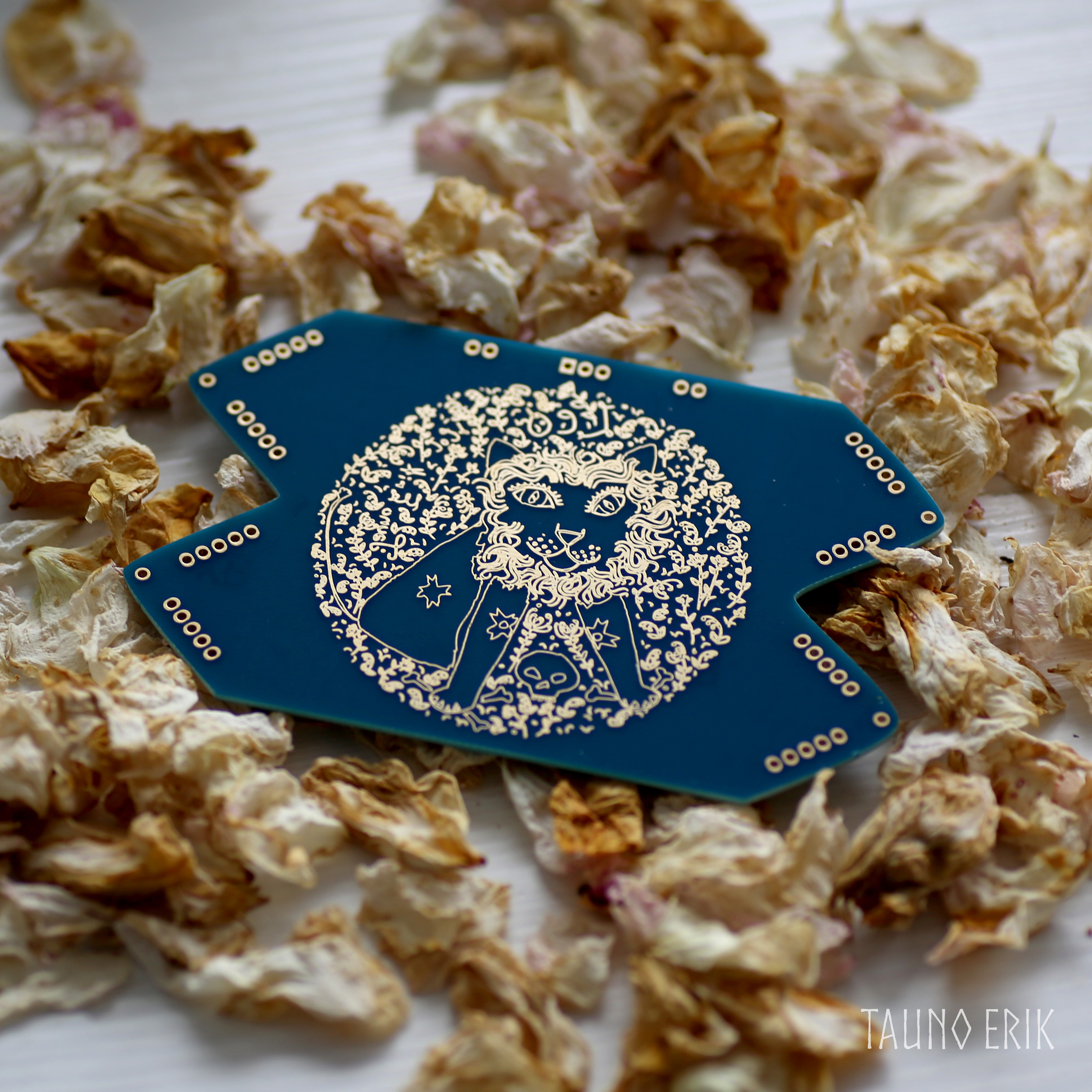
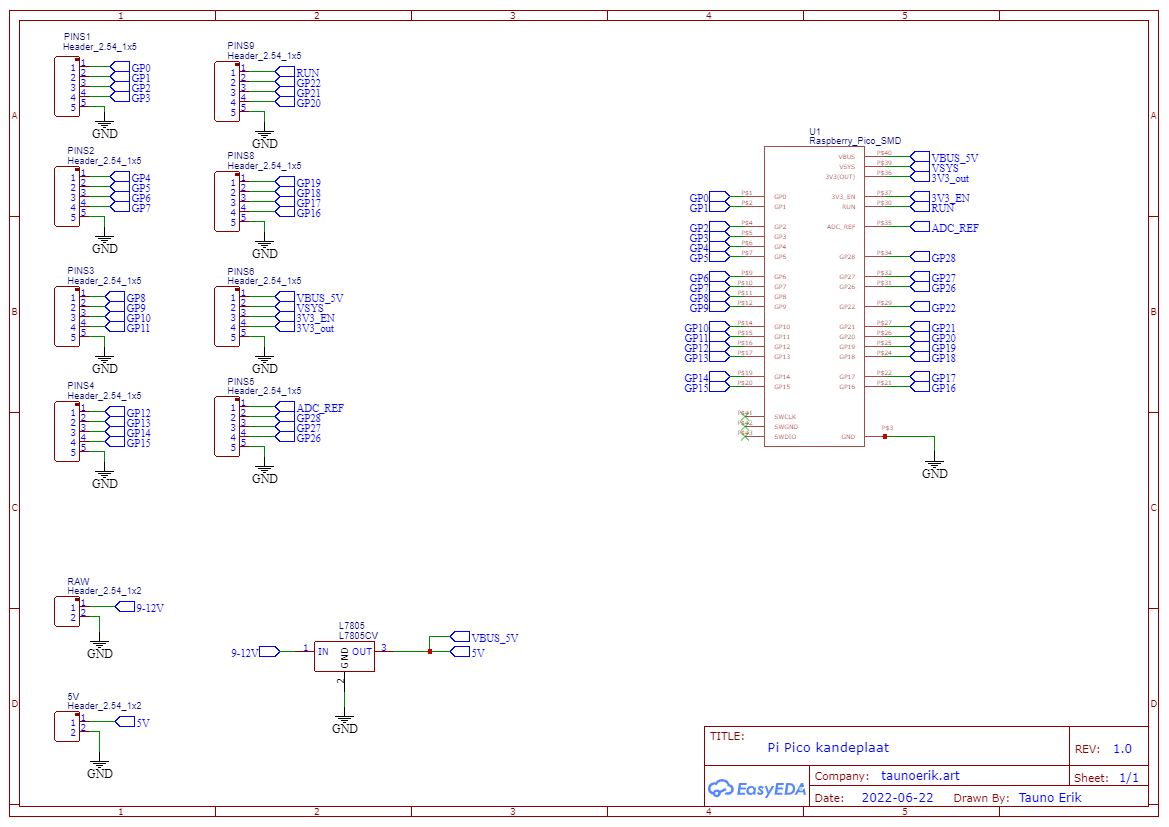
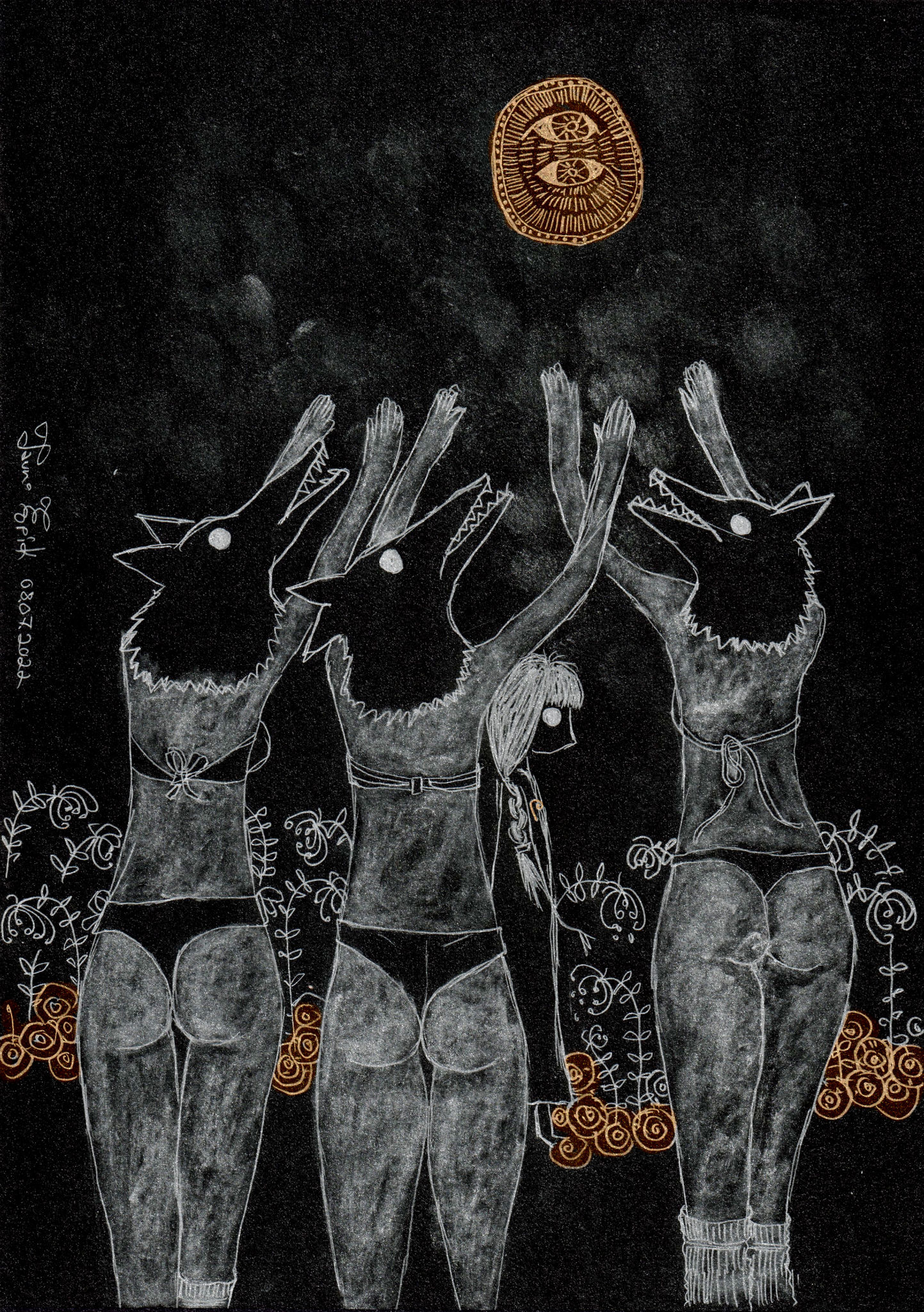
Here are one PCB designs I have made recently.
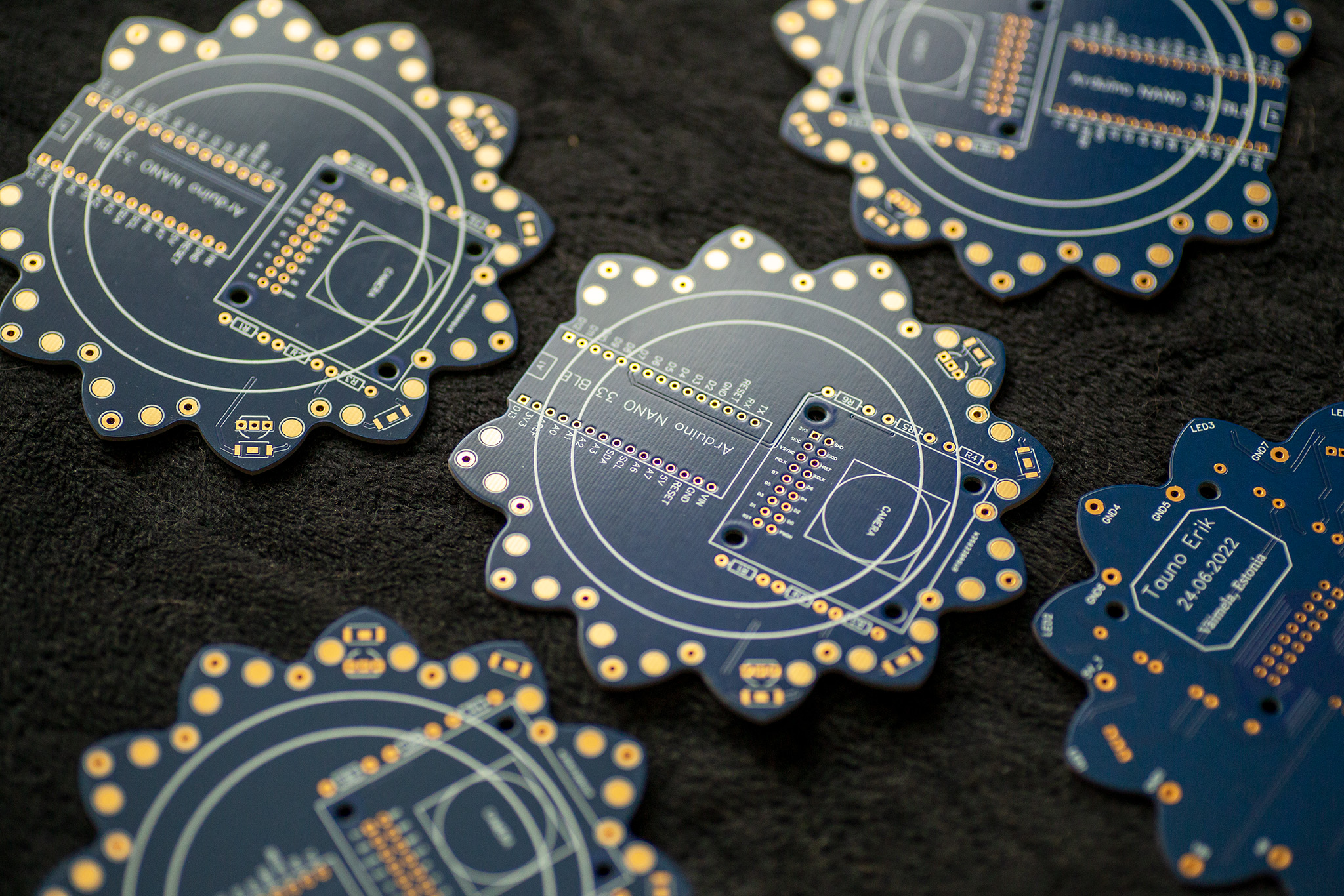
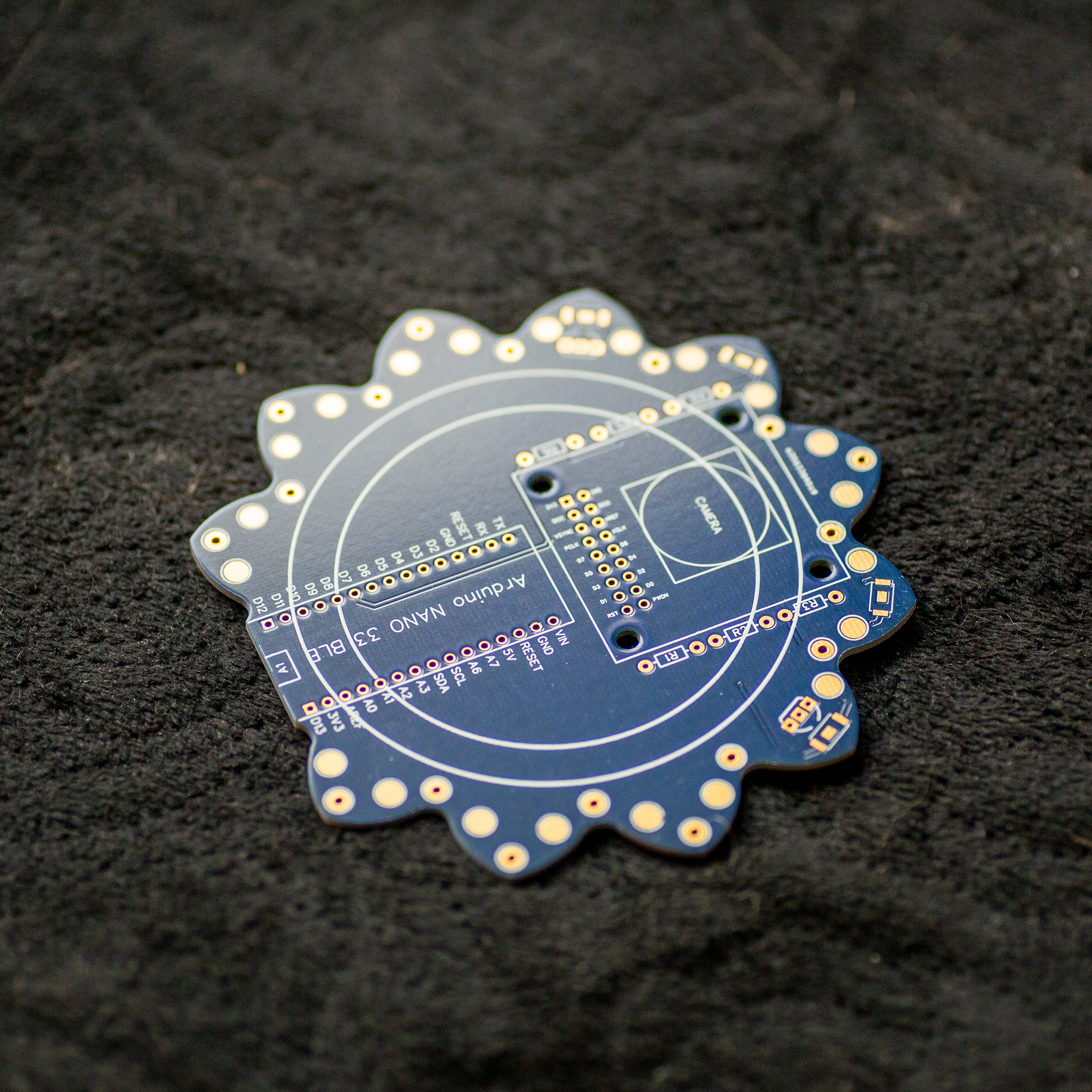
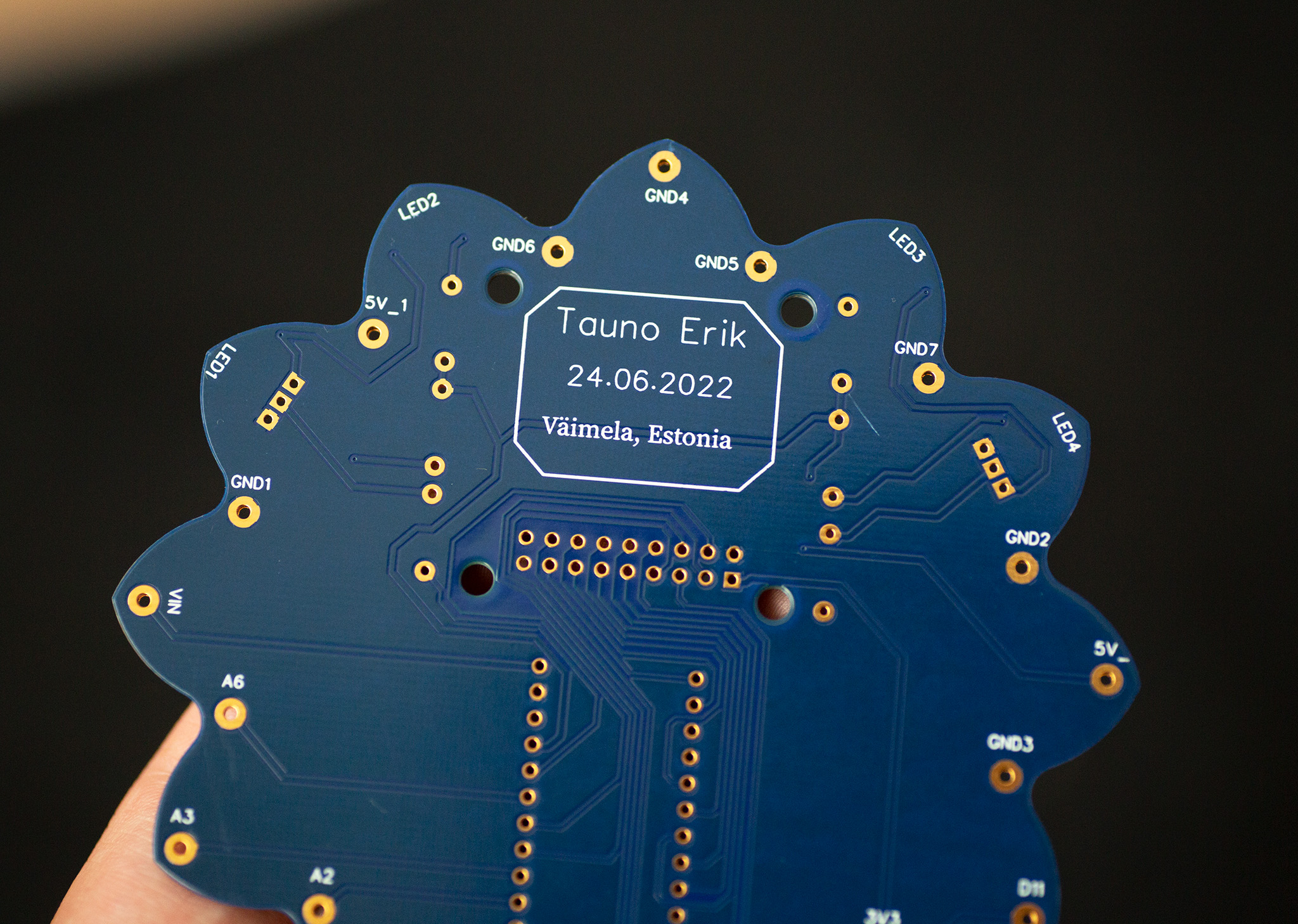
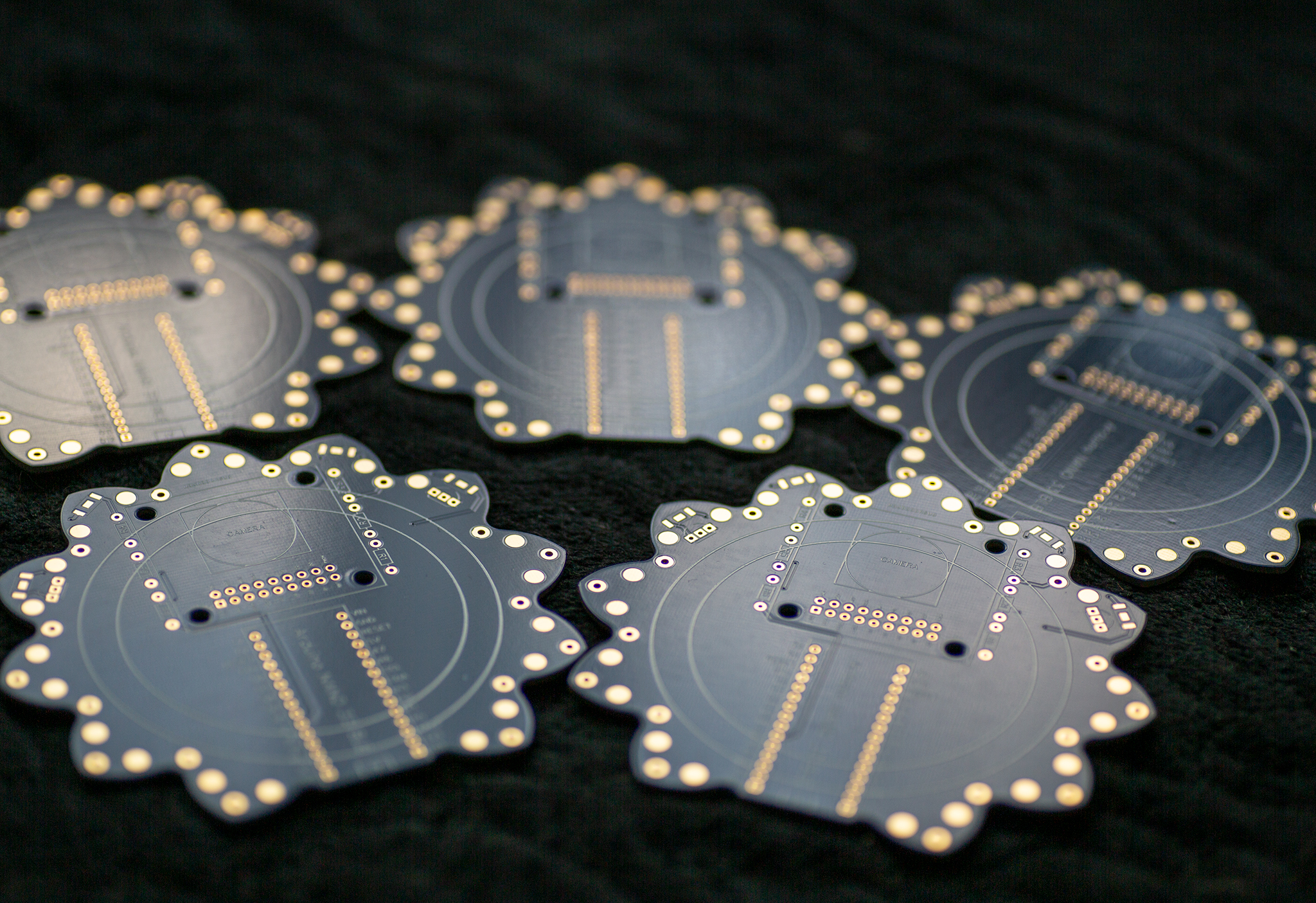
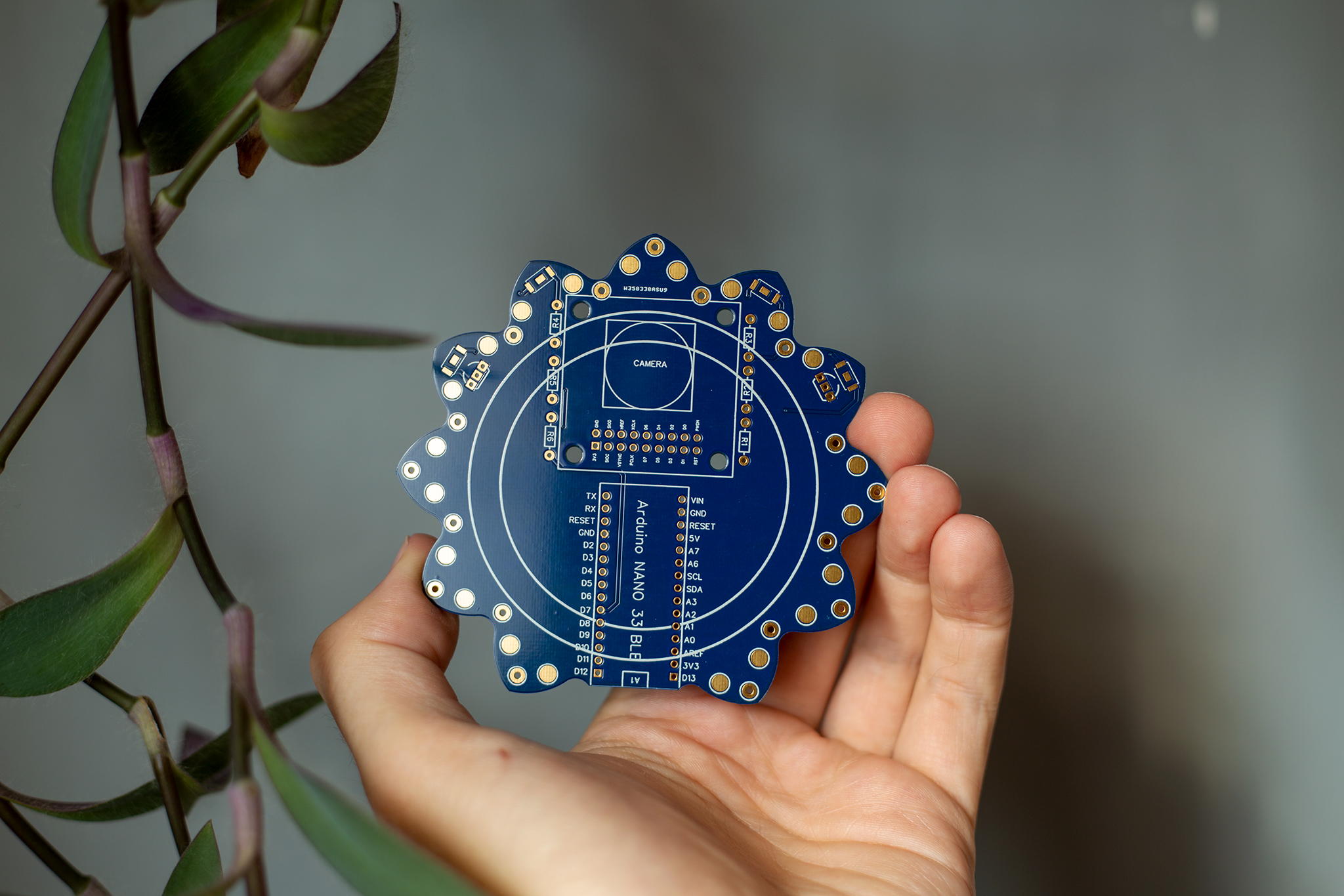
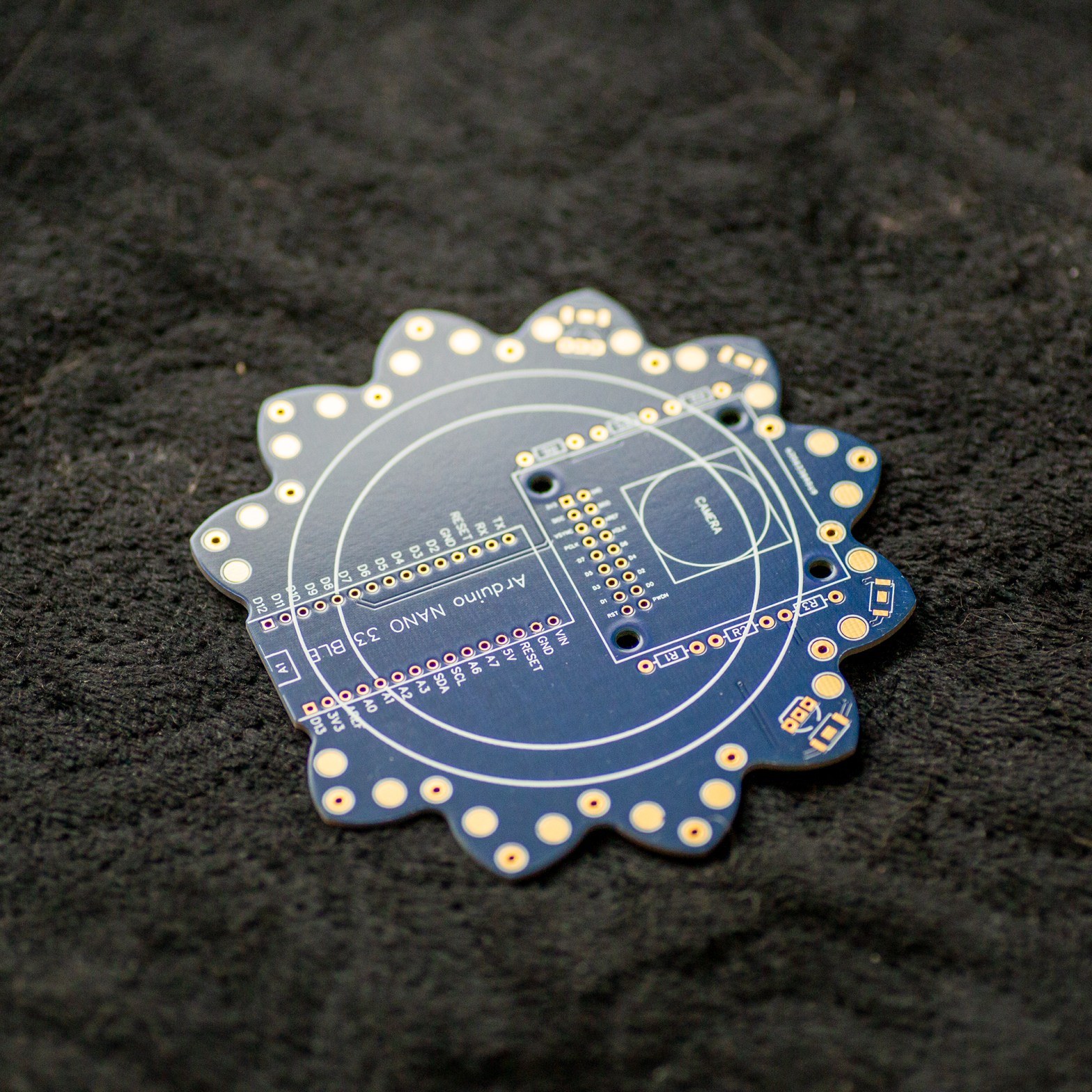
In spring I bought TinyML Cookbook and there are a lot of detailed examples of how to use machine learning on microcontrollers. So I designed this board to experiment with it. On this PCB, with is made by PCBWay, is room for Arduino Nano 33 Ble sense and OV7670 camera. I also added some LEDs to illuminate camera scenes if needed. And on the side are all the rest of the pins that I can use.
So I plan to use the camera and TinyML and make one Peter Vogel style circuit sculpture/painting.
Project documentation is on GitHub.